Even though it is all simply called “matcha,” the flavor, aroma, and overall expression can vary remarkably depending on its origin, cultivar, and how it is prepared.
When you enjoy a bowl at a Japanese tea cafe or prepare leaves purchased from a tea shop, you might find yourself delightfully surprised by the distinct personality of the tea.
These nuances come from the tea bush cultivars, the growing methods, and the traditional blending skills of the tea masters. Here is a thorough, approachable guide to the foundational definitions of matcha and six essential cultivars to help you enjoy this quiet world even more.
Author’s Mini-Column: Honoring the Bowl and the Craft
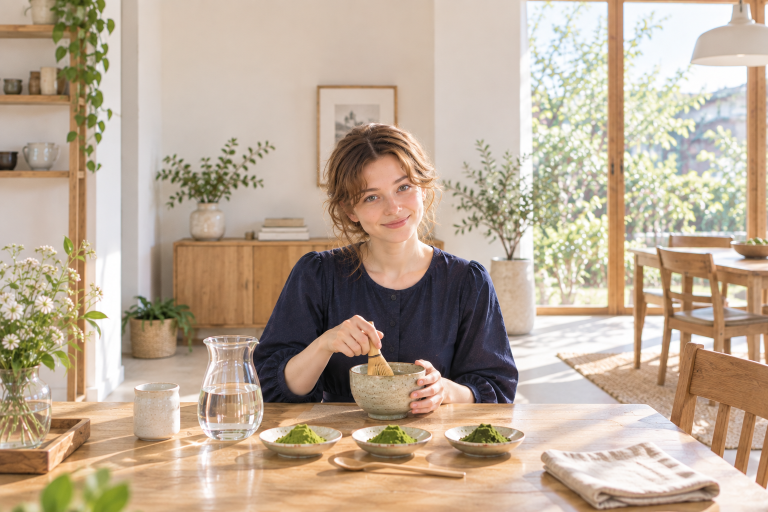
Before exploring these wonderful cultivars, there is something I hold very close to my heart. Because these leaves carry generations of dedication from growers who poured their lives into the soil, the most beautiful way to experience them is with sincere respect—whisked gently as a pure, straight bowl of thin tea (Usucha) using nothing more than hot water and a bamboo whisk.
Generations of quiet labor—tending the earth through changing seasons, sheltering the fresh shoots from the harsh sun, and slowly stone-grinding each serving—are resting within that single bowl. Taking the time to sit quietly and honor that tradition is a truly peaceful and grounding experience.
At the same time, when I prepare a matcha latte in my daily life, I carry that exact same reverence for these precious cultivars. I never compromise on quality, choosing only the finest ingredients from around the world to stand alongside the tea. I will share a little more about my personal way of enjoying this in the column toward the end of this guide.
What Is Matcha? Its Origins and Thoughtful Craft
What exactly is matcha, and how is it made?
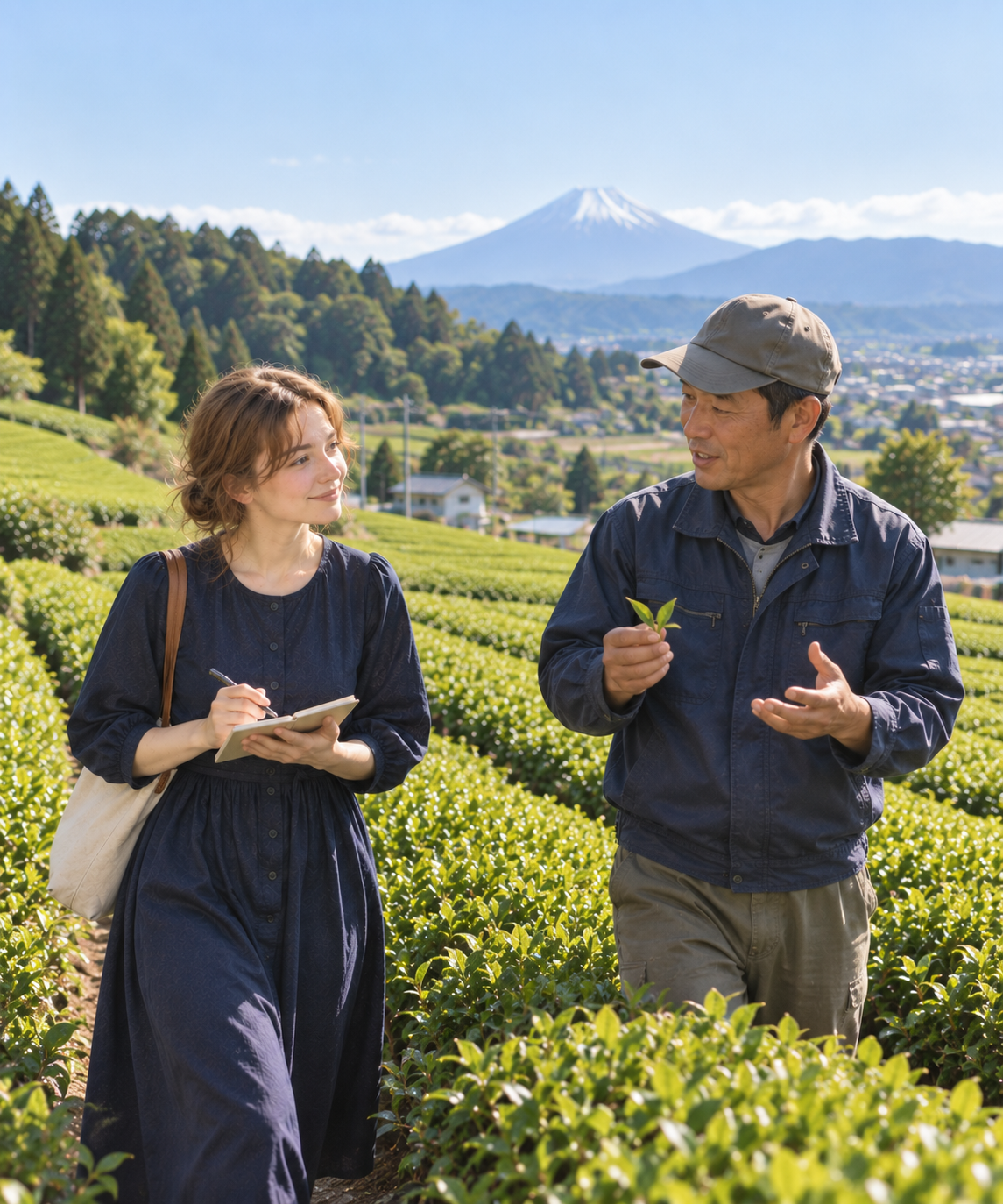
The raw material used for authentic matcha is called Tencha. It is grown and processed in a manner entirely different from everyday open-field green teas like Sencha.
1. Shaded Cultivation (Covering the Fields)
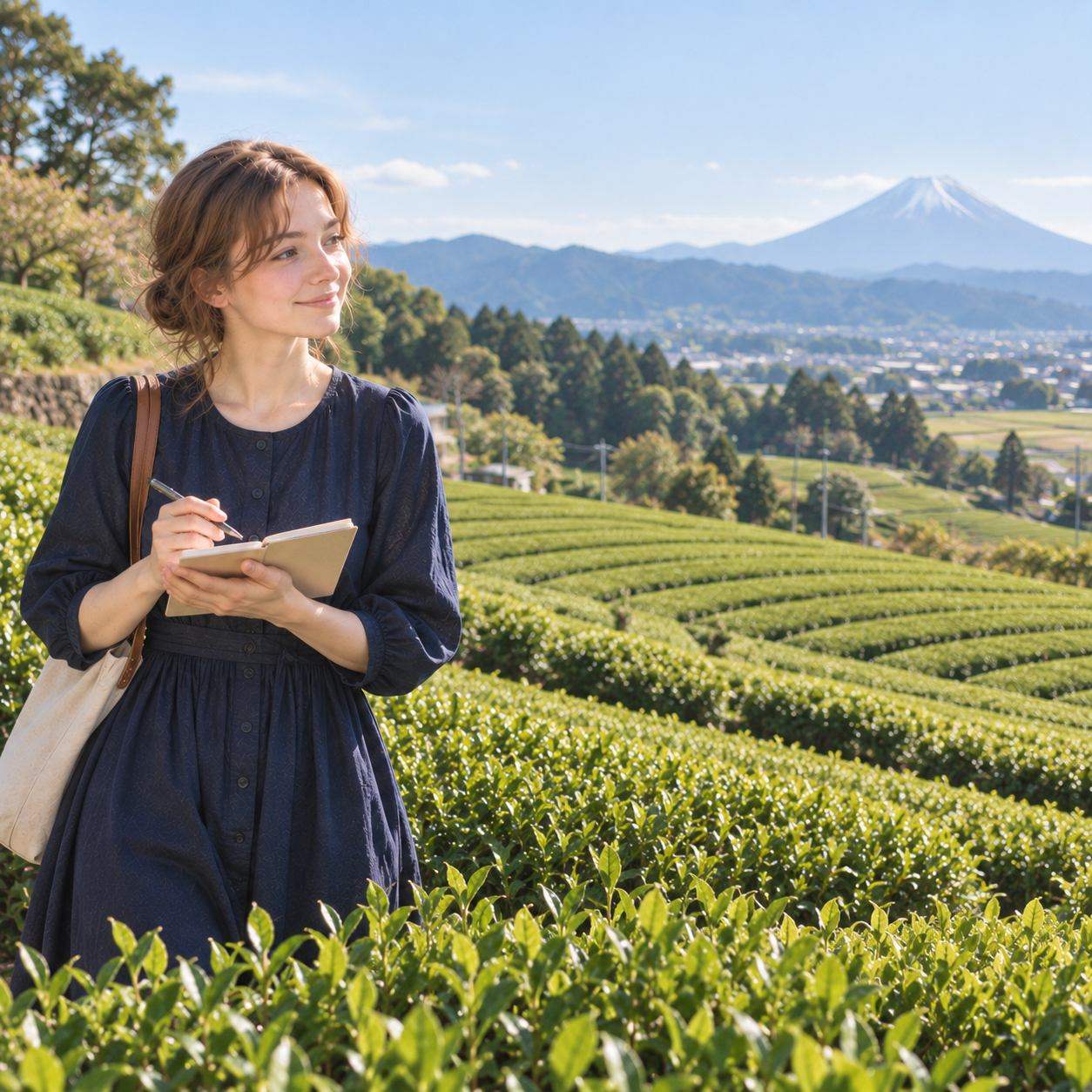
About two to three weeks before the harvest, farmers cover the entire tea garden using woven reed screens, straw, or specialized shading nets to block direct sunlight. The natural sweet and savory component inside tea leaves, known as theanine, converts into bitter catechins through photosynthesis when exposed to direct sun. Shading the bushes halts this transformation, locking the high concentrations of savory theanine safely inside the leaf. Furthermore, as the tea bushes strive for light, their chlorophyll levels rise significantly, resulting in a vivid, luminous emerald green and producing a distinctive sweet, oceanic aroma called ooika.
2. Drying Without Rolling
Standard green tea leaves are repeatedly rolled and kneaded while drying after steaming to shape them into needles. Tencha, however, is never rolled. Fresh shoots are steamed and then dried completely flat. By omitting the rolling process, the delicate cell structure of the leaf remains intact, creating clean, crisp tea flakes.
3. Stone-Grinding into Fine Powder
The dried Tencha leaves are carefully stripped of their stems and coarse veins, keeping only the purest leaf flesh. These tender flakes are then placed between heavy granite stone mills and turned slowly by hand or low-speed mechanisms. Because the stone mills do not heat up, the friction does not scorch the delicate aromas. The tea is milled into an exceptionally fine powder—so fine it effortlessly slips between the ridges of your fingerprints. A single traditional stone mill produces only about 30 to 40 grams of matcha per hour. This immense patience and craftsmanship are what create the velvety smoothness of genuine matcha.
The Difference Between Matcha and Powdered Green Tea
At sushi restaurants, you might see jars of green tea powder and wonder if it is the same as matcha. While they look similar at a glance, they are entirely different teas.
- Powdered Green Tea (Funmatsu-ryokucha): Made by simply pulverizing ordinary Sencha leaves grown under full sunlight. Because it absorbed full sun, it is rich in catechins, offering strong natural astringency and natural cleansing properties that refresh the palate during a meal. Its color tends to carry a softer, yellowish-green hue.
- Matcha: Made strictly from shaded Tencha and ground finely on stone mills. It is rich in theanine, carries virtually no harsh bitterness, and produces a luminous emerald green bowl crowned with a fine, velvety froth.
Powdered green tea is wonderful for quick, everyday dining, while matcha is an invitation to pause and savor the deep umami and calm aroma of shaded leaves.
Understanding Thin Tea (Usucha) and Thick Tea (Koicha)
In the classical tea tradition, matcha is served in two primary styles:
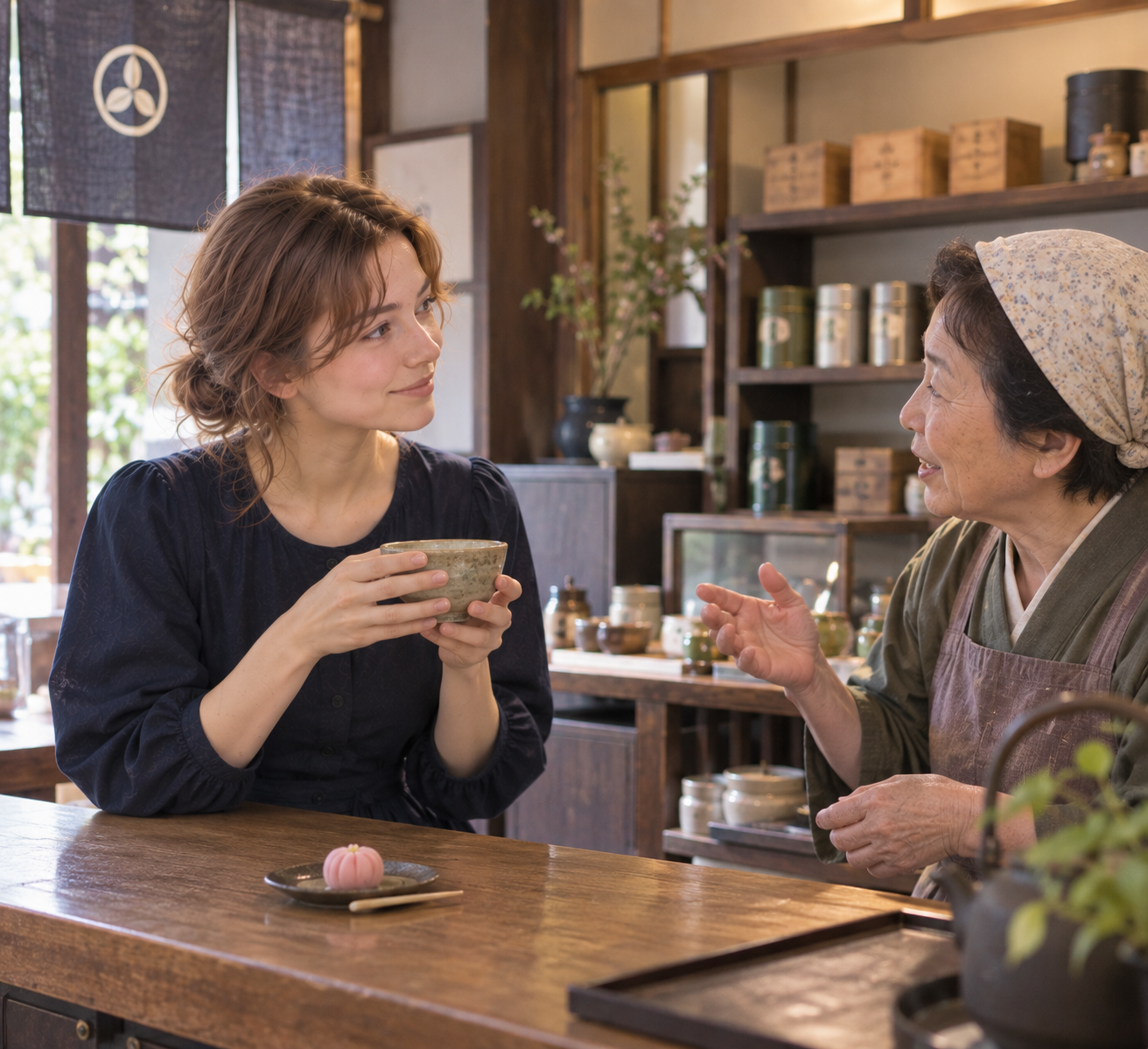
- Thin Tea (Usucha): The familiar style most people enjoy. Whisking about 1 to 2 grams of matcha with 60 to 70 ml of warm water using a bamboo whisk produces a light, refreshing bowl with a delicate layer of creamy microfoam.
- Thick Tea (Koicha): Using two to three times the amount of matcha (about 4 to 5 grams) with only 30 to 40 ml of water, the tea is gently kneaded into a rich, velvety consistency like warm melted chocolate. Only the highest grades of matcha, completely free from harsh astringency, are used for Koicha, representing the most formal and sacred form of hospitality.
Blends (Gogumi) and Single Cultivars
Matcha is also defined by how it is composed by the maker:
- Blends (Gogumi): Matcha crafted by master tea blenders who combine harvests from different cultivars and fields. Because weather changes every year, blending ensures a consistent, balanced, and dependable flavor season after season. The vast majority of matcha is crafted this way.
- Single Cultivars: Matcha made exclusively from one specific variety of tea plant. Just as fine wines are appreciated for their distinct grape varieties, single-cultivar matcha allows you to experience the unmasked voice of the soil, climate, and plant itself.
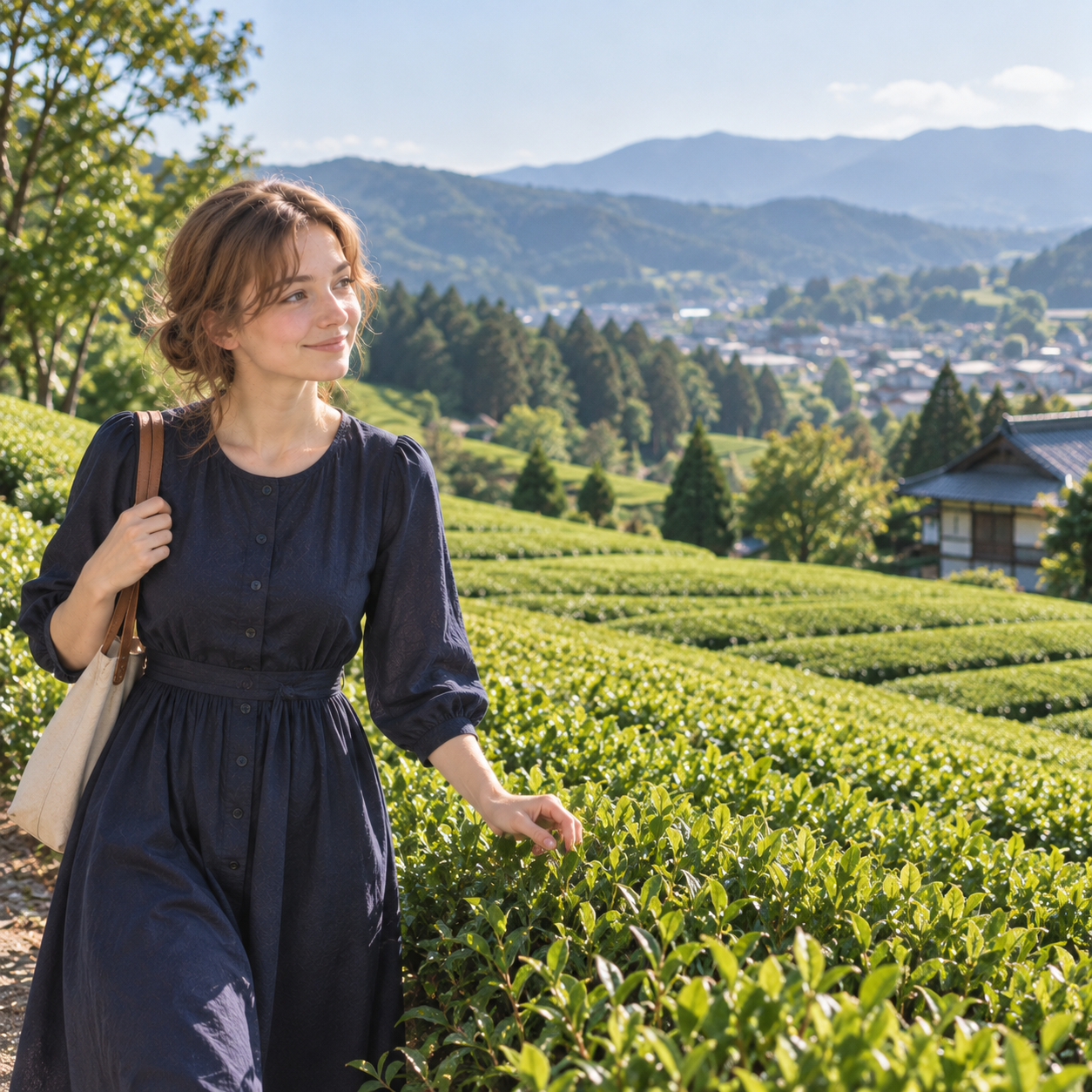
6 Essential Cultivars to Know
Among the many varieties cultivated across Japan, here are six representative cultivars that define the world of matcha.
1. Yabukita
Born in Shizuoka, Yabukita is the backbone of the Japanese tea industry, accounting for nearly 70% of the nation’s tea fields. It offers a clean harmony of natural sweetness, savory umami, and crisp, pleasant astringency. Serving as the trusted benchmark for all Japanese green tea, it provides a familiar and approachable taste.
2. Samidori
An heirloom cultivar selected from native tea bushes in Uji, Kyoto. It is celebrated for its exceptionally clear, brilliant green color, fresh citrus-like aroma, and remarkably smooth finish. It is effortless to drink as a straight thin tea (Usucha) and has long been cherished as a timeless Uji classic.
3. Asahi
Selected in early 20th-century Kyoto, Asahi is one of the most prized and rare cultivars grown for Tencha, often fetching the highest prices at auctions. Because its harvest window is very short and yields are limited, it is deeply precious. It presents an aristocratic depth of rich umami and heavy body, showing its finest qualities when kneaded into traditional Koicha.
4. Goko
Another heritage treasure born in Uji, often cultivated for competition-grade Gyokuro and Tencha. True to its name, which evokes fragrant incense, it carries an intoxicating, sweet shaded perfume. On the palate, it reveals an astonishingly creamy, rich umami and a comforting, lingering finish.
5. Okumidori
Created by crossing Yabukita with a native Shizuoka variety. It is a late-budding cultivar known for its gentle nature, free from sharp bitterness or distracting astringency. It yields a calm, disciplined sweetness and a crystalline green infusion that finishes cleanly. (As a small gentle note, the Japanese green tea cultivar thoughtfully chosen by YouTuber Adela / Adelala [YouTube: @adelalala] for her own matcha brand is also Okumidori from Shizuoka.)
6. Uji-hikari
Selected from native heirloom plants in Uji, Kyoto, this variety frequently claims the highest honors in national tea appraisals. It is admired for its striking, deep jade color, sophisticated fragrance, and concentrated, velvety umami that commands deep presence with every sip.
Author’s Note: A Personal Rhythm and the Finest Pairings
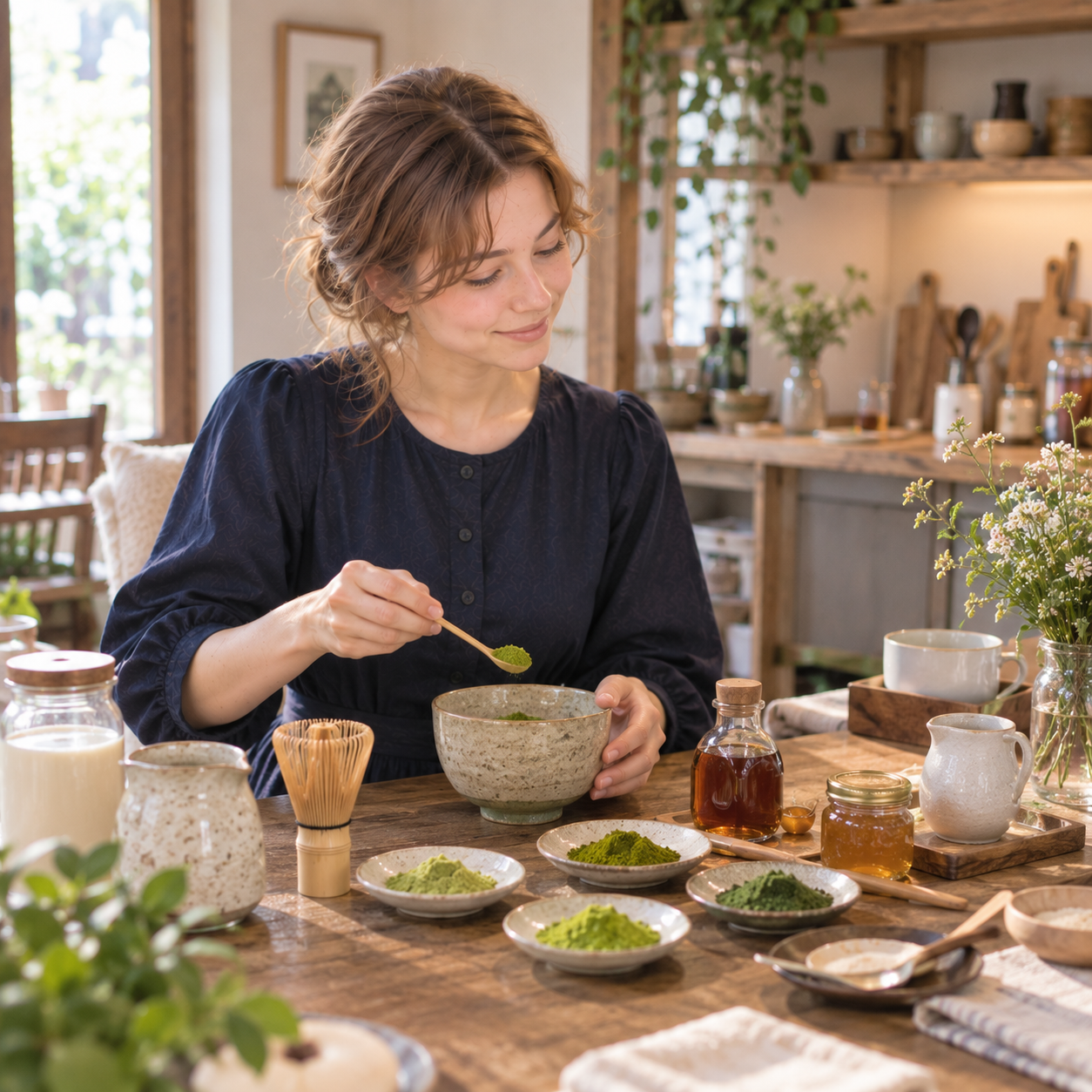
When it comes to these varieties, drinking them straight with deep respect is the most beautiful form, and preparing them thoughtfully with reverence for tradition is the true foundation. First, try whisking them simply with a bowl, warm water, and a chasen, to taste the pure life of the leaf.
At the same time, this is entirely a matter of personal preference and my own way of enjoying it, but there are times when I like to pair Okumidori with Manuka honey.
To me, it tastes wonderful, and I enjoy it very much. Naturally, everyone has their own preferences.
While it always remains a matter of personal taste, I make it a point to pair them with the highest grade of ingredients, carrying deep respect for the producers and for the people who have cherished this tea through generations.
Even when making a latte, whenever I use such special cultivars, I always choose the finest things. For Okumidori, I pair it with high-grade Canadian maple syrup, and for Goko, I pair it with New Zealand Manuka honey. For instance, pairing them with carefully selected maple syrup harvested in Canada, or rare Manuka honey made in New Zealand. To me, it simply tastes very good.
Taking the time to understand the quiet craftsmanship and individual cultivars behind matcha transforms every bowl into an intimate, meaningful pause. Start with a simple, straight whisk to receive the honest gifts of the earth, and enjoy discovering the cup that rests most gently in your everyday life.
For a gentle reminder on how to easily prepare an unhurried latte in your daily cadence, feel free to visit my earlier guide: A One-Minute Matcha Latte: My Everyday Green Routine in the UK and Japan[cite: 1].
Authoritative Agricultural & Tea Resources
- Japan Tea Central Public Interest Incorporated Association (Official Definitions and Quality Standards)
- Ministry of Agriculture, Forestry and Fisheries of Japan (MAFF) (Tea Production & Registered Cultivars)
- National Agriculture and Food Research Organization (NARO) (Tea Plant Variety Database)
- Kyoto Tea Cooperative (Heritage and Cultivation Standards of Authentic Ujicha)
Editorial Disclaimer & Mindful Enjoyment Notice
Cultural Reverence & Personal Reflections: The cultivar profiles, tasting notes, and processing standards shared in this guide are drawn from established Japanese tea agricultural resources and historical traditions. The personal pairings and latte routines shared in the author’s notes reflect subjective domestic experiences, written with deep reverence for traditional tea masters, agricultural heritage, and the farmers who nurture the soil. Individual taste preferences vary naturally, and nothing herein asserts an absolute or mandatory way to enjoy tea.
Caffeine & Dietary Mindful Awareness: Because authentic matcha consists of whole, shade-grown tea leaves stone-ground into a microfine powder, it naturally delivers concentrated amounts of caffeine, L-theanine, and catechins. Individuals with caffeine sensitivities, those who are pregnant or nursing, children, or those taking specific medications should be mindful of their daily consumption and enjoy matcha at an unhurried, comfortable pace. Never inhale dry matcha powder directly, and ensure it is smoothly whisked into warm water to prevent throat irritation.
Ingredient Safety & Infant Honey Precaution: Raw, unpasteurized honey (including artisanal New Zealand Manuka honey) should never, under any circumstances, be given to infants under one year of age due to the risk of infant botulism. Individuals with known food allergies, specific dietary restrictions, or metabolic considerations should always consult a qualified healthcare professional regarding their personal dietary choices.
Information Integrity & Independent Discretion: All external references, public databases, and historical contexts provided are based on verified agricultural records available at the time of writing. However, agricultural yields, market availability, and regional guidelines evolve over time. Readers are encouraged to exercise personal discretion and due diligence when sourcing tea varieties and incorporating new ingredients into their wellness routines.


Comments