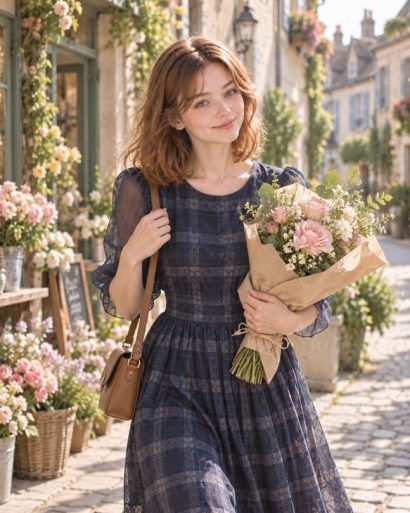
Rose Meaning & Symbolism Guide: Rose Color Meanings, Number of Roses Meaning & Gifting Advice — Do Roses Have Any Bad Meanings?
A calm, practical guide to what roses can symbolize by color and number — and how to choose a bouquet that feels thoughtful, personal, and right for the person receiving it.

Roses have always felt a little different from other flowers to me.
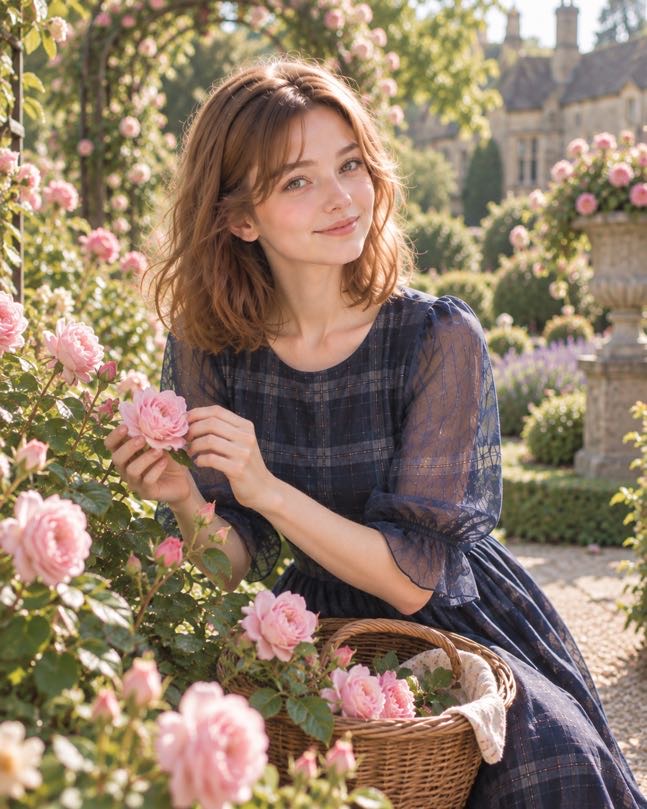
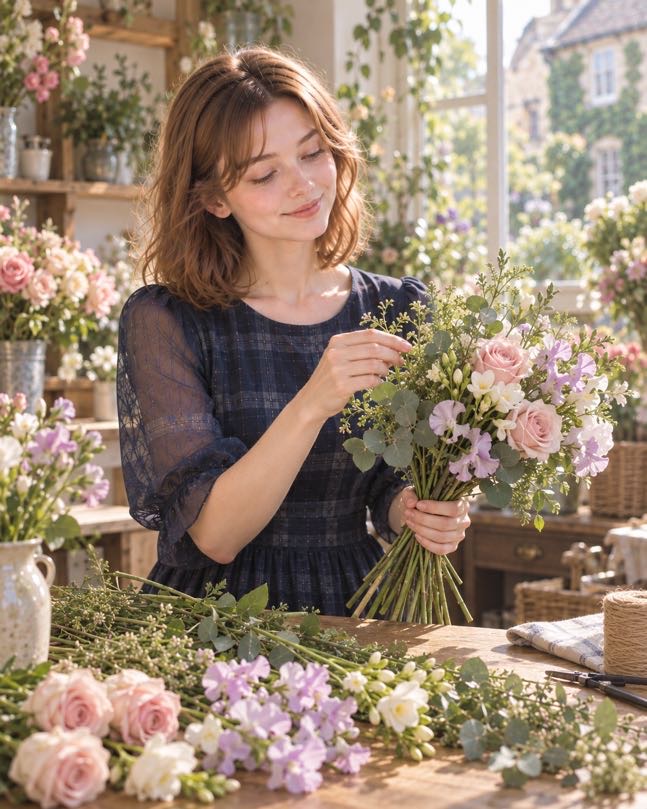
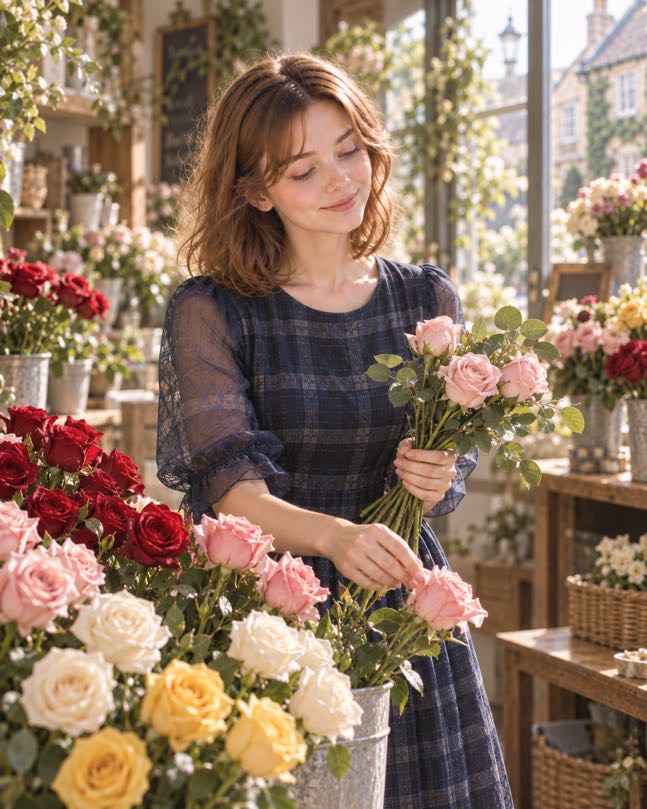
When I was living in the UK, I studied flowers at a flower school and also helped at a flower shop. During that time, I spent many hours learning about floral design, choosing flowers for different occasions, and seeing how much thought people often put into a bouquet before giving it to someone they care about. I was also asked many questions about flowers as gifts — which colors felt appropriate, what kind of arrangement might suit a certain person, and what a flower might quietly communicate.
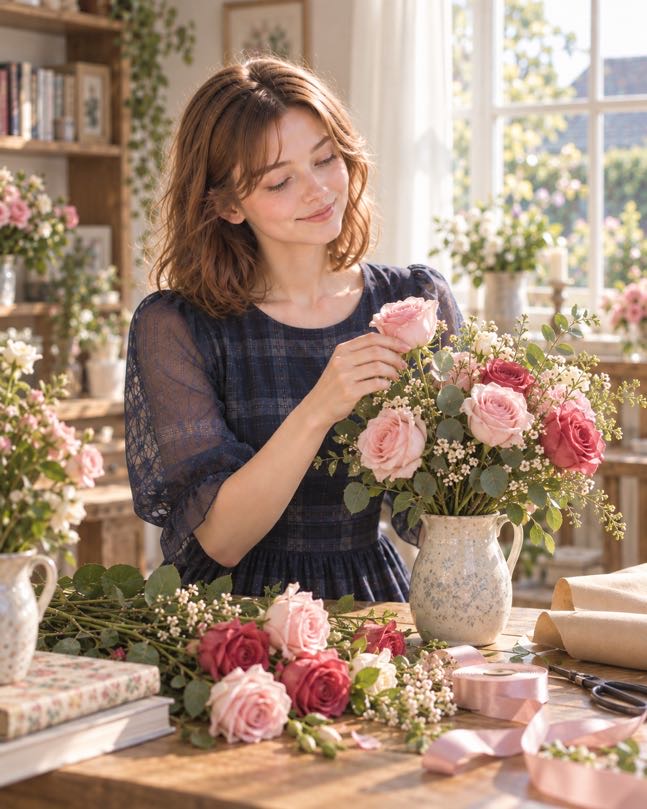
I remember bringing practice flowers home after class and arranging them in my room. Sometimes I would buy a few flowers for myself and place them in a small bottle or vase. Even a single rose could make the room feel a little more elegant and soften the atmosphere around it.
That experience is one reason I have never thought of rose meanings as a rigid set of rules. Symbolism can be useful, especially when you are choosing a meaningful gift, but the person receiving the flowers matters just as much as the traditional meaning attached to them.
In this guide, I want to look at both sides: the traditional meanings and symbolism of roses, and the more practical question of how to choose roses thoughtfully when giving them to someone.
- Quick Answer: What Do Roses Mean?
- Rose Meaning & Symbolism — Why Do Roses Carry So Much Meaning?
- Rose Color Meanings
- Red Rose Meaning — Love, Romance and Passion
- Pink Rose Meaning — Gratitude, Admiration and Grace
- White Rose Meaning — Purity, Respect and New Beginnings
- Yellow Rose Meaning — Friendship, Joy and Warmth
- Orange Rose Meaning — Enthusiasm, Energy and Attraction
- Lavender and Purple Rose Meaning — Enchantment, Wonder and Admiration
- Green Rose Meaning — Renewal, Hope and Growth
- Blue Rose Meaning — Mystery, Uniqueness and the Impossible
- Peach Rose Meaning — Sincerity, Gratitude and Appreciation
- Number of Roses Meaning — What Different Rose Counts Can Represent
- Rose Color and Number Together — The Message Becomes More Specific
- Do Rose Meanings Change by Country?
- How to Choose Roses for Gifting
- When a Woman Gives Roses to a Man
- When a Man Gives Roses to a Woman
- Gifting Roses to a Friend, Family Member or Colleague
- My Personal Memories of Roses
- Do Roses Have Any Bad Meanings?
- Frequently Asked Questions About Rose Meaning & Symbolism
- A Simple Final Guide to Choosing Roses
- Final Thoughts
- References & Further Reading
Quick Answer: What Do Roses Mean?
Roses most commonly symbolize love, affection, admiration, gratitude, friendship, beauty, and emotional connection. Their meaning can change according to color, number of stems, cultural tradition, and the occasion for which they are given.
These meanings are not universal laws. Rose symbolism has developed differently across countries, historical periods, and floristry traditions. It is best used as a helpful guide rather than a strict code.
Rose Meaning & Symbolism — Why Do Roses Carry So Much Meaning?
Roses have been used as symbols for centuries. They appear in mythology, literature, religion, art, courtship traditions, weddings, public ceremonies, and private gifts. Over time, people began using roses not simply as beautiful flowers, but as a way of expressing emotions that might otherwise be difficult to put into words.
The symbolism of roses is unusually layered. A single flower can communicate something different depending on its color, shade, number of stems, the relationship between giver and recipient, the occasion, and the cultural tradition being followed.
This is why two people can look up the meaning of the same rose and find slightly different answers. Major florist guides such as FTD and Interflora Australia broadly agree on the core modern meanings, while sometimes using different wording for individual colors or numbers.
From a botanical point of view, roses belong to the genus Rosa, a remarkably diverse group that includes shrubs, climbers, ramblers, miniature forms, and many cultivated varieties. The Royal Horticultural Society’s rose guide is a useful authoritative reference for the plant itself.
Rose Color Meanings
| Rose color | Common modern associations | Often suited to |
|---|---|---|
| Red | Love, romance, passion | Partners, anniversaries, romantic milestones |
| Pink | Gratitude, admiration, grace | Friends, family, mentors, softer romance |
| White | Purity, respect, new beginnings | Weddings, milestones, understated gifts |
| Yellow | Friendship, joy, warmth | Friends, birthdays, cheerful congratulations |
| Orange | Enthusiasm, energy, attraction | Achievements, celebrations, lively romance |
| Lavender / Purple | Enchantment, wonder, admiration | Distinctive romantic or elegant gifts |
| Green | Renewal, hope, growth | New jobs, new homes, fresh chapters |
| Blue | Mystery, uniqueness, aspiration | Creative or unconventional recipients |
| Peach | Sincerity, gratitude, appreciation | Thank-you gifts, friends, mentors, colleagues |
Red Rose Meaning — Love, Romance and Passion
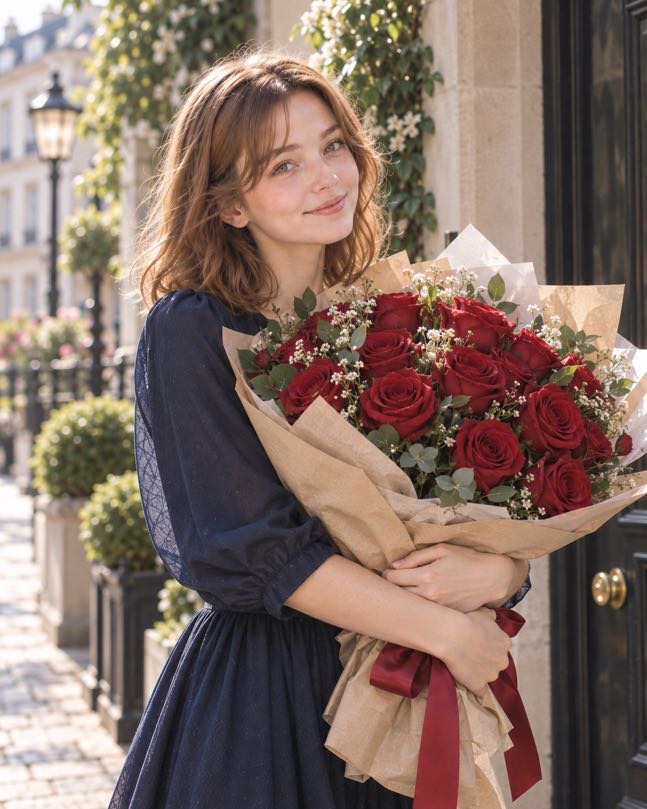
Red roses are the clearest and most widely recognized symbol of romantic love. They are strongly associated with love, romance, passion, desire, deep affection, and commitment. This is why red roses are so commonly chosen for Valentine’s Day, anniversaries, romantic dinners, and important relationship milestones.
But a red rose does not always need to mean a dramatic declaration of love. A single red rose can feel understated and intimate, while a large bouquet makes a much stronger statement. This is one reason the number of roses matters almost as much as the color.
Pink Rose Meaning — Gratitude, Admiration and Grace
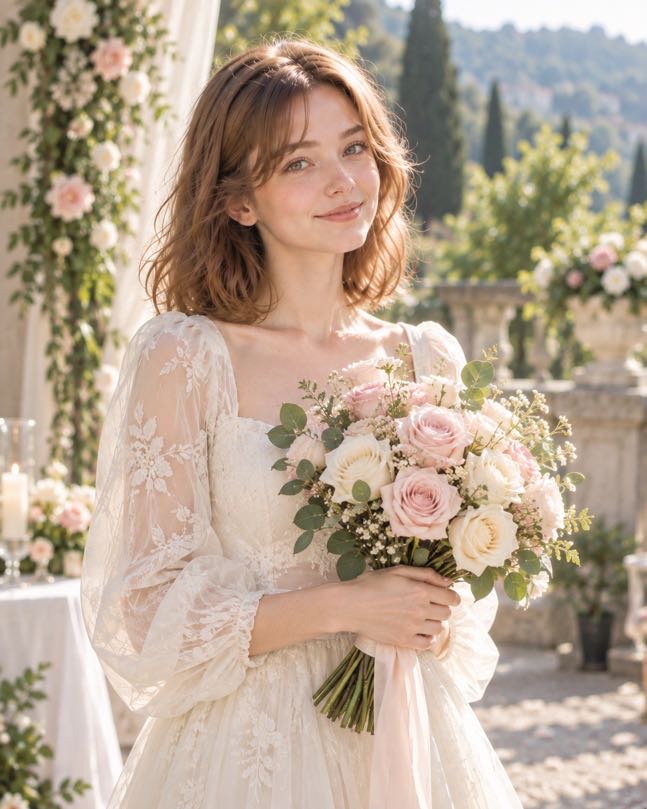
Pink roses are softer in tone than red roses and are among the most versatile roses for gifting. They commonly symbolize gratitude, admiration, appreciation, grace, gentleness, and joy.
Deep pink roses are often associated with stronger gratitude and appreciation, while lighter pink roses are frequently linked with grace, sweetness, and gentleness. That makes pink roses especially useful when you want to show warmth without making the gift feel overwhelmingly romantic.
White Rose Meaning — Purity, Respect and New Beginnings
White roses are often associated with a quieter kind of beauty. Common meanings include purity, innocence, grace, respect, new beginnings, and loyalty. They are frequently used in weddings because of their association with new beginnings and refined simplicity.
White roses are especially useful when you want the gesture to feel elegant without being strongly romantic. The same white rose can feel romantic, ceremonial, peaceful, or simply refined depending on how and when it is given.
Yellow Rose Meaning — Friendship, Joy and Warmth
In modern gifting, yellow roses are most commonly associated with friendship, joy, warmth, caring, happiness, and cheerful affection. They are a natural choice when you want to give roses without creating a strong romantic message.
Modern floristry tends to emphasize these brighter associations with friendship and joy. For contemporary gifting, that is the interpretation I would use.
Orange Rose Meaning — Enthusiasm, Energy and Attraction
Orange roses sit somewhere between the warmth of yellow and the intensity of red. They are commonly associated with enthusiasm, energy, excitement, attraction, admiration, and passion.
They can be especially good for congratulations, a new job, a graduation, a major achievement, or a relationship with a playful and energetic tone.
Lavender and Purple Rose Meaning — Enchantment, Wonder and Admiration
Lavender and purple roses have a more unusual, dreamlike feeling than classic red, pink, white, or yellow roses. They are commonly associated with enchantment, admiration, wonder, fascination, elegance, and love at first sight.
They work beautifully when you want something romantic but less predictable than red roses, and their association with refinement makes them especially appealing for a quiet-luxury aesthetic.
Green Rose Meaning — Renewal, Hope and Growth
Green roses are less common and immediately feel distinctive. Their modern symbolism often includes renewal, hope, growth, abundance, balance, and rejuvenation.
They can be an interesting choice for a new home, new job, graduation, or any personal milestone that represents a fresh chapter.
Blue Rose Meaning — Mystery, Uniqueness and the Impossible
Blue roses have a completely different atmosphere. Because true blue is not a naturally occurring rose color in the same way as red, pink or yellow, blue roses have long been associated with mystery, uniqueness, rarity, aspiration, and the seemingly impossible.
They can work beautifully for someone creative, unconventional, or determined to pursue something difficult.
Peach Rose Meaning — Sincerity, Gratitude and Appreciation
Peach roses are softer and warmer than pink roses. They commonly symbolize sincerity, gratitude, appreciation, thoughtfulness, and warmth.
They are particularly useful for thank-you gifts to a mentor, colleague, close friend, or someone who has helped you.
Number of Roses Meaning — What Different Rose Counts Can Represent
The color of a rose is only one part of its symbolism. In many traditions, the number of roses in a bouquet can also carry meaning.
This is where it becomes especially important not to treat rose symbolism as one universal rulebook. Different florists and different countries sometimes assign different wording to the same number. Still, a few meanings appear repeatedly across English-language florist guides such as FTD and Interflora.
| Number | Commonly cited meaning |
|---|---|
| 1 rose | Love at first sight or a simple, direct romantic gesture |
| 2 roses | Shared love, partnership, connection |
| 3 roses | “I love you” |
| 6 roses | Deep admiration or “I want to be yours” |
| 7 roses | Strong romantic interest or infatuation |
| 9 roses | Lasting or eternal love |
| 10 roses | Admiration or “you are perfect to me” |
| 12 roses | A classic declaration of love and devotion |
1 Rose Meaning
A single rose is often associated with love at first sight, devotion, or a simple and direct romantic gesture. It can be surprisingly elegant, especially in a new relationship where a large bouquet might feel too formal.
2 Roses Meaning
Two roses are often associated with shared love, mutual affection, partnership, and connection. The symbolism is simple: two flowers, two people.
3 Roses Meaning
Three roses are one of the most consistently repeated rose-number meanings and commonly represent “I love you.” The symbolism is often explained as one rose for each word.
6 Roses Meaning
Six roses are commonly associated with deep admiration, wanting to be together, or strong romantic interest. They feel more substantial than three without becoming overly grand.
7 Roses Meaning
Seven roses are often connected with strong attraction or infatuation, making this number more naturally suited to romantic contexts than general gifting.
9 Roses Meaning
Nine roses are commonly associated with lasting love, enduring affection, or long-term commitment. They can work especially well for an anniversary.
10 Roses Meaning
Ten roses are often associated with admiration, completeness, or the idea that someone is “perfect to me.”
12 Roses Meaning — The Classic Dozen
Twelve roses are perhaps the most familiar bouquet size in modern romantic gifting. Different florists use slightly different language, but the general idea is strong commitment, devotion, and a classic declaration of affection.
Rose Color and Number Together — The Message Becomes More Specific
Color and number can work together. That means the same number of roses can feel completely different depending on the color chosen.
- 1 red rose — simple romantic affection
- 3 red roses — a direct “I love you” message
- 6 pink roses — admiration and appreciation with a softer tone
- 9 red roses — lasting romantic commitment
- 12 red roses — the classic full romantic gesture
- 3 yellow roses — cheerful affection or friendship, depending on context
- 6 peach roses — gratitude and thoughtfulness with a fuller presentation
- 1 white rose — quiet elegance, respect, or a symbolic new beginning
The important point is that the meaning should never be read from the number alone. Color, relationship, occasion, and culture all matter.
Do Rose Meanings Change by Country?
Yes. Rose meanings can vary by country, culture, historical period, and floristry tradition. There is no single worldwide dictionary that fixes one meaning to every rose color or every number of stems.
Even professional florist guides sometimes phrase the same symbolism differently. The safest approach is simple: treat rose meaning as a tradition and a guide, not as a strict rule.
Rose Meanings in Japan
In Japan, rose meanings are often discussed in especially detailed ways. It is common to find Japanese guides that explain both the meaning of the rose color and the meaning of the number of roses.
Japanese flower-language articles may give individual interpretations to a wider range of bouquet sizes than English-language guides commonly do. That does not mean those interpretations should automatically be applied everywhere else.
If you are giving roses in another country, especially for a wedding, proposal, anniversary, formal ceremony, or other important occasion, it is sensible to check the local gifting tradition as well as the general symbolism.
How to Choose Roses for Gifting
Knowing the symbolic meaning is helpful. But when someone actually walks into a flower shop or orders a bouquet online, there are usually more practical questions: What color should I choose? How many roses should I give? Will the bouquet feel too romantic? Will it feel too formal? Will the person even have somewhere to put it?
From my own experience studying flowers in the UK and helping at a flower shop, I found that people often needed reassurance more than rules. They usually did not need a complicated lecture about flower meanings. They needed help choosing something that felt right for the person receiving it.
Start with the Person, Not the Symbolism
Before choosing the “correct” rose meaning, think about the person receiving the flowers. What colors do they usually like? Do they prefer soft, understated things or bold ones? Is your relationship romantic, friendly, professional, or familial? Will they need to carry the bouquet home? Do they have space for a large arrangement?
A bouquet with a perfectly matched traditional meaning is not necessarily the best gift if the recipient dislikes the color or feels uncomfortable carrying it around.
The Best Rose Is Often the One That Suits the Recipient
The safest choice is not always the rose with the “perfect” symbolic meaning. It is often the rose that suits the person receiving it.
If someone loves pale pink, giving them soft pink roses may feel more thoughtful than choosing red simply because red traditionally represents romantic love. If someone prefers simple interiors, a small bouquet of white or cream roses may suit them better than a very large arrangement.
When a Woman Gives Roses to a Man
Giving flowers to a man is still less common in some places, which is exactly why it can feel especially memorable. There is no reason roses should be considered a gift only for women.
Choose the Scale Carefully
For someone who does not regularly receive flowers, a very large bouquet may feel unexpectedly formal. One to three roses can feel simple and personal; six roses can feel more deliberate; a small mixed arrangement can soften the romantic message.
Color Can Change the Tone Completely
Red makes the strongest romantic statement. If that is what you intend, there is nothing wrong with choosing it. But if you want something warmer or less intense, white or cream can feel understated, orange can express energy and admiration, yellow can suggest friendship and warmth, peach can express gratitude, and muted pink can convey gentle affection.
Think About Where He Will Receive Them
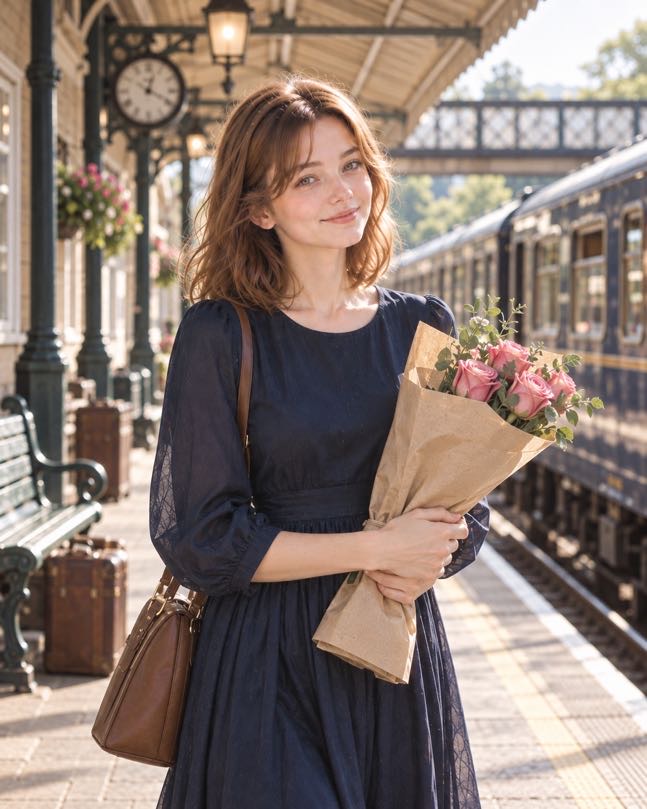
If you are sending roses to someone at work, a huge bouquet may attract more attention than they want. If the gift is given at dinner or at home, something more romantic can feel natural. If the recipient needs to carry the bouquet on a train, through an airport, or around town, size matters.
Sometimes the most thoughtful choice is the bouquet that is easiest to live with after the moment of surprise has passed.
When a Man Gives Roses to a Woman
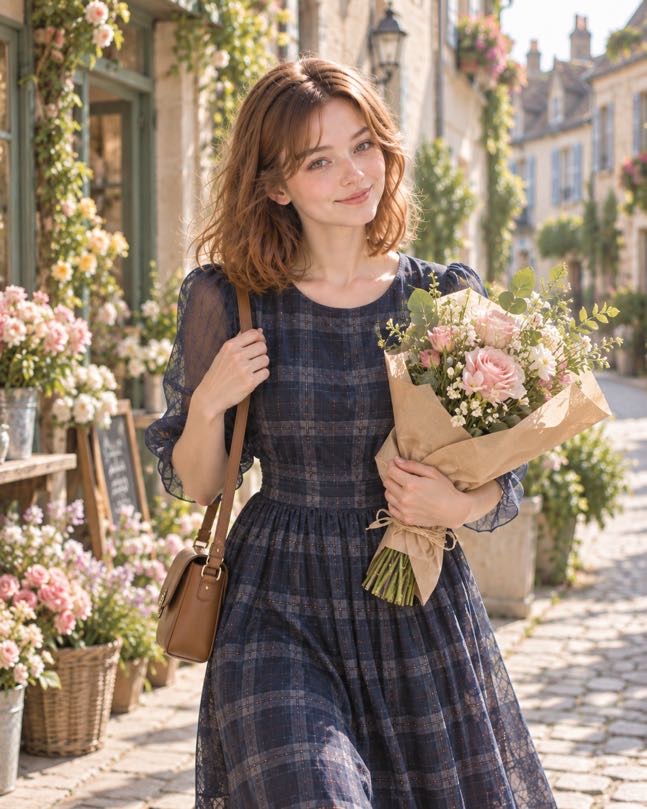
The classic image of a man giving a woman red roses is so familiar that it can sometimes become automatic. But red roses are not always the best choice. The first question should still be: What would she actually love?
Do Not Assume Red Roses Are Always the Right Answer
Some women prefer pale pink, white, peach, cream, lavender, or mixed soft colors. If you already know her taste, that is often more useful than following convention.
Match the Bouquet to the Stage of the Relationship
A very large bouquet early in a relationship can sometimes feel more intense than intended. For a new relationship, one beautiful rose, three roses, or a small seasonal bouquet may feel more natural. For an anniversary or established relationship, a larger bouquet may feel entirely appropriate.
Consider the Practical Side
Before sending a large bouquet, consider whether she has a vase, whether she will be home to receive it, whether she has to carry it somewhere, and whether the arrangement will fit naturally into her space.
A Short Personal Message Is Better Than Explaining the Symbolism Too Much
If you include a card, you do not need to explain every traditional meaning. A simple line such as “I chose these because the color reminded me of you” can feel warmer than turning the card into a dictionary entry.
Gifting Roses to a Friend, Family Member or Colleague
Roses are not only romantic flowers. Yellow, pink, peach, white, orange, and green roses can all work beautifully outside romantic relationships.
- Yellow for friendship and warmth
- Pink for gratitude and admiration
- Peach for appreciation and sincerity
- Orange for congratulations or enthusiasm
- White for understated elegance or a new beginning
- Green for growth and a fresh chapter
1. Think about the person.
2. Think about the occasion.
3. Choose the color.
4. Choose the number and size.
5. Check the traditional meaning last.
My Personal Memories of Roses
For me, roses have never been only about symbolism. They are also connected to very specific memories.
When I was living in the UK and studying flowers, I often brought practice flowers home after class. Sometimes I would buy flowers myself and place them in small bottles or simple vases. Even one rose could change the atmosphere of a room. It could make an ordinary space feel a little softer, a little more elegant, and somehow more cared for.
I also remember seeing wild roses while climbing in the Yatsugatake area in Japan with a relative. They felt completely different from the roses I knew from flower shops. They were stronger, rougher, and more natural. The wind moved through them, and their thorns were very real.
Another memory comes from school. One of my music teachers often kept roses near the piano. I still remember the way they looked in the light coming into the music room. They gave the room a sense of calm, elegance, and gentleness that I noticed every time I saw them.
That is probably why I still believe rose meanings should never be reduced to a rigid list. The traditional symbolism is interesting. It can be useful. But the feeling a flower gives you matters too.
Sometimes the most meaningful rose is simply the one that makes you think, “This would suit that person beautifully.”
Do Roses Have Any Bad Meanings?
Sometimes, yes. Certain traditions, historical periods, or cultural interpretations attach less positive meanings to particular rose colors or arrangements.
But that does not mean roses are generally “bad” flowers to give. In modern gifting, the overwhelming majority of commonly chosen rose meanings are associated with positive ideas such as love, affection, friendship, gratitude, admiration, joy, respect, hope, new beginnings, and sincerity.
The important thing to remember is that flower symbolism changes over time. A meaning that appeared in an older tradition may not be the meaning most people understand today, and interpretations can also vary by country.
For everyday gifting, there is no reason to be overly anxious. If the bouquet is chosen thoughtfully, suits the recipient, and carries a warm intention, that usually matters far more than an obscure historical interpretation.
Frequently Asked Questions About Rose Meaning & Symbolism
What do roses symbolize?
Roses most commonly symbolize love, affection, admiration, gratitude, friendship, beauty, and emotional connection. Their meaning can also depend on color, number of stems, culture, and occasion.
What do different rose colors mean?
Common modern meanings include red for love and romance; pink for gratitude and admiration; white for purity, respect, and new beginnings; yellow for friendship and joy; orange for enthusiasm and energy; lavender or purple for enchantment and admiration; green for renewal and growth; blue for mystery and uniqueness; and peach for sincerity and gratitude.
What does a red rose mean?
A red rose most commonly represents romantic love, passion, and desire. A single red rose can feel intimate and understated, while a larger bouquet makes a stronger romantic statement.
What do pink roses mean?
Pink roses are commonly associated with gratitude, admiration, appreciation, grace, gentleness, and joy. They are among the easiest roses to give in both romantic and non-romantic settings.
What do yellow roses mean?
In modern gifting, yellow roses are most commonly associated with friendship, warmth, joy, and cheerful affection.
What do white roses mean?
White roses are often associated with purity, grace, respect, loyalty, and new beginnings. They are frequently used for weddings and other important life events.
What does the number of roses mean?
The number of roses can add another layer of symbolism. Commonly repeated examples include 1 rose for a simple romantic gesture, 2 for shared love, 3 for “I love you,” 6 for deep admiration, 9 for lasting love, and 12 for a classic declaration of devotion. Exact wording varies between cultures and florists.
What do 3 roses mean?
Three roses are commonly used to represent “I love you,” often explained as one rose for each word.
What do 12 roses mean?
Twelve roses are often associated with complete devotion, strong romantic affection, or a classic “be mine” message. A dozen red roses has become one of the most recognizable romantic bouquets.
Do rose meanings change by country?
Yes. Rose symbolism can differ according to country, culture, historical tradition, and florist practice. This is especially true for the meaning of specific numbers of roses.
Can a woman give roses to a man?
Yes. Roses can be given to anyone. A smaller bouquet, a simple arrangement, or colors such as white, orange, yellow, peach, or muted pink can work especially well when you want the gesture to feel thoughtful without being overly formal.
Can a man give roses to a woman without choosing red?
Absolutely. Pink, peach, white, lavender, yellow, and orange roses can all be beautiful choices depending on the relationship, occasion, and personal taste of the recipient.
What is the safest rose color for gifting?
There is no single universally safest color. If you are unsure, pink, peach, white, or yellow can often feel versatile and thoughtful. The best choice usually depends on the recipient and the type of relationship you have with them.
Should I choose roses by meaning or by personal taste?
Personal taste should come first. Traditional symbolism can help refine your choice, but it should not override what the recipient actually likes.
A Simple Final Guide to Choosing Roses
For romance: choose red, pink, lavender, or peach depending on how intense or soft you want the gesture to feel.
For friendship: choose yellow, peach, or soft pink.
For gratitude: choose pink or peach.
For congratulations: choose orange, yellow, green, or a bright mixed bouquet.
For a new beginning: choose white or green.
For someone who loves unusual flowers: choose lavender, blue, green, or another distinctive shade.
For the number of roses: choose the size that suits the relationship and occasion first, then check the traditional meaning if you want an extra layer of symbolism.
And above all: choose the roses that feel right for the person receiving them.
Final Thoughts
Roses have lasted as symbols for so long because they can carry many different kinds of meaning. They can say love. They can say thank you. They can say I admire you. They can say I am thinking of you. They can celebrate a new beginning, a friendship, an achievement, or simply a beautiful ordinary day.
For me, the quiet beauty of roses has always mattered as much as their traditional symbolism.
The meaning helps. But the feeling matters too.
And when a rose is chosen with care, it does not need to be complicated. Sometimes one flower, in the right color, given to the right person, is enough.
References & Further Reading
For botanical information and contemporary floristry conventions, these are useful starting points:
The information in this article is provided for general educational and cultural-interest purposes only.
Rose meanings, flower symbolism, and the traditional meanings assigned to specific colors or numbers of roses are not universally standardized. Interpretations can vary by country, culture, historical period, religious tradition, florist, source, and personal custom.
The meanings described in this article reflect commonly cited modern interpretations found in English-language floristry and gifting references, together with contextual discussion from Japanese flower-language traditions where noted. They should not be treated as fixed, official, legally recognized, or universally accepted meanings.
Before giving roses for an important occasion — including weddings, proposals, memorials, formal ceremonies, significant anniversaries, workplace events, or cross-cultural situations — consider the recipient’s preferences, local customs, and the context in which the flowers will be received.
This article is not intended to provide professional floral-design, event-planning, cultural, legal, religious, medical, psychological, or relationship advice. Any references to emotions, relationships, cultural symbolism, or traditional interpretations are descriptive and should not be understood as guarantees of how a recipient will interpret a gift.
Flower availability, colors, varieties, bouquet sizes, delivery practices, and commercial descriptions may vary by florist, country, season, and supplier.
If this article includes affiliate links or product recommendations in the future, the presence of a link does not change the editorial principle used here: the choice of flowers should be based primarily on the recipient, occasion, personal taste, and current local context.
When in doubt, asking a florist directly about current local gifting conventions is a sensible final check.
Comments