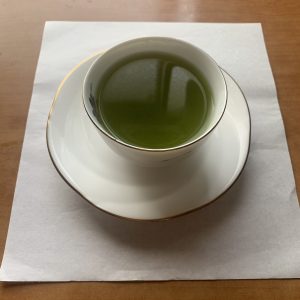
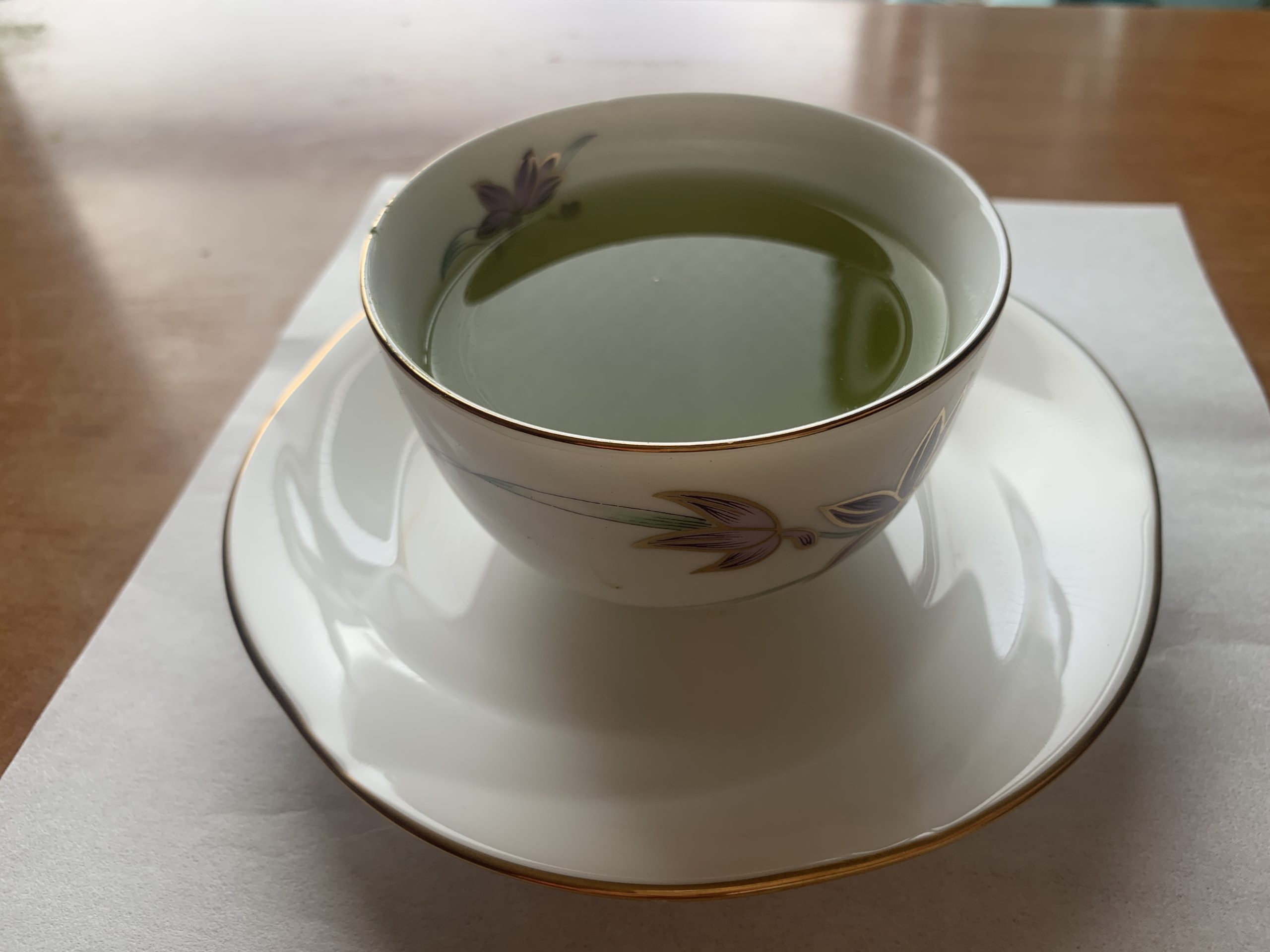
Having lived in both the UK and Japan, I attended tea ceremony and flower arrangement classes since I was in elementary school.
Today, I’ll explain how to keep matcha free of clumps, along with a few simple tricks used by matcha lovers in Japan.
1. It’s Not You (A Sign of Quality)
Finding dry, bitter clumps at the bottom of your bowl can be frustrating, but it does not mean your technique failed.
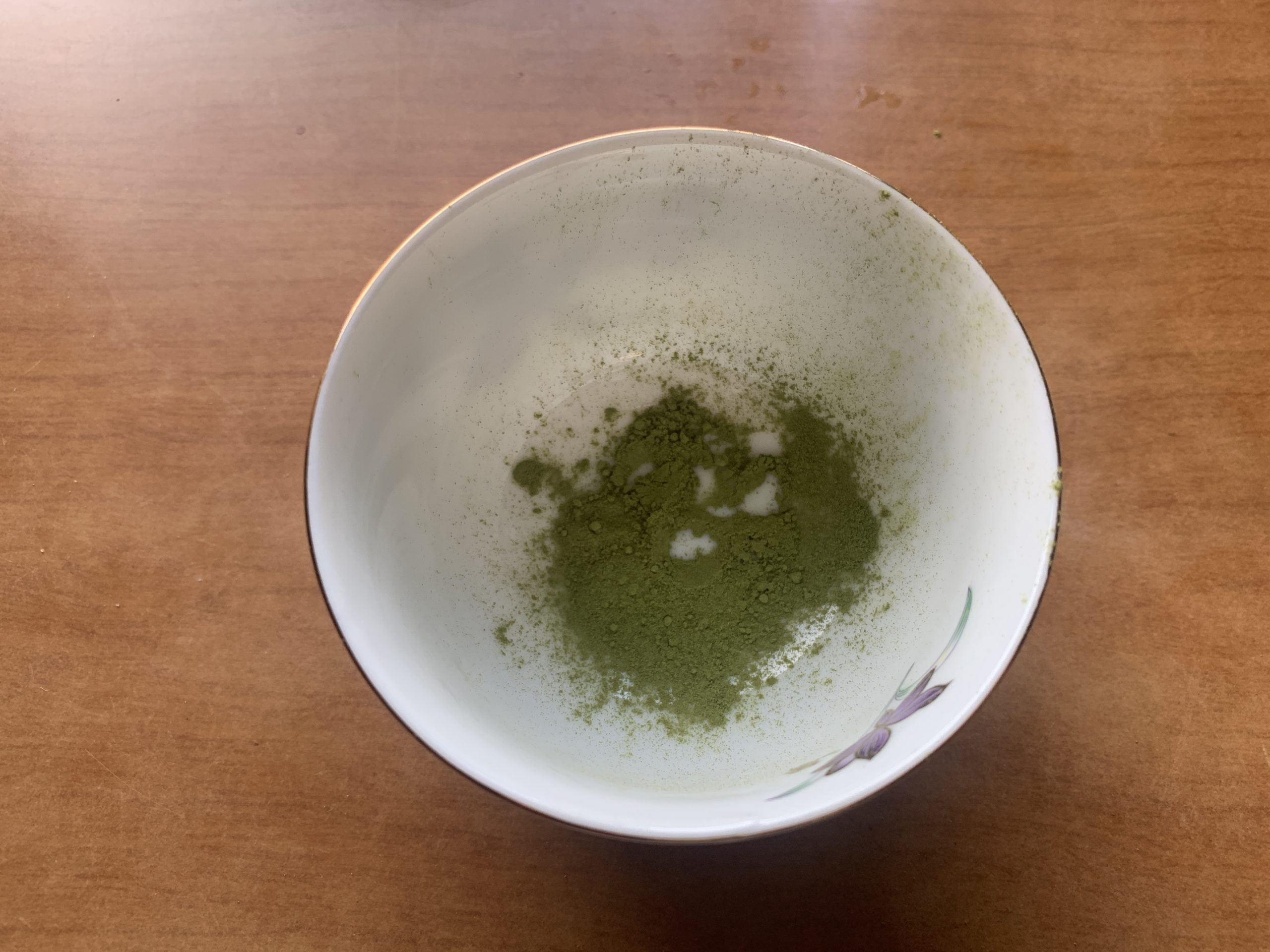
- Stone-ground purity: Authentic matcha is made from shaded leaves (tencha) with stems and veins removed, ground slowly into micro-particles.
- The self-weight factor: These microscopic particles sit in an airtight tin, where their own weight gently presses them together.
- The direct solution: Clumping simply shows that your tea is pure and finely ground. Passing it through a fine-mesh tea sifter right before preparing resolves most clumps instantly.
2. Why Banishing Clumps Changes the Taste
Removing clumps does much more than make your tea look smooth.
- Trapped bitterness: A dry clump keeps raw powder locked inside, creating an unpleasant grit.
- Releasing natural sweetness: When each particle disperses evenly in water, the tea’s amino acids (L-theanine) are fully released.
- The result: Harsh astringency softens into a smooth, velvety texture with a subtle, natural sweetness on your palate.
3. The Science of the “Clay Pocket”
Why does vigorous whisking fail once hot water is poured over dry matcha?
A research study by students at Kijo Elementary School in Japan (awarded a Special Prize at the 54th Natural Science Observation Contest) examined this exact question.
When hot water hits dense pockets of matcha, the surface tension of water quickly moistens only the outer layer. This creates a tight, clay-like seal around the dry powder inside, forming a stubborn capsule. Once sealed, water cannot easily reach the dry center no matter how fast you stir.
Primary Source: Shizecon Archive — Research on the Clumping Mechanism of Matcha (Awarded the Jin Akiyama Special Prize, 54th Contest):
https://www.shizecon.net/award/detail.html?id=293
4. The 10-Second Ritual: Sifting and the Edgewise Pour
Two simple habits used in Japan prevent this capsule from forming:
- Sift just in time: Matcha settles quickly under its own weight. Sifting immediately before preparing lets air wrap around each grain so it stays light.
- The edgewise pour (Enshū style): Rather than pouring hot water straight down onto the dry pile, gently pour it along the inner wall of your bowl. The water slips underneath, lifting the powder from below without trapping dry pockets.
5. No Bamboo Whisk? The Spoon & Paste Method
You can make a completely clump-free cup even without a bamboo whisk:
- Sift: Place 1.5 to 2 grams of matcha into a bowl with a curved bottom.
- Add a splash: Add just one teaspoon (about 15 ml) of warm or cool water.
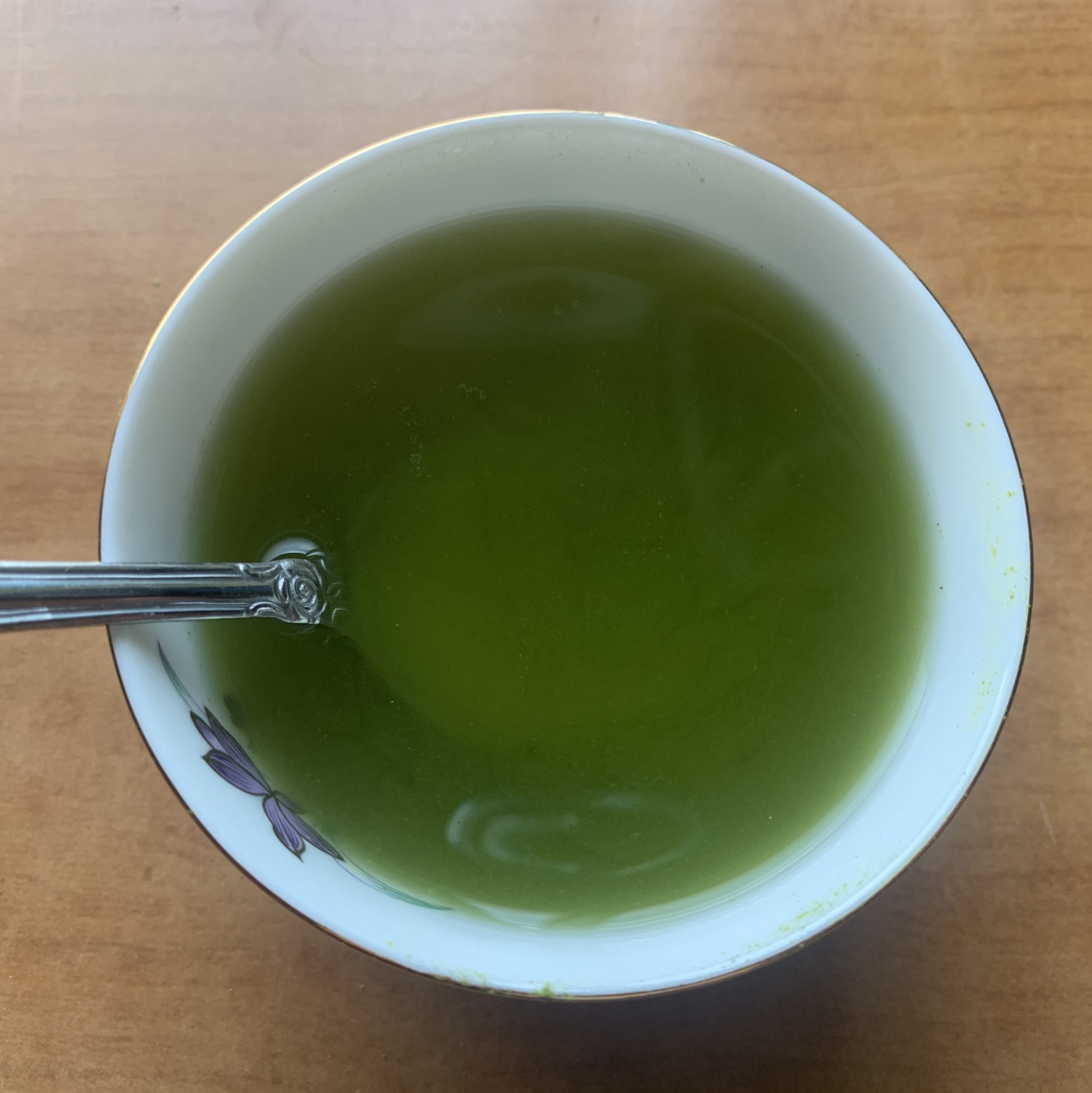
- Press and smooth: Use the back of your spoon to gently rub the powder against the curved wall for a few seconds. The friction smooths out any pockets into a rich, glossy paste.
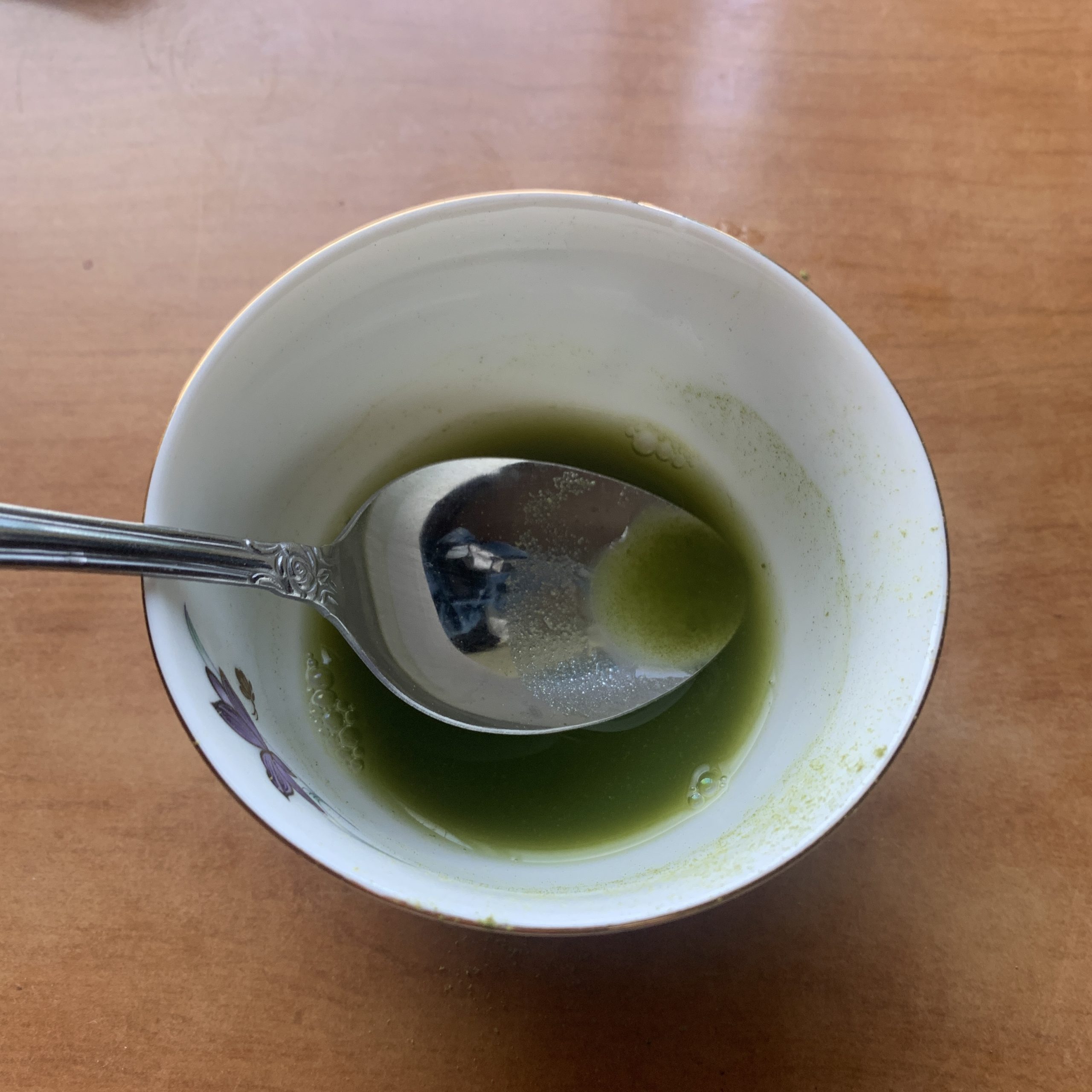
- Finish: Pour in the rest of your hot water (around 75–80°C) or warm milk, stirring gently until completely dissolved.
6. The Sweet Trick for Iced Lattes
Milk proteins and fats make blending a little trickier when preparing iced lattes.
- Mix sugar first: If you enjoy a sweetened latte, blend your dry sugar or sweetener directly into the dry matcha powder before adding any liquid.
- The spacer effect: The larger sugar crystals act as tiny spacers between the fine tea grains. When liquid is added, the sugar dissolves immediately, taking the matcha with it into an even blend.
7. Little Habits Used by Japanese Tea Lovers
A few subtle details often practiced in Japan:
Pre-warm and Thoroughly Dry the Bowl
Pouring hot water into the bowl first warms the ceramic, but remember to wipe it completely dry before adding matcha. Any leftover droplet creates a clump the moment powder touches it.
Softening the Whisk
Dip the bamboo whisk tips into warm water for a few seconds before whisking. The bamboo softens, preventing prongs from breaking and helping it aerate the tea smoothly.
Conclusion
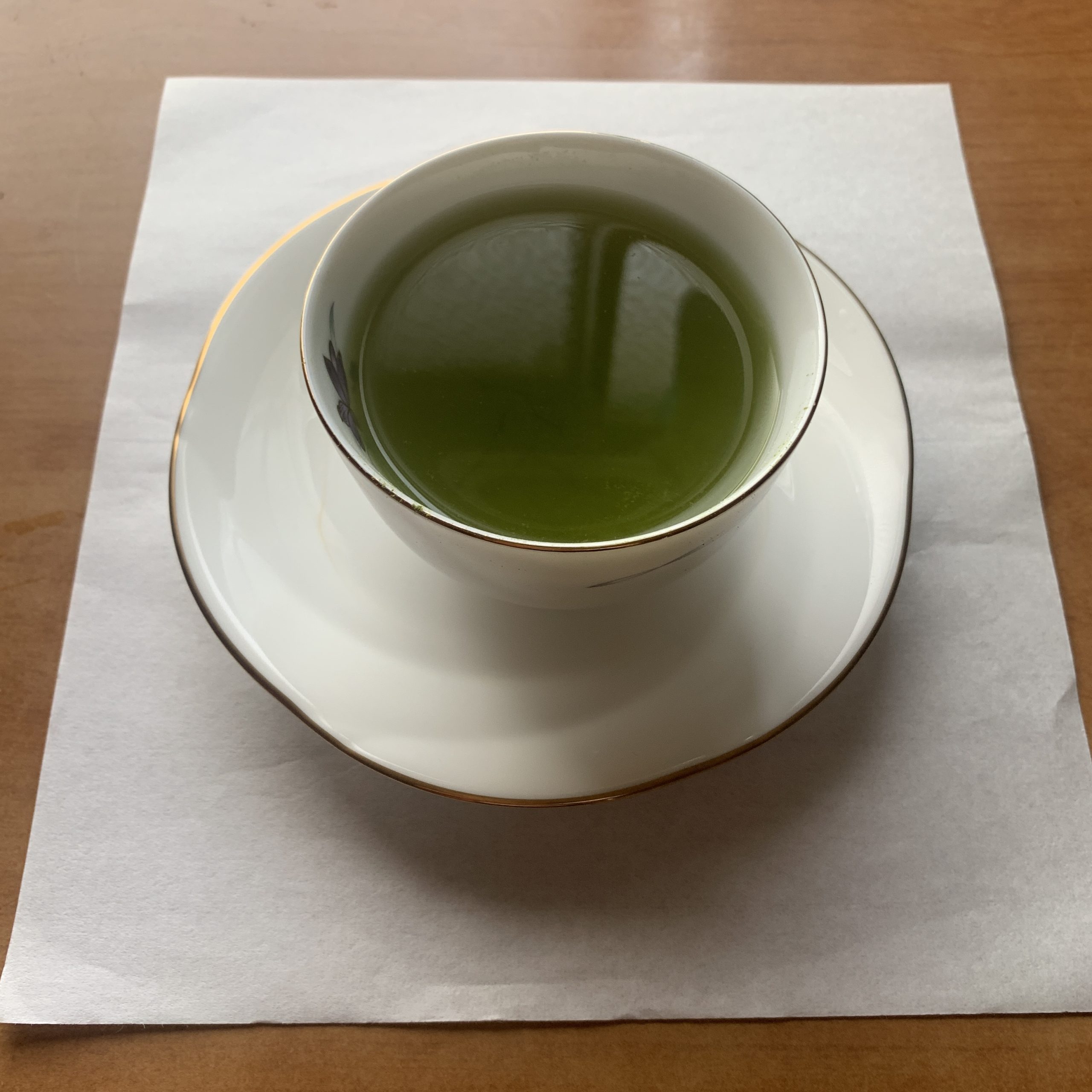
Preventing clumps is truly not complicated. All it takes is a small trick.
It only adds a quick, simple step to your usual routine, taking almost no extra time. Once you get used to it, you will do it naturally in just a few seconds without even thinking. It really is just a tiny adjustment.
The true purpose of drinking matcha has always been to slow down, pause, and enjoy a quiet, mindful moment. Since keeping it smooth is so simple, keep these small steps in mind, and spend the rest of your time enjoying your tea.
I hope you have a wonderful and peaceful day with your matcha today.
Authoritative References & Cultural Archives
- Natural Science Observation Contest (Shizecon): Kijo Elementary School – Award-winning study on matcha clumping mechanisms
- Ministry of Agriculture, Forestry and Fisheries of Japan (MAFF): Official Guidelines and Standards on Authentic Japanese Green Tea & Tencha
- World Green Tea Association (O-CHA NET): Global Cultural Archives on Traditional Japanese Tea Ceremony and Processing
Disclaimer: The information provided in this article is for educational, cultural, and informational purposes only. While traditional techniques and scientific references are carefully compiled, individual results may vary depending on the type of tea, water temperature, and equipment used. This content does not constitute professional culinary or nutritional advice.


Comments