*Conceptual image generated by AI. Actual facilities and landscape may vary.
- A Personal Note from Lina: The Quiet Beauty of Hakone
- Chapter 1: Stillness as an Answer: Fuji-Hakone-Izu National Park & Geological Force
- Chapter 2: The Art of the Ryokan: Iconic Japanese Sanctuaries
- Chapter 3: Diverse Ways to Stay: Woodland Lodges, Private Villas & Classic Heritage
- Chapter 4: The Genuine Essence of Staying at a Ryokan & Day-Trip Onsen
- Chapter 5: Mountain Climate, Seasonal Wardrobe & Onsen Packing Essentials
- Chapter 6: Honest Tables, Hearthside Tea & Roasted Beans
- Chapter 7: Nature, Heritage, Zen & Forest Art
- Chapter 8: The Unhurried Day Trip: Navigating the Classic Hakone Loop
- Chapter 9: Hakone from Tokyo: Access, Strategic Routes & Mountain Drives
A Personal Note from Lina: The Quiet Beauty of Hakone
Throughout my travels journeying across the world to explore and research destinations defined by quiet luxury, this area of Hakone in Japan has always been a truly special place for me.
Growing up near Tokyo, it was a familiar place that I could easily reach with just a short trip, so my family and I went to Hakone often together.
Later, when I turned 18 and reached the age where I could drive a car in Japan, I used to drive up to Hakone every single weekend.
There are so many spots in this region where you can spend your time quietly and peacefully.
At the same time, when it comes to the sightseeing areas—such as Owakudani, where you can feel the grand scale and raw power of nature—they have left an extraordinarily strong impression on me.
So today, from the perspective of having gathered so many real experiences right here on the ground, I would like to guide you through Hakone, focusing specifically on a quiet and luxurious style of travel.
*Conceptual image generated by AI. Actual facilities and landscape may vary.
Chapter 1: Stillness as an Answer: Fuji-Hakone-Izu National Park & Geological Force
Hakone’s quiet atmosphere is held inside an ancient volcanic caldera within Fuji-Hakone-Izu National Park. The encircling outer ridges buffer the interior valleys from the hum of modern metropolitan life, feeding thermal springs through deep geological layers into the forest groves below.
Camp Nights and the Living Forest: Lina’s Childhood Memories
When I was in elementary school, I went camping in Hakone many times, both through school camps and trips organized with families from our neighborhood. Being able to experience this grand nature, and at times its rougher, wild side, is truly the reason I came to love nature so deeply throughout my life.
As a child, I once heard tales that giant salamanders could be found somewhere in these mountain streams (*not with any intention of catching one—I simply longed to see one with my own eyes). Hearing that, I spent hours walking and climbing upstream along the rocky riverbeds searching the cold waters. I later learned that the natural range of the Japanese giant salamander lies primarily farther west in Japan, but at the time, that innocent curiosity made the mountain rivers feel like an endless world of discovery. Well, that was just me as an elementary schooler.
The areas where we went camping were tucked deep into the mountains. Once, during a school camp, adults representing each household drove us up in their cars. We left in the evening after school was over, and as we drove into the night, we spent a long time traveling along extremely dark mountain roads. Sitting there in the car, I felt an unforgettable feeling—as if I were heading straight into something unimaginably vast, deep into the heart of mother nature.
The Raw Force of Owakudani
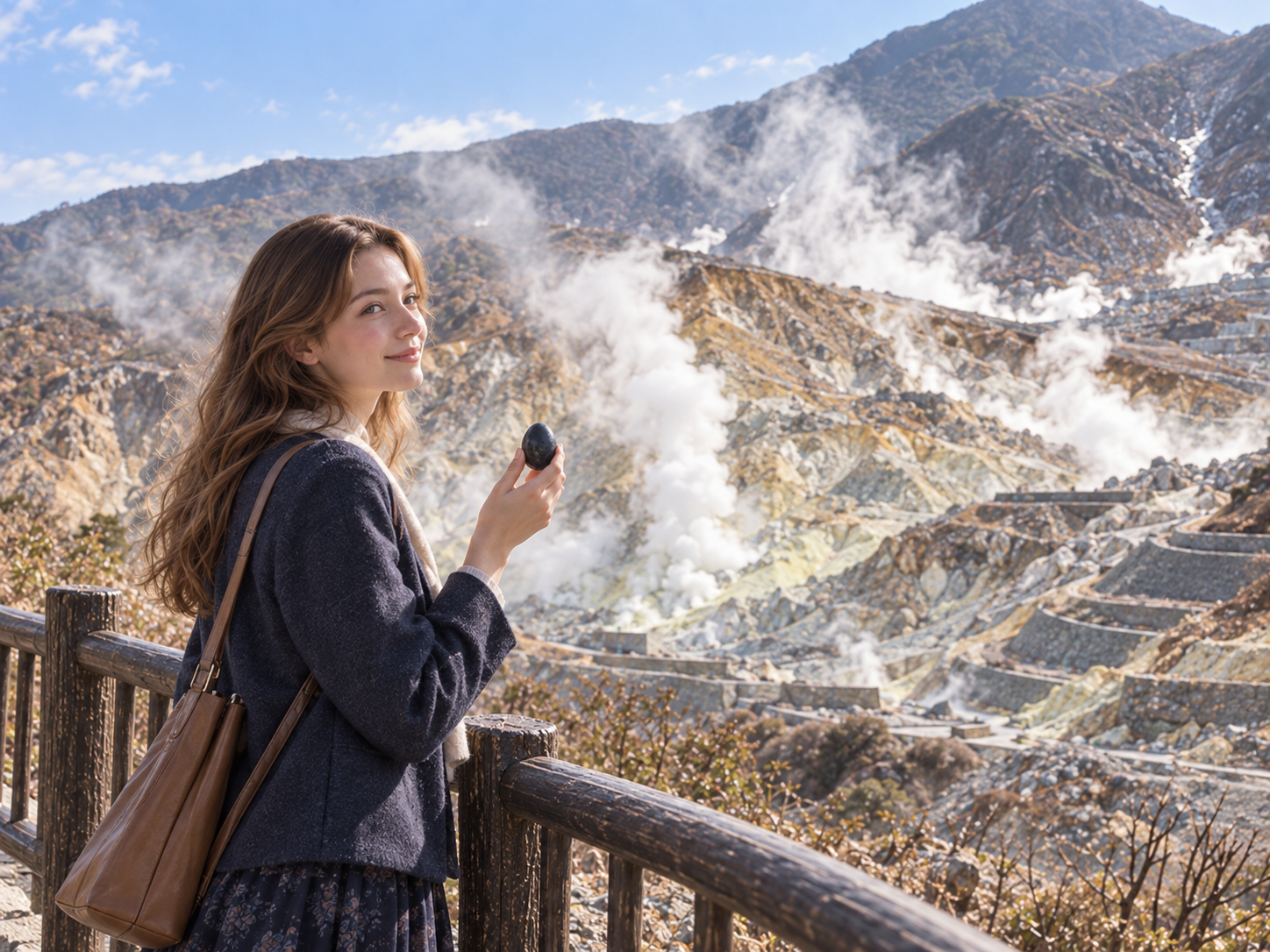
Higher up in the mountains, you reach Owakudani, the volcanic valley at the heart of Hakone. Here, plumes of volcanic steam and sulfurous gases billow steadily from bare, ochre-tinted rocks, displaying the geothermal energy moving beneath the surface. It forms a striking contrast with the quiet cedar groves below. Standing before this raw natural display, you realize that the calm of Hakone is not a fragile silence, but a grounded stillness resting on living geological vitality.
*Conceptual image generated by AI. Actual facilities and landscape may vary.
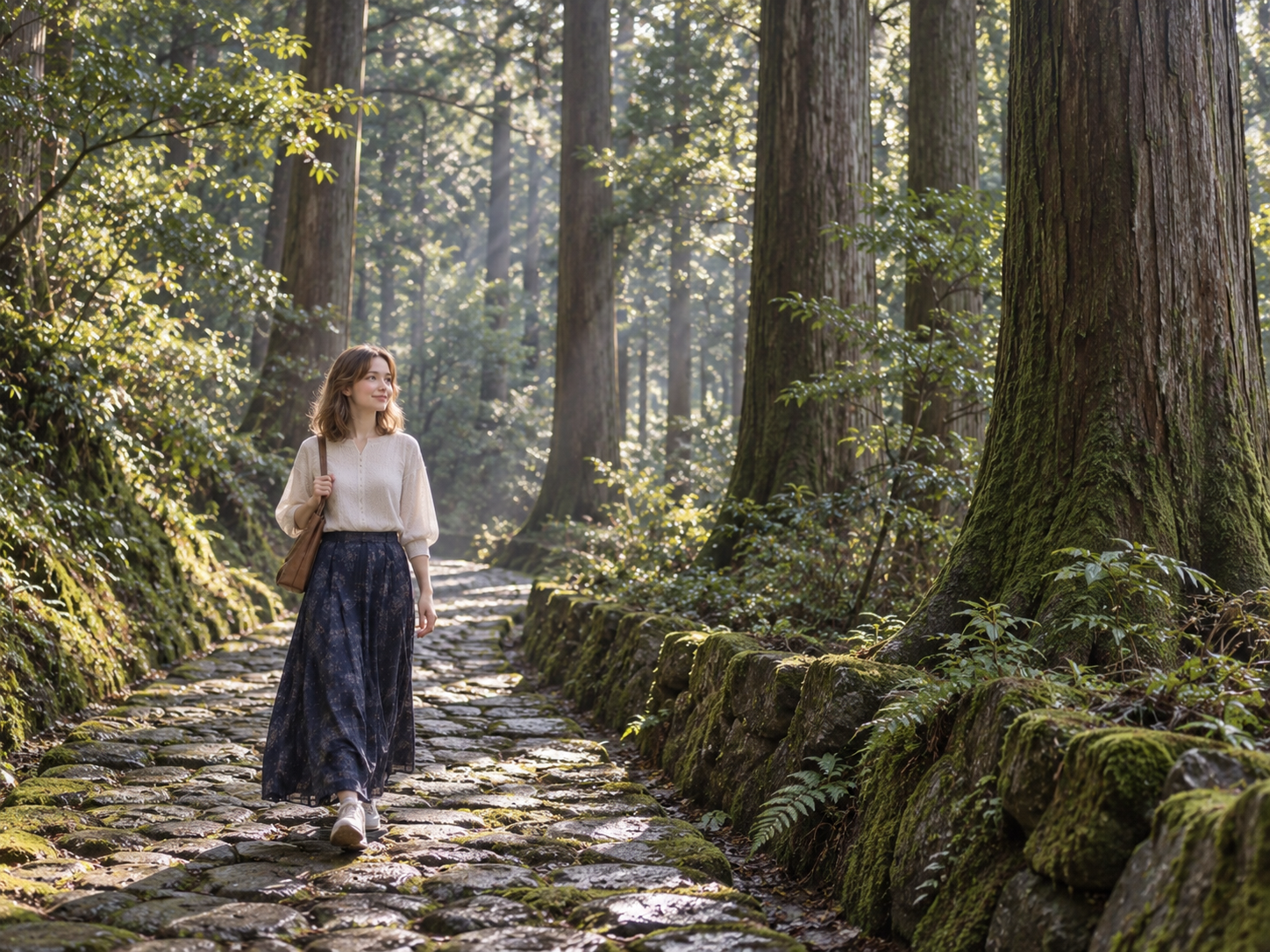
*Conceptual image generated by AI. Actual facilities and landscape may vary.
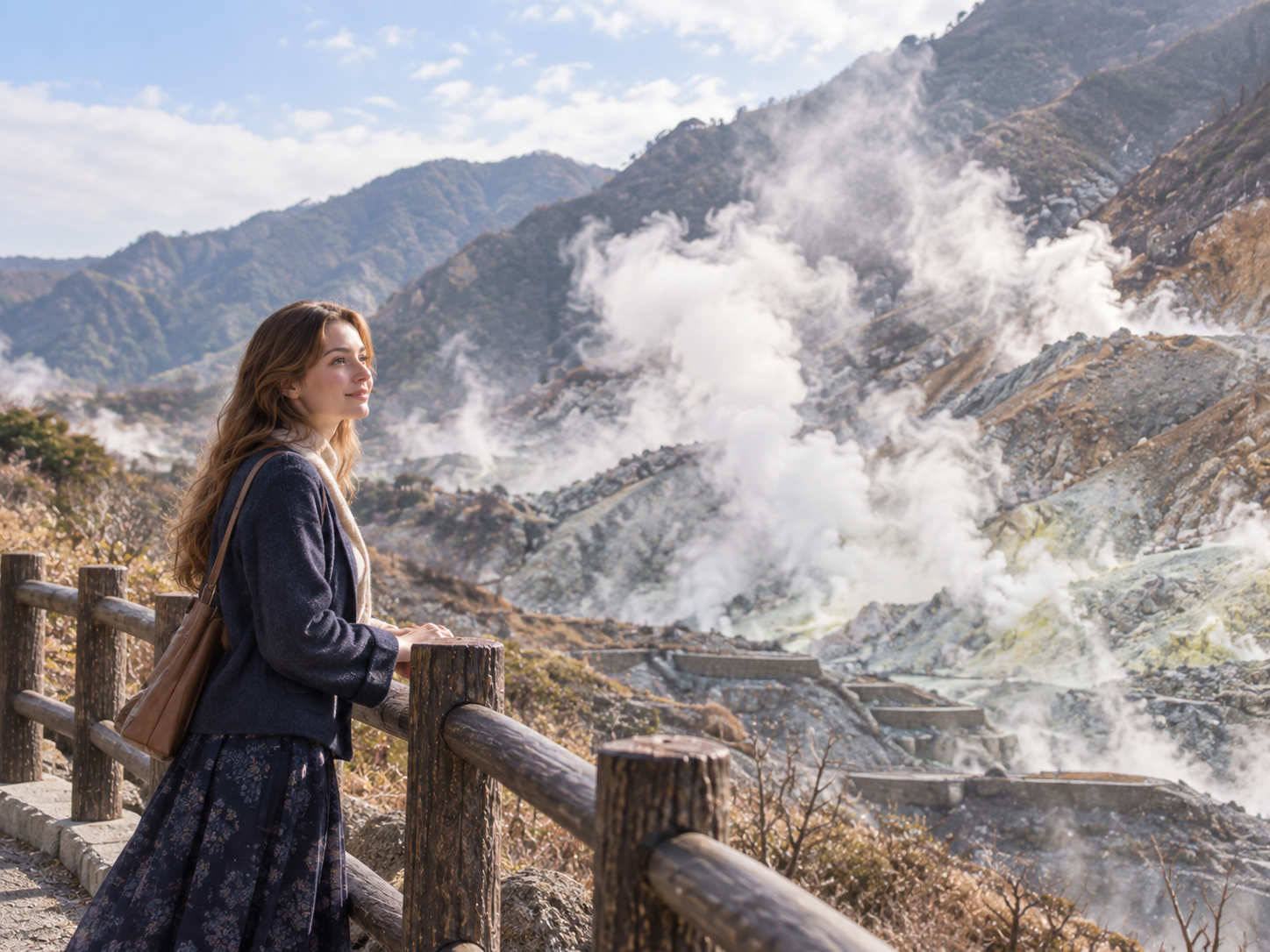
*Conceptual image generated by AI. Actual facilities and landscape may vary.
Chapter 2: The Art of the Ryokan: Iconic Japanese Sanctuaries
Hakone is internationally renowned for its architectural inns. Here, a ryokan stay is an experience designed to bring your senses into rhythm with the seasons. Rates vary substantially by season, room type, and whether multi-course dinners are included; travelers should always consult the official booking portals below for real-time arrangements and availability (updated as of September 2026).
| Sanctuary Name | Setting & Style | Key Distinctive Feature | Ideal Traveler |
|---|---|---|---|
| Hakone Gora Byakudan | Gora / Forest Ridge | Sandalwood aroma, 16 suites with private golden-tinted spring baths | Connoisseurs of sensory stillness |
| Hakone Suishoen | Kowakudani / Forest Estate | Registered heritage villa set within a 3,000-tsubo wooded estate | Travelers seeking heritage seclusion |
| Hakone Ginyu | Miyanoshita / Valley Rim | Terraced cliffside baths overlooking the misty ravine | Lovers of sweeping mountain vistas |
| Gora Karaku | Gora / Mountain Steps | One Michelin Key honor, private balcony baths, calm water terrace | Modern architecture enthusiasts |
| Hakone Kowakien Ten-yu | Kowakudani / Highland Forest | 6th-floor infinity bath framing mountain ridges, private balcony tubs | Elevated outdoor relaxation |
| Madoka no Mori | Gora / Woodland Sanctuary | Private forest balconies, two individual botanical spa suites | Restorative travelers and couples |
| Fukuzumiro | Tonosawa / Riverside | Historic 1890 sukiya woodwork, sound of rushing mountain river | Literary souls and heritage seekers |
Curated Sanctuaries in the Forest
Hakone Gora Byakudan: Set along the peaceful slopes of Gora, Byakudan welcomes guests with the gentle scent of natural sandalwood at the entrance. Its sixteen suites each feature private open-air baths supplied by a naturally golden-tinted private spring, framing wide views of the Hakone ridges through generous windows.
Hakone Suishoen: Originally a private summer villa for the noble Mitsui family, Suishoen preserves its century-old registered cultural property main building amidst a spacious 3,000-tsubo wooded estate. Guests can walk quiet garden paths, unwind in suites with private hot spring baths, and enjoy drinks in the historic salon.
Hakone Ginyu: Built along the steep ravine edge of Miyanoshita, Ginyu is celebrated for its panoramic gorge views. Soaking in its open-air baths gives the peaceful sensation of floating above the mountain mist drifting through the green canopy.
Gora Karaku: Recognized with one Michelin Key, Karaku combines clean modern lines with individual open-air mineral baths on every balcony. Its calm courtyard water terrace and refined Japanese breakfasts served in the dining room provide an unhurried, comfortable stay.
Hakone Kowakien Ten-yu: Surrounded by mountain greenery, Ten-yu features a sixth-floor infinity bath that mirrors the open sky and tree-lined ridges. Guests appreciate having their own ceramic balcony soaking tubs and morning dining highlighting regional ingredients.
Gora Hanaougi Madoka no Mori: Tucked into the forested slopes, this property is constructed with aromatic Japanese woods. Alongside private balcony tubs, its detached spa features two private treatment rooms, allowing traveling companions to reserve rejuvenating botanical sessions during their stay.
Fukuzumiro: Founded in 1890 along the Haya River in Tonosawa, this registered national cultural property represents classic Meiji-era sukiya woodwork. Long appreciated by Japanese literary figures, it provides an authentic window into old Japan, where you can read beside an open screen while listening to the river below.
Chapter 3: Diverse Ways to Stay: Woodland Lodges, Private Villas & Classic Heritage
While classic tatami inns are central to Hakone, there are also distinct ways to stay that cater to autonomous schedules, longer visits, and varied tastes.
Nordic Forest Sanctuaries: Före in Sengokuhara
Set among the birch and beech trees of the Sengokuhara plateau, Före offers a different experience from typical tatami rooms. Designed with clean Scandinavian details, its woodland suites feature wood-burning stoves, deep bathtubs, and large windows opening onto the trees. Guests can enjoy wood-fired contemporary dining with Japanese and international influences, spend time in quiet reading lounges, and join morning yoga sessions out in the crisp mountain air.
*Conceptual image generated by AI. Actual facilities and landscape may vary.
Private Villas & Western Heritage Architecture
For those who prefer independent timing, private vacation rentals and standalone forest cabins in Sengokuhara offer full kitchens, private saunas, and hot spring taps. Choosing an independent villa lets you pick up fresh local vegetables and artisanal tofu, prepare meals at your own pace, and experience the quiet feeling of living up in the mountains.
Alternatively, travelers can experience history at the landmark Fujiya Hotel in Miyanoshita. Established in 1878 during the Meiji era, this property has welcomed international dignitaries and travelers for generations, combining traditional Japanese architectural rooflines with classic Western hotel hospitality and landscaped courtyards.
Practical Booking Guidance from Real Travelers
To keep your trip smooth and unrushed, keeping a few practical logistics in mind will prevent unnecessary stress:
- Late Afternoon Arrival: Plan to arrive at your inn by late afternoon, particularly when a multi-course Kaiseki dinner is included in your plan. Mountain transport services—including ropeways and funiculars—finish between roughly 16:15 and 17:00 depending on the season, and each ryokan sets its own latest check-in and dinner service times.
- Station Shuttle Schedules: Many hillside properties offer complimentary shuttle pickups from nearby stations such as Gora or Hakone-Yumoto. These services often conclude around 17:00; confirming pickup details beforehand saves you from carrying heavy bags up steep mountain grades.
- Advance Spa Reservations: If you wish to pair hot spring bathing with an on-site massage or botanical facial, reserving two to four weeks early is recommended as therapists are limited.
Chapter 4: The Genuine Essence of Staying at a Ryokan & Day-Trip Onsen
The True Experience of a Ryokan: When the Clock Disappears and the Mind Empties
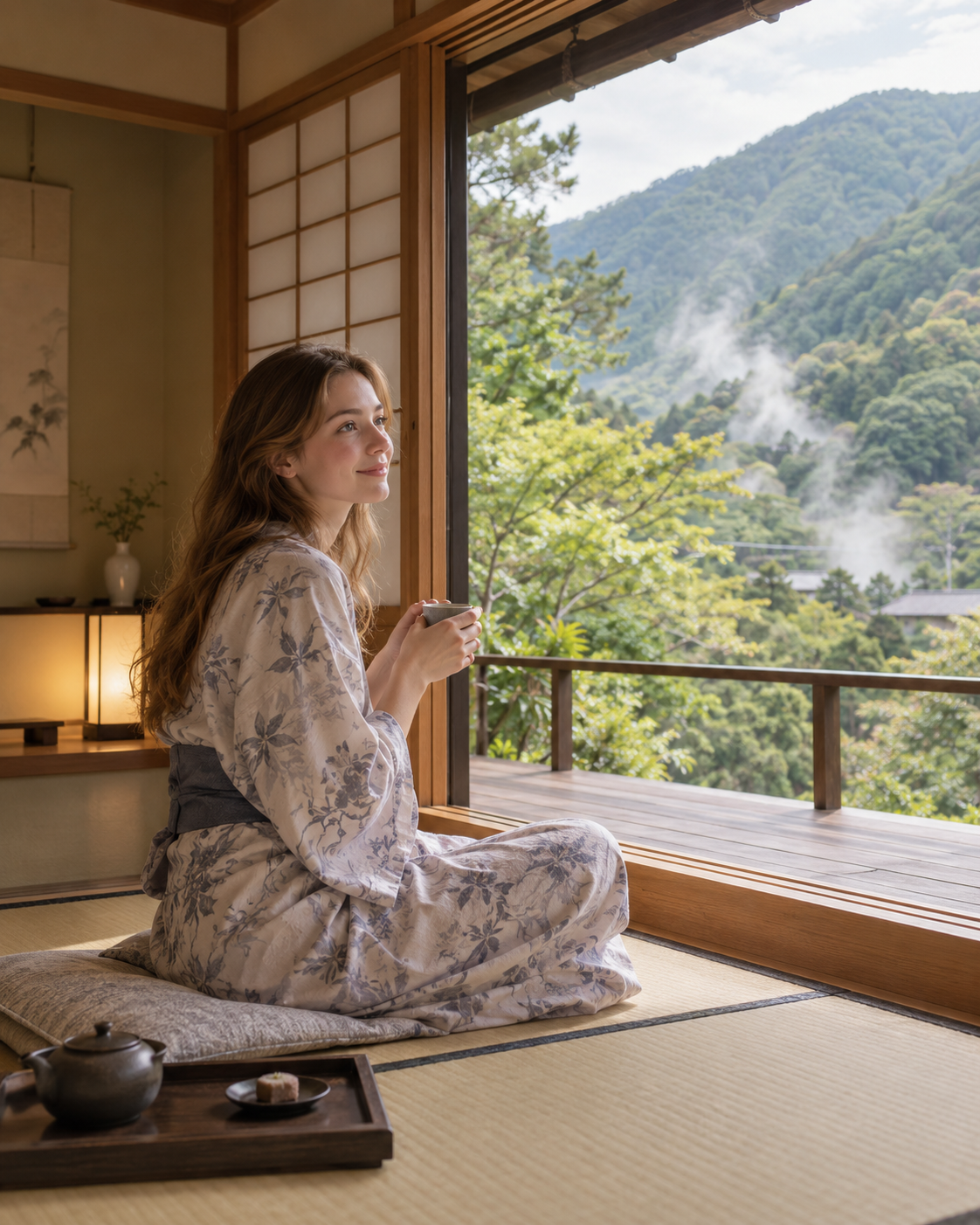
Stepping across the threshold of a traditional Japanese ryokan feels entirely unlike checking into a modern city hotel. Rather than an impersonal commercial space, it feels as though you are being quietly welcomed into someone’s well-tended home. You leave your shoes at the entrance, and the moment your socks meet the smooth tatami, the subtle, dry fragrance of woven rush straw fills the air. After sitting down with a bowl of whisked tea and a gentle confection, you slip out of your traveling clothes and put on a soft cotton yukata. From that single gesture onward, the need to look at a clock simply falls away. Watching the afternoon light drift through the paper shoji screens, you can stretch out across the straw mats and let your thoughts wander into nothingness. It becomes a dedicated sanctuary for the rare art of doing nothing.
For those who spend their ordinary days absorbed in demanding creative work or fast-paced schedules, this unrushed rhythm is a quiet revelation. Historically across Japan, celebrated authors and thinkers would intentionally retreat to mountain inns for weeks at a time to write, think, or simply clear away mental noise. Submerging into the hot spring waters morning and evening, returning to an unadorned room to write by an open window, and listening only to the rustle of trees or mountain water allows the mind to completely empty itself. In an age of endless notifications, having an uncluttered room where nothing demands your attention is the purest definition of quiet luxury.
Soft Expressions and the Quiet Magic of Connection
One of the deepest joys of staying longer in a compact hot spring retreat is how natural human connection becomes, even across language barriers. Throughout my travels across the globe, I have found that whenever you are resting in a place where you can genuinely be yourself, your heart naturally opens. You become relaxed, honest, and unhurried, which makes genuine connection happen almost effortlessly. Even if you arrive in Hakone knowing only a few words of Japanese, there is never a reason to feel anxious.
The nakai-san who gracefully lays out your seasonal evening dishes, the inn’s okami, the caretakers who scrub the cedar and stone baths at dawn, and the shopkeeper down the lane have lived with the rhythm of these mountain springs for decades. These are people whose daily lives involve tending the hot mineral waters, working quietly with their hands, and bathing under the evening mist. They possess the softest, most grounded expressions. When you walk among them in your yukata, their steady calm begins to rub off on you. Before you even realize it, the unconscious tension held in your shoulders and jaw completely dissolves, leaving behind a soft, unhurried smile.
Nostalgic Lanes, Steaming Manju, and Simple Joys
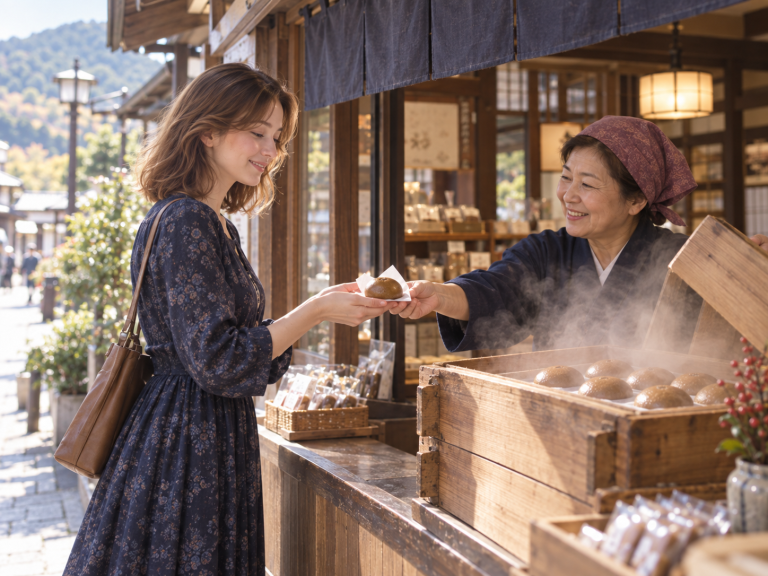
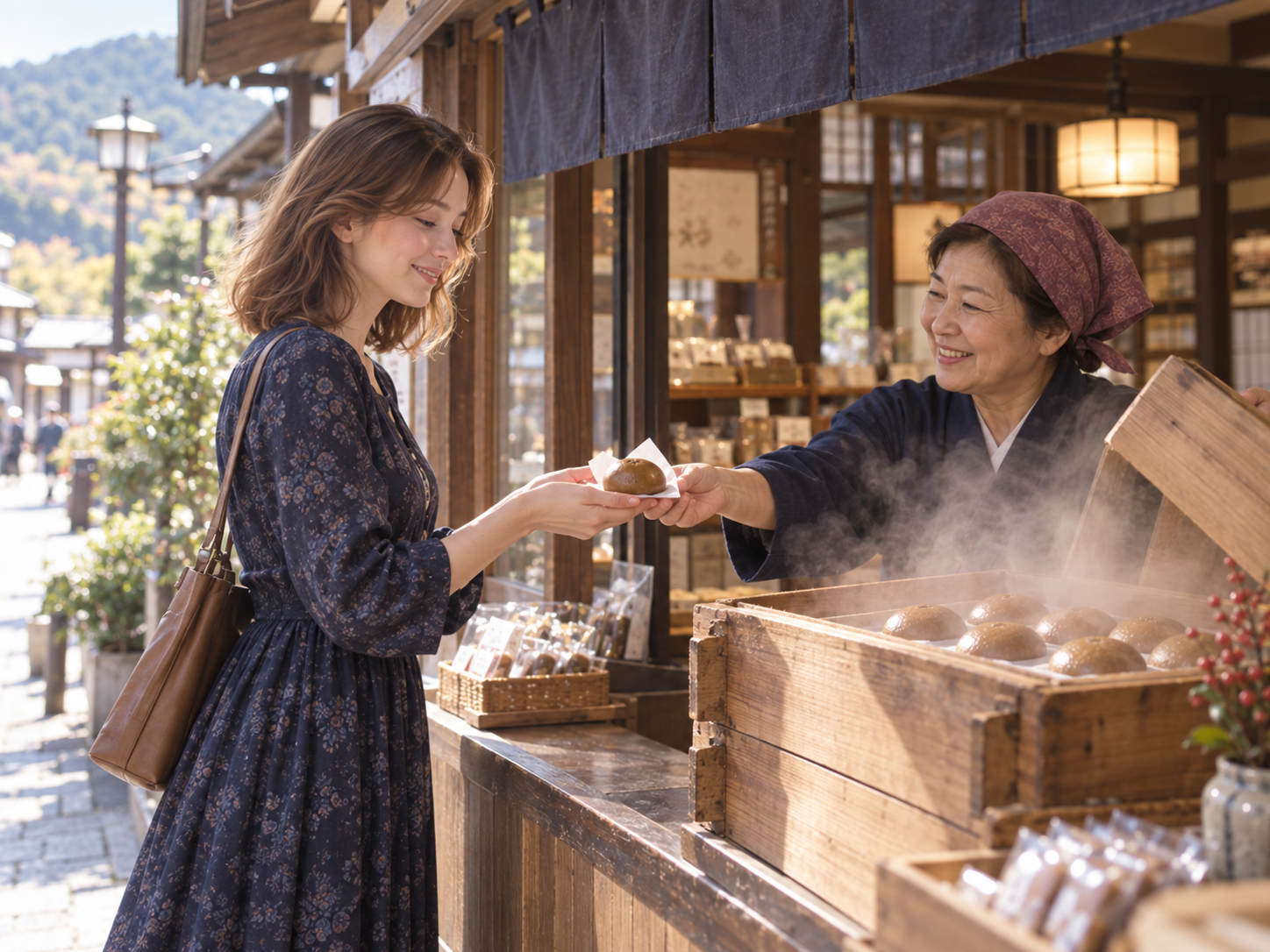
Beyond the privacy of your guest room, there is an enduring pleasure in stepping outside in wooden clogs as dusk gathers. Along the older backstreets of onsen towns, the smell of sulfur blends with wood smoke and roasting tea. You can buy freshly steamed onsen manju—dark brown buns filled with sweet red bean paste, piping hot straight from the bamboo steamers—warming your fingers in the chill mountain air as you eat.
In some older onsen quarters, you may still encounter nostalgic Showa-era games such as vintage smartball pinball tables and simple ring-toss setups made of varnished wood. Tossing painted wooden rings to win a modest ceramic frog or a small lucky cat may seem like a relic of the past, but in its modest simplicity lies an innocence that modern travel rarely offers. These unscripted, gentle moments—stepping into a quiet corner pub for an evening glass of beer, listening to the rain on cedar eaves, and strolling back to your futon under a blanket of mountain stars—are what make a traditional Japanese ryokan stay a timeless retreat for the spirit.
*Conceptual image generated by AI. Actual facilities and landscape may vary.
Day-Use Onsen: Unwinding in the Forest for a Few Hours
For travelers visiting Hakone on an unhurried day trip from Tokyo, several dedicated bathhouses offer authentic hot spring waters and serene forest settings (prices noted as of September 2026):
Tenzan Tohji-kyo (Oku-Yumoto): Built in classical timber architecture across the foot of a wooded slope, Tenzan embodies the authentic spirit of traditional Japanese toji (therapeutic healing bathing). It features outdoor rock baths set in the greenery, with pools of varying temperatures alongside a mountain cold plunge. Tenzan focuses strictly on quiet healing: individual guests with tattoos are permitted when visiting alone and observing the facility’s quiet rules (current admission should be checked on the official website prior to visiting).
Hakone Yuryo (Tonosawa): Designed like a traditional countryside folk house, this sanctuary offers communal indoor and outdoor baths facing the forest, as well as private rooms with their own open-air tubs available for rent. Visitors can also arrange on-site massages or enjoy meals cooked over a charcoal hearth (admission: approximately ¥1,700–¥2,200 depending on weekday or weekend visits; taking the free 3-minute shuttle from Hakone-Yumoto Station makes getting up the steep slope effortless).
Ryuguden (Lake Ashi): Set on the tranquil shores of Lake Ashi, this historic building features a dedicated day-use wing. On clear days, soaking in its outdoor mineral baths offers dramatic views across the lake water directly toward Mount Fuji.
Hotel Green Plaza Hakone (Ubako): Located near Ubako Station, this hotel opens its outdoor mineral baths to daytime visitors (¥1,600 as of September 2026). It remains one of the rare high-elevation baths in Sengokuhara where bathers can gaze upon Mount Fuji on clear mornings.
Chapter 5: Mountain Climate, Seasonal Wardrobe & Onsen Packing Essentials
Hakone features noticeable temperature shifts due to its mountain terrain. While Hakone-Yumoto Station in the valley sits around 100 meters above sea level, higher districts such as Gora, Sengokuhara, and Lake Ashi sit between 500 and 750 meters up. Temperatures in the highlands are typically 3°C to 5°C cooler, and mountain breezes can pick up quickly as the sun sets.
The Four Seasons in the Highlands
- Spring (March to May / 8°C–18°C): Cherry blossoms bloom progressively from the lower valleys up into the highlands. Mornings and evenings remain crisp, making light sweaters and versatile layers helpful.
- Summer (June to August / 22°C–28°C): The highland plateau offers a welcome break from Tokyo’s summer humidity. Breathable fabrics and a compact folding umbrella for occasional mountain showers ensure easy travel.
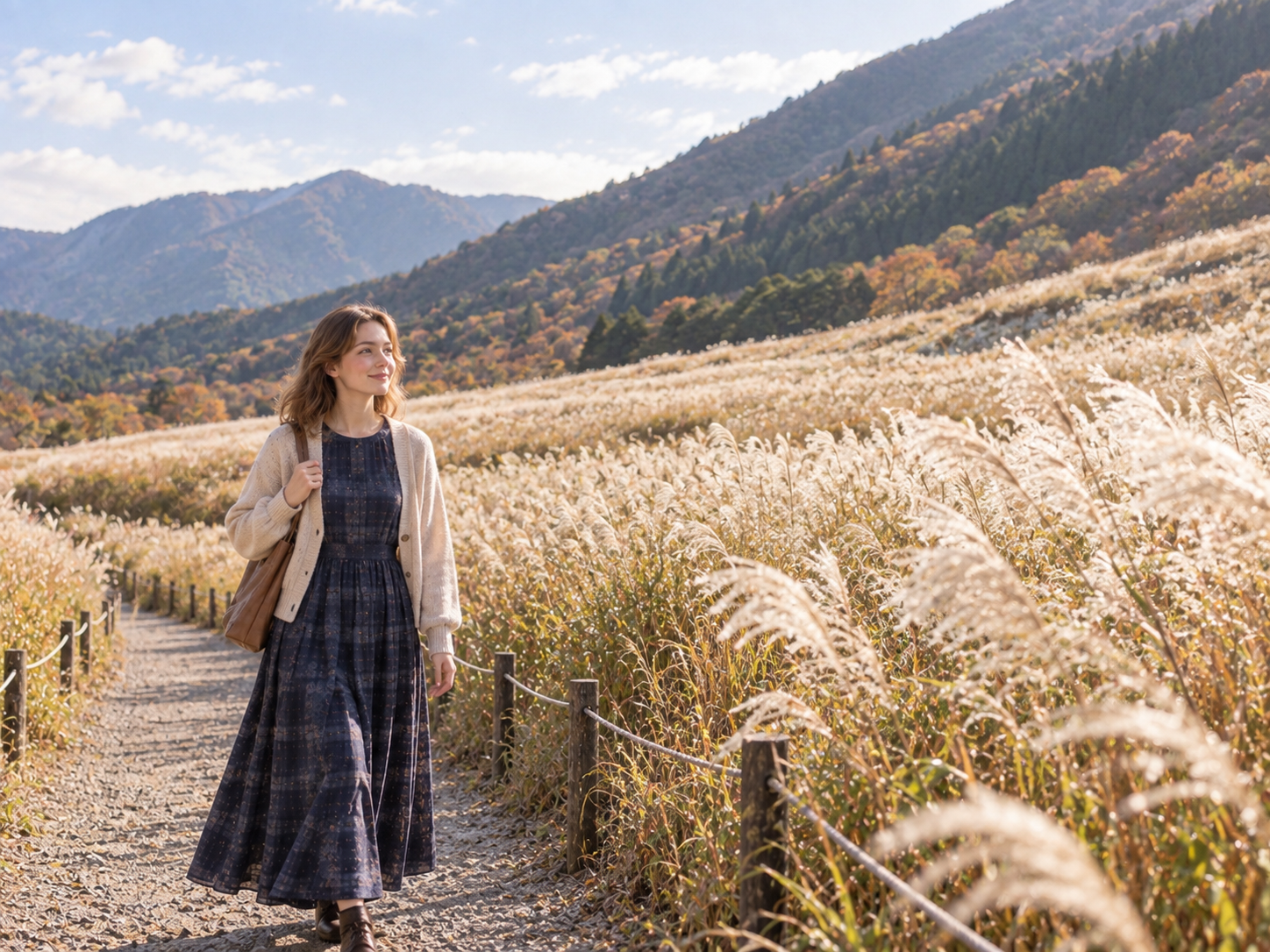
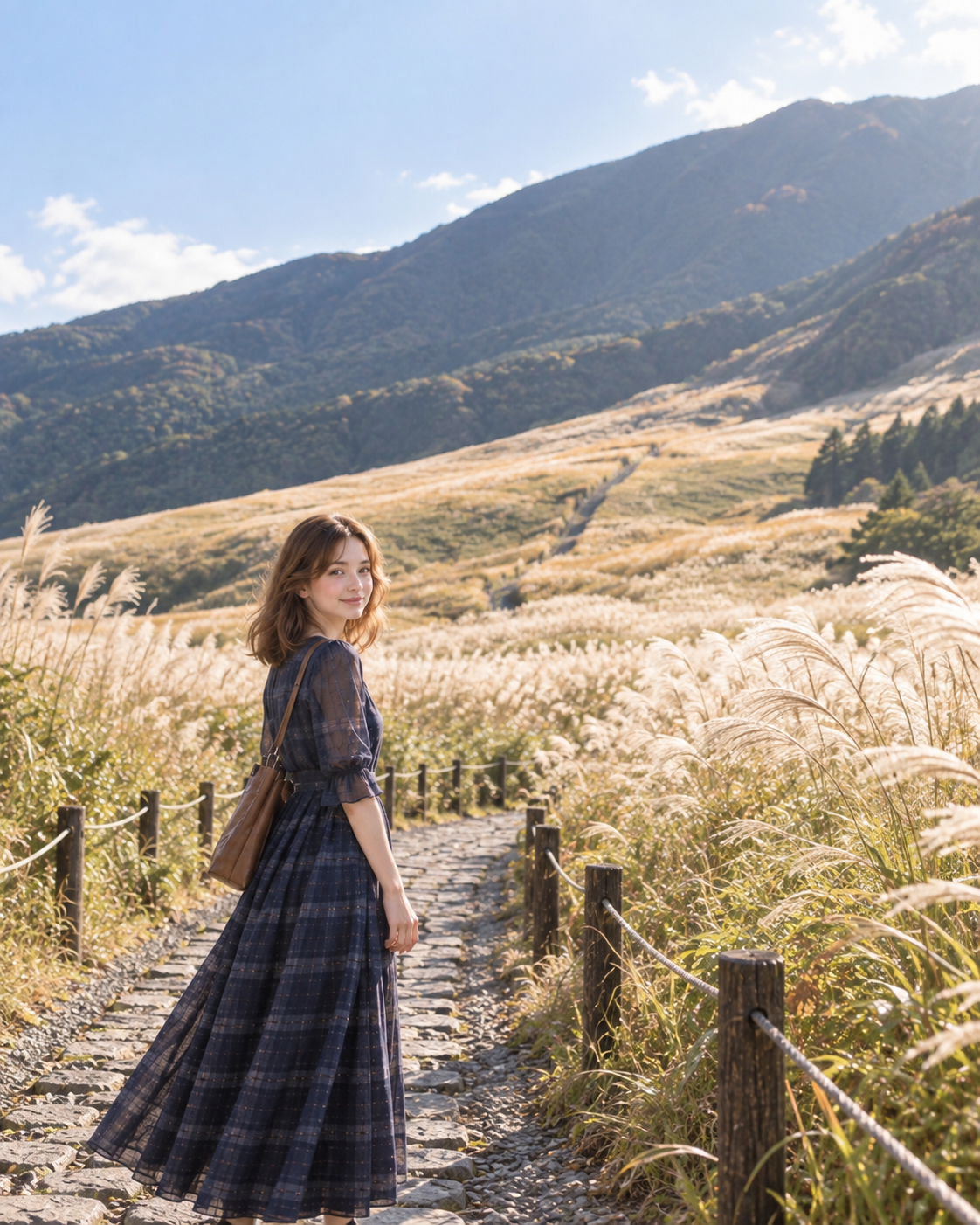
- Autumn (September to November / 10°C–20°C): The vast grasslands across Sengokuhara turn golden with Japanese pampas grass (Miscanthus sinensis), while the surrounding hills blaze with crimson maples. A windbreaker and cozy evening layers are recommended for twilight strolls.
- Winter (December to February / 0°C–8°C): Crisp, dry winter days often offer some of the clearest views of Mount Fuji framed by snow against deep blue skies. Warm coats and gloves are essential. Driving Safety Note: Higher roads and passes can develop black ice from late December through February; travelers without winter driving experience should rely on trains and local shuttles rather than rental cars.
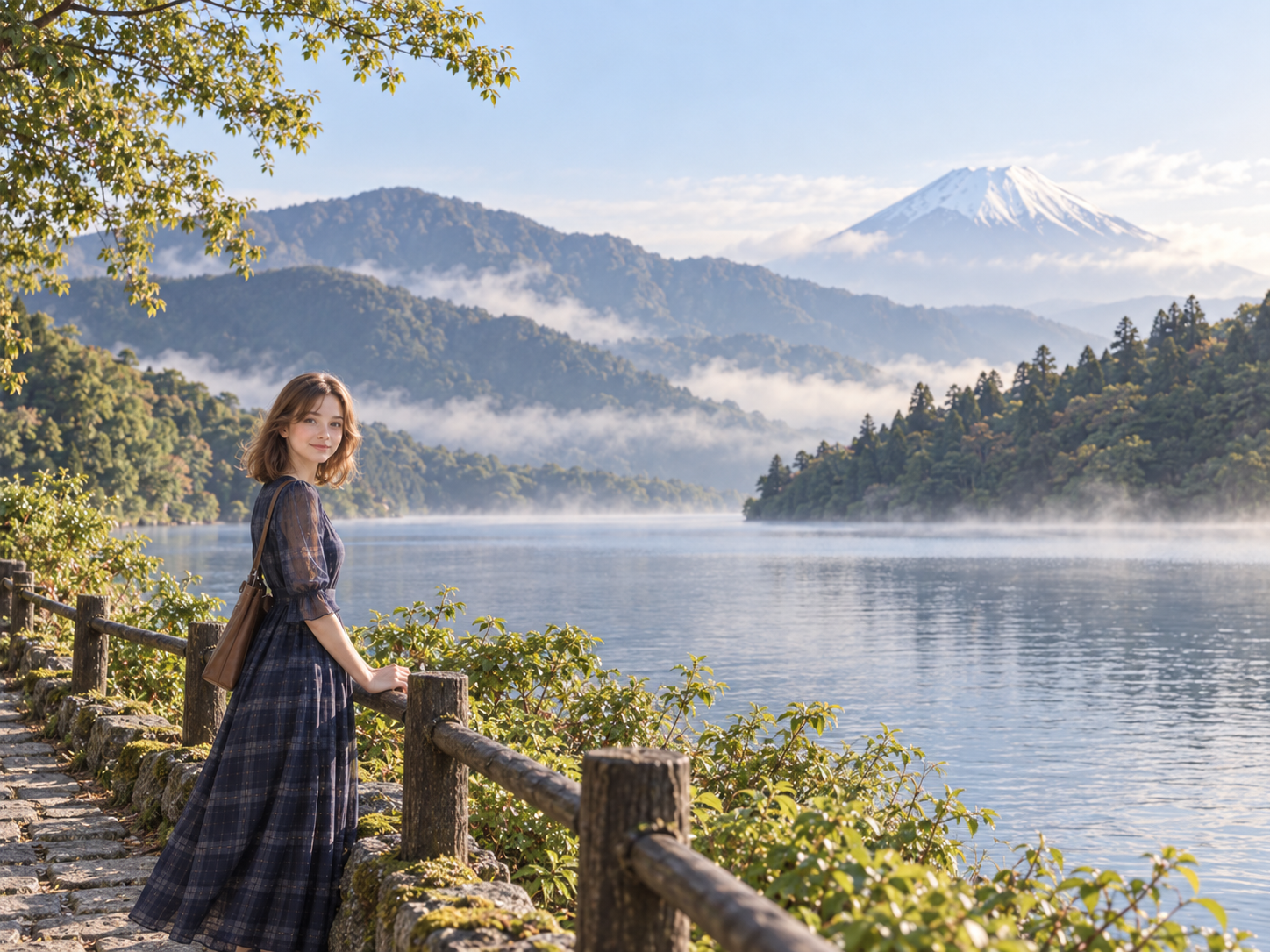
*Conceptual image generated by AI. Actual facilities and landscape may vary.
Packing Essentials & First-Timer Onsen Etiquette
Packing for a stay is delightfully simple because many full-service ryokans provide yukata robes, towels, basic toiletries, and light outer jackets (haori); higher-end properties often supply split-toe socks and premium skincare as well. In your own bag, bring slip-on shoes for effortless removal at entryways, quality socks, a rich moisturizer, and a hair tie if you have long hair.
For those entering a communal onsen for the first time, the routine is natural and peaceful once understood. Undress completely in the changing area, take the small modesty towel with you to the washing stalls, and sit down to wash thoroughly with soap and shampoo before entering the bath. Rinse off completely, place the small towel on the bath ledge or atop your head (never submerge it in the spring), and step smoothly into the warm water. Within moments, the mineral warmth takes over and any lingering hesitation fades away.
Chapter 6: Honest Tables, Hearthside Tea & Roasted Beans
Hakone’s food culture draws strongly on pure mountain water, fresh local ingredients, and the volcanic landscape that yields its hot springs and famous Owakudani black eggs. Dining here is unhurried, restorative, and grounded in the geography of the hills.
Pure Spring Water Craft: Artisanal Tofu, Soba & Kuro-Tamago
Because making tofu and brewing tea depends completely on clear water, local artisans have refined their craft over generations. In Gora and Tonosawa, you can savor warm, freshly scooped tofu (shakuri-dofu) with just a touch of soy sauce and ginger, as well as delicate fresh yuba (tofu skin). Paired with hand-cut buckwheat soba noodles and mountain vegetable tempura, it represents Japanese comfort dining at its finest.
Up at Owakudani, travelers frequently stop for the renowned Kuro-Tamago (black eggs). Boiled directly in natural hot spring pools containing sulfur and iron, the shells turn black through a natural mineral reaction while the egg inside remains tender and rich. Local tradition says that eating one adds seven years to your life—a cheerful reflection of the earth’s natural energy celebrated here.
*Conceptual image generated by AI. Actual facilities and landscape may vary.
Four Centuries by the Hearth: Amasake-chaya
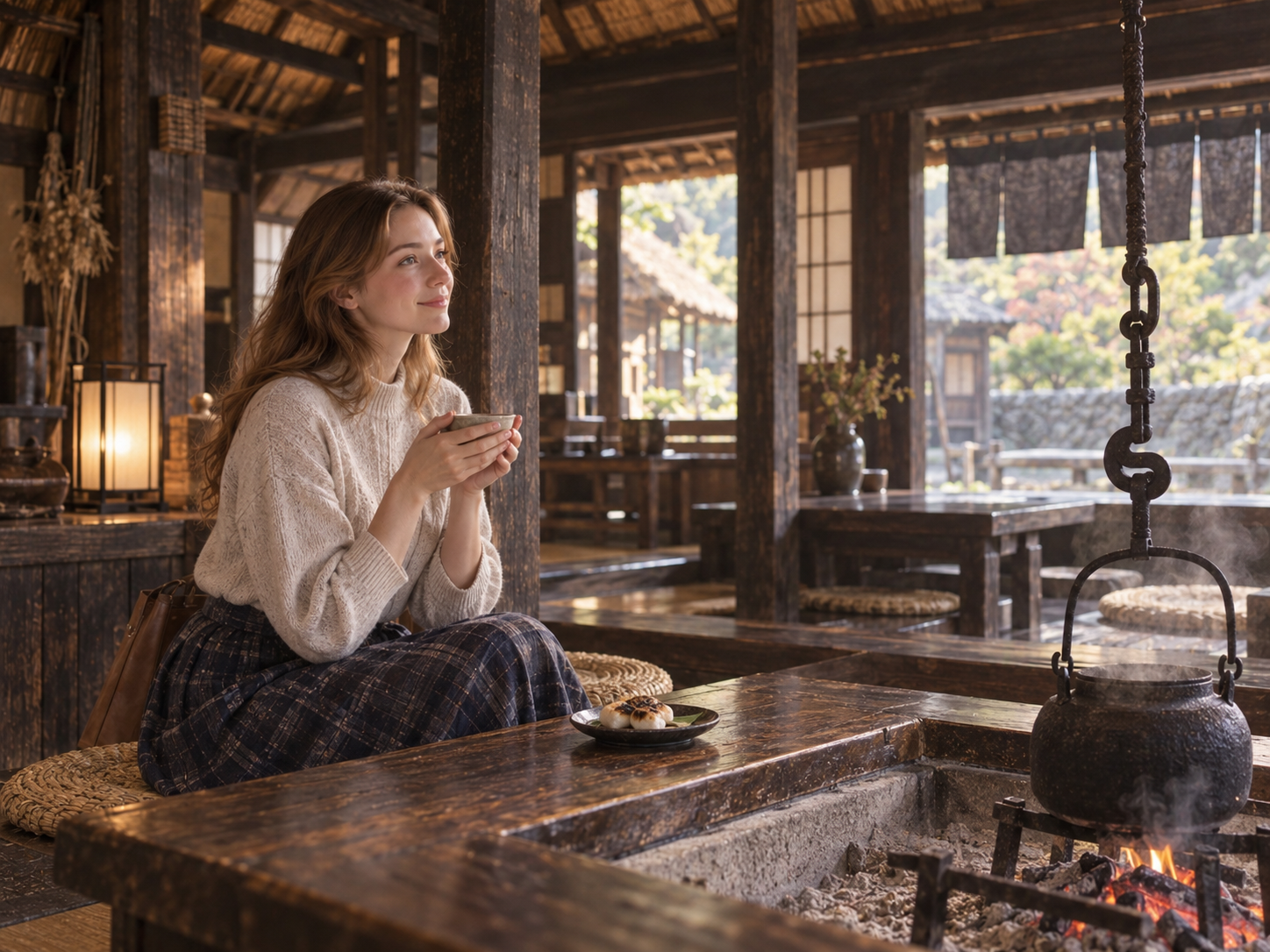
Along a quiet, mossy curve of the Old Tokaido Road stands Amasake-chaya, a thatched-roof teahouse that has welcomed travelers for roughly 400 years. Run today by the family’s thirteenth generation, stepping inside feels like entering living history. Dark wooden beams shaped by woodsmoke frame an open sunken hearth (irori) where charcoal gently glows.
Here, you can enjoy a warm bowl of naturally sweet, non-alcoholic fermented amazake brewed with a recipe and method handed down since the Edo period, alongside charcoal-grilled chikara-mochi (toasted rice cakes dusted with sweet soy or roasted soybean powder). Sitting by the open hearth with a warm bowl in your hands brings the exact comfort that sustained travelers crossing these passes centuries ago.

*Conceptual image generated by AI. Actual facilities and landscape may vary.
*Conceptual image generated by AI. Actual facilities and landscape may vary.
Quiet Coffee Culture & Kaiseki Dining
Hakone also features unhurried places to rest with coffee:
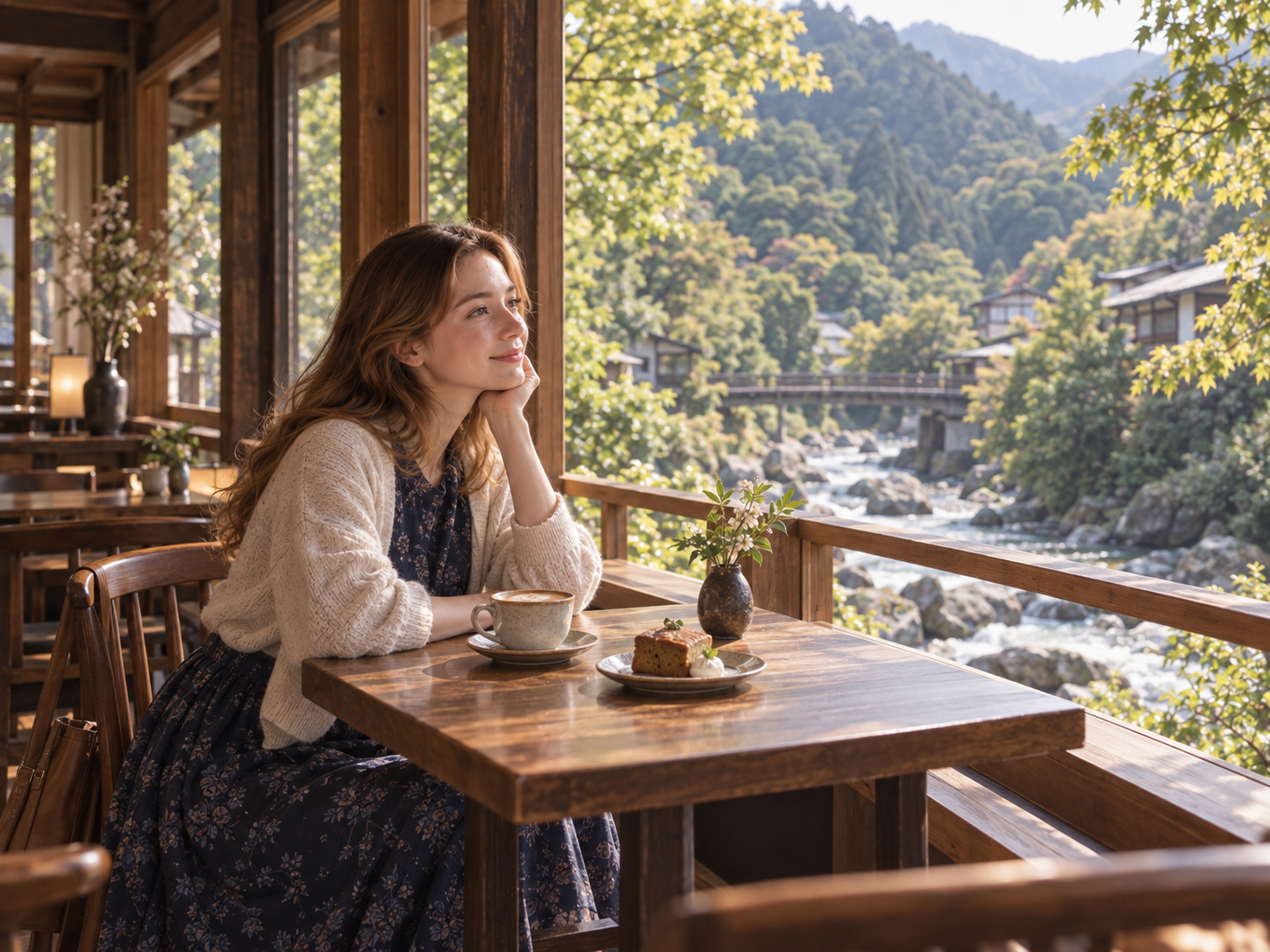
- cafe Timuny. (Hakone-Yumoto): Set right beside the clean waters of the Haya River, serving pour-over coffees and homemade cakes across two timber-lined floors filled with river light.
- NARAYA CAFE (Miyanoshita): Perched above a green ravine, where you can soak your feet in an outdoor mineral footbath on the deck while enjoying coffee and signature gourd-shaped monaka sweets.
- Switchback Cafe (Ohiradai): A cozy stop near the railway tracks where train admirers can sip specialty brews while watching mountain trains change directions between the trees.
*Conceptual image generated by AI. Actual facilities and landscape may vary.
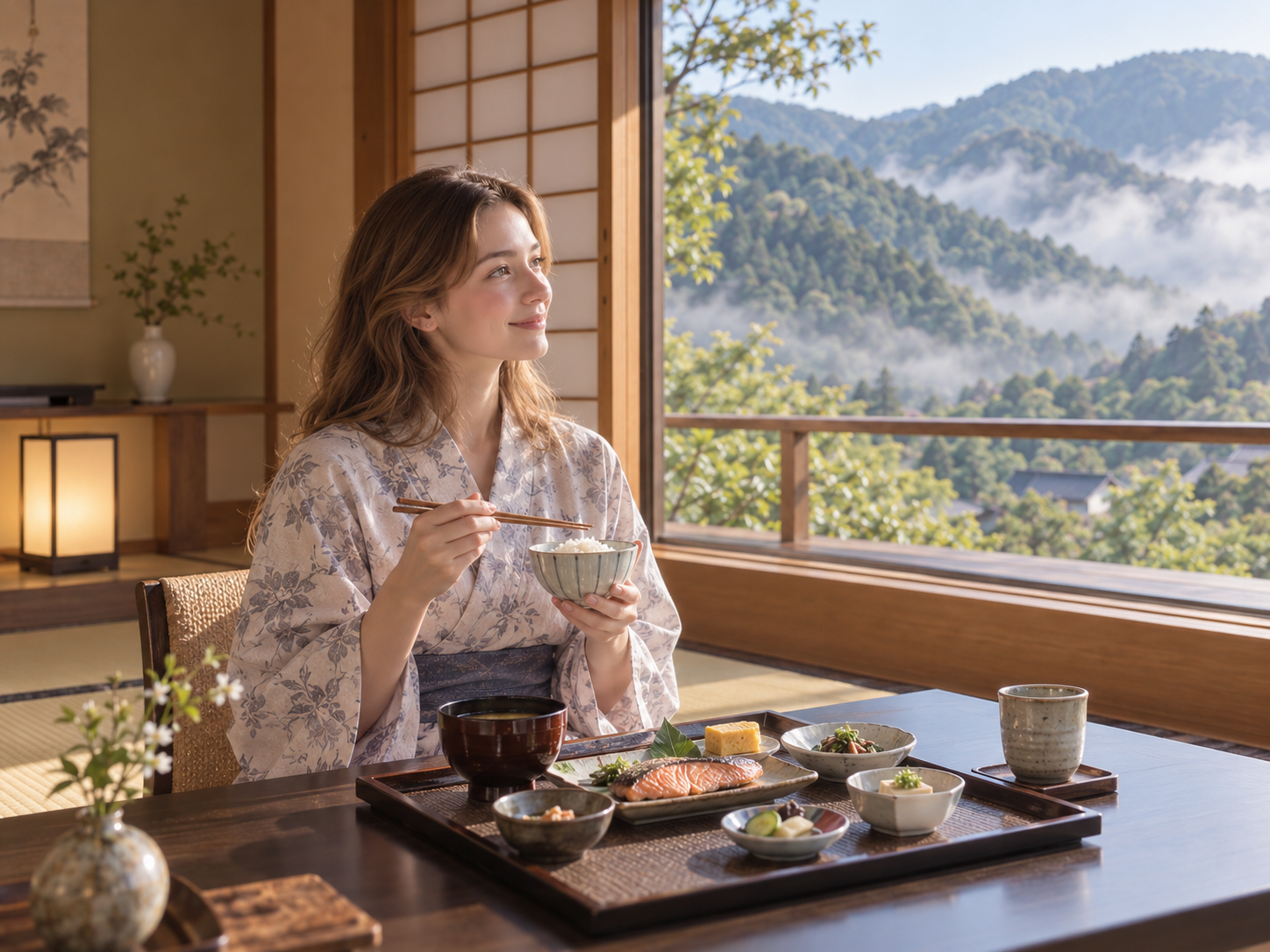
In the evening, dinner at your inn brings together seasonal courses served with quiet elegance, complemented in some properties by locally inspired tableware and craft motifs. Each dish—from mountain herbs to fresh coastal seafood from nearby Sagami Bay—is presented with care. Awakening the following morning to warm steamed rice, simmered local vegetables, and comforting miso soup beside the garden screen quietly completes the restorative cycle.
*Conceptual image generated by AI. Actual facilities and landscape may vary.
Chapter 7: Nature, Heritage, Zen & Forest Art
Part of what makes Hakone distinctive is how naturally historic paths and modern aesthetic spaces sit together within the mountain landscape.
Walking the Old Tokaido Cobblestones & Cedar Avenues
Connecting Tokyo and Kyoto during the Edo period, the Old Tokaido highway crossed directly through these steep passes. Travelers can still walk preserved stretches of the Old Tokaido Road (Kyukaido), where mossy, rounded stone pavers are shaded by an avenue of 400-year-old cryptomeria cedars.
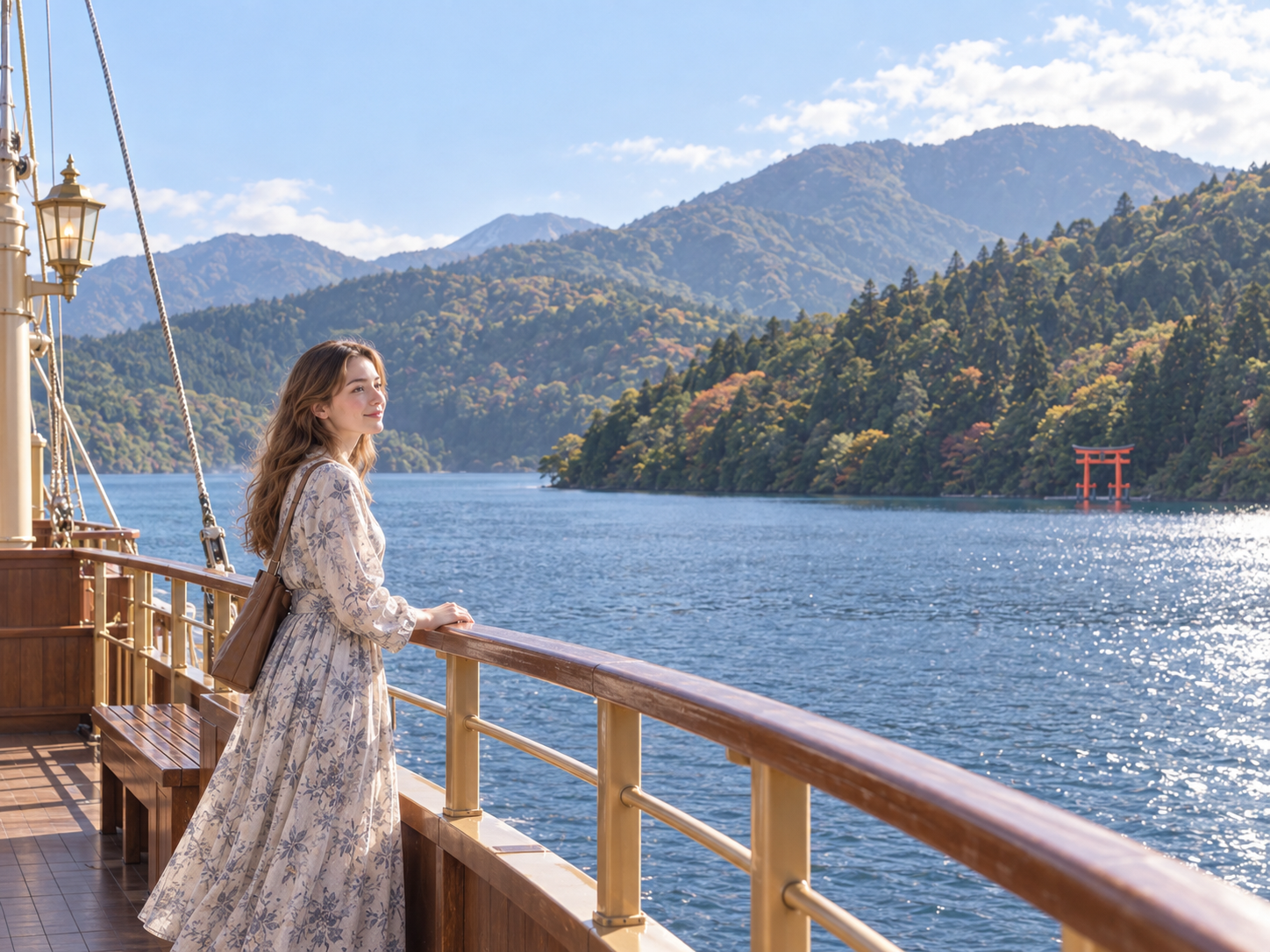
Near the southern shore of Lake Ashi stands the faithfully reconstructed timber complex of the Hakone Sekisho (Checkpoint), historically one of the most important checkpoints controlling movement along the highway toward and away from Edo. Walking these paths early in the morning before daytime visitors arrive lets you see the vermilion Torii gate of Hakone Shrine standing quietly out in the water, reflecting against the dawn mist.
Stillness: Zazen at Josen-ji Temple
In Miyanoshita, you will find Josen-ji Temple, a Soto Zen Buddhist sanctuary founded in 1583. Guided by resident monks, visitors are introduced to the seated meditation practice of Zazen, receiving instruction in posture, breathing, and mental centering according to the temple’s tradition. Focusing quietly on breath and posture among the trees helps quiet mental chatter and anchors you in the present moment, followed by a peaceful pause with simple temple confections.
Forest Sanctuaries of Modern Art & Architecture
Hakone is also home to museums that blend naturally into the surrounding forest:
- Pola Museum of Art (Sengokuhara): Designed with much of its glass-and-concrete structure kept low and integrated into the national park forest. Beyond Impressionist works, its shaded Art Nature Trail winds through native beech woods for quiet contemplation.
- Okada Museum of Art (Kowakudani): Houses an extensive collection of East Asian ceramics and paintings. Visitors can relax at an outdoor footbath cafe facing a large mural screen depicting the Wind and Thunder Gods.
- Hakone Open-Air Museum (Chokoku-no-mori): Displays monumental sculptures by Henry Moore, Rodin, and Miró across rolling lawns, complete with an outdoor mineral footbath and a Picasso pavilion.
- Enoura Observatory (Odawara Detour): Designed by contemporary artist Hiroshi Sugimoto, this reservation-only coastal site overlooks Sagami Bay. Combining ancient stone stages, glass architecture, and solar alignment axes, it provides a memorable architectural pause on your journey to or from Hakone.
Geological Roots & The Seventeen Springs (Hakone Jushichiyu): The thermal abundance of Hakone is the product of over 400,000 years of volcanic history, with caldera collapses forming the lake basin seen today. Across this varied landscape, mineral waters filter through distinct subterranean strata, traditionally celebrated as the Hakone Jushichiyu (The Seventeen Hot Springs of Hakone), featuring roughly twenty varieties of spring chemistry that change with elevation—from acidic sulfate-rich waters near volcanic vents to gentle chloride and bicarbonate springs in the lower river valleys.
Chapter 8: The Unhurried Day Trip: Navigating the Classic Hakone Loop
The Hakone Loop (often called the Hakone Round Course or Golden Route) allows travelers to circumnavigate the caldera’s peaks, forests, and waters in a single circuit without an automobile. The classic route combines mountain railway, funicular cable car, aerial ropeway, sightseeing ship, and bus connections, with the regional Hakone Freepass covering eight participating transport networks throughout the wider area.
Ticketing & The Counter-Clockwise Rhythm
Obtaining the Digital Hakone Freepass (available via Odakyu’s EMot platform; priced from Shinjuku at ¥7,100 for two consecutive days or ¥7,500 for three days, as of September 2026) covers all eligible transport services. Following the circuit in a counter-clockwise direction often provides a smooth, unhurried progression:
- 1. Hakone-Yumoto to Gora: Board the Hakone Tozan Railway. The mountain train climbs through green ravines, changing directions three times at switchbacks. You can pause at Chokoku-no-mori for the Open-Air Museum or visit the moss gardens of the Hakone Museum of Art.
- 2. Gora to Sounzan: Transfer to the Hakone Tozan Cable Car for a brief climb to Sounzan Station. At cu—mo Hakone, you can rest your feet in an outdoor terrace footbath while looking out over the mountain view.
- 3. Sounzan to Owakudani & Togendai: Ride the Hakone Ropeway. As the gondola crests the ridge, the smoking vents of Owakudani appear below. Taste a warm Kuro-Tamago before descending smoothly to Togendai by Lake Ashi.
- 4. Togendai across Lake Ashi: Board one of the lake’s cruise ships: the Queen Ashinoko (appointed by designer Eiji Mitooka with timber inlays and stained glass), the French-inspired Royal II, or the Victory. Quiet Travel Insight: For an additional fee (with a discounted rate available for Hakone Freepass holders; standard one-way upgrade is ¥800 as of September 2026), you can enter the First-Class special cabin to enjoy a quieter salon and open views of the floating Torii gate and Mount Fuji from the upper deck.
- 5. Avoiding Late-Day Bus Traffic: The mountain road descending from Motohakone Port often experiences heavy late-afternoon road traffic. Seasoned travelers frequently return across the lake to Togendai to reconnect with the ropeway and rail network, or enjoy an evening soak at Hakone Yuryo before taking the train back to Tokyo.
*Conceptual image generated by AI. Actual facilities and landscape may vary.
Chapter 9: Hakone from Tokyo: Access, Strategic Routes & Mountain Drives
An 18-Year-Old’s Adventure: Lina’s Mountain Driving Memories
As I mentioned at the very beginning of this guide, when I turned 18 and reached the age where I could drive in Japan, I used to drive up to Hakone every single weekend.
There are many famous lakes around Hakone, and I would sometimes go a bit further to visit them, but I truly enjoyed the drive through Hakone itself just as much.
Hakone has relatively steep mountains, and starting out on the driving course known as the Hakone Turnpike felt like setting off on a real adventure to me, having just gotten my driver’s license. Once you started driving, you would begin climbing a steep slope, and after continuing for a while, you would drive through deep green foliage until reaching the rest house near the mountain summit. When I arrived there, I would feel a sense of relief, feeling like I had just completed a great adventure. That was me at 18 years old.
If you are exploring by car, driving up to the Taikanzan Observatory (perched at roughly 1,011 meters) just before dawn is wonderful. In the quiet morning air, you can watch the silhouette of Mount Fuji slowly appear out of the valley mist.
Reaching Hakone from Tokyo: Four Straightforward Routes (Updated as of September 2026)
Choosing how to reach Hakone from Tokyo depends on your starting neighborhood and your luggage:
- Route A (Fastest Transit / Shinkansen): Board the Tokaido Shinkansen Kodama from Tokyo Station or Shinagawa Station directly to Odawara Station (about 25–35 minutes depending on departure station and service). Covered partially by Japan Rail passes, this is an efficient option for travelers based around Tokyo Station or those heading onward to Kyoto. From Odawara, connect to the Hakone Tozan Railway or arrange your inn’s transfer.
- Route B (Direct Comfort / Romancecar): Departing from Shinjuku Station, the Odakyu Romancecar limited express brings you straight to Hakone-Yumoto Station in roughly 75 to 90 minutes (ticketless limited express surcharge is ¥1,150 as of September 2026). On GSE services, front and rear observation deck seats go on sale one month in advance and are highly sought after, so purchasing as soon as sales open is recommended.
- Route C (Direct Highway Bus for Heavy Luggage): Nonstop express buses depart from Busta Shinjuku directly for Sengokuhara and Togendai by Lake Ashi. Transit takes about two hours depending on highway traffic, but it eliminates carrying heavy bags through train transfers.
- Route D (Flexible IC Card Express): Regular Odakyu Rapid Express trains depart frequently from Shinjuku to Odawara. Passengers can simply tap a standard IC transit card (Suica or PASMO) without needing advance reservations, connecting to the Hakone Tozan line at Odawara.
The Enduring Harmony of Hakone
Hakone has so many different sides across its valleys. You can feel the great presence of wild nature, walk through onsen streets, and rest in well-crafted inns where the spirit of Japanese hospitality is shared with care. Being so close to Tokyo while offering such a complete change of pace, it is easy to understand why people continue to love this mountain escape.
Official Resources & Further Reading
- Hakone Tourist Association (Hakone Navi) — Official regional travel advisories and seasonal trail data.
- Ministry of the Environment Japan — Fuji-Hakone-Izu National Park conservation and visitor guidelines.
- Odakyu Electric Railway Official — Romancecar seat reservations, digital ticketing, and Hakone Freepass terms.
- Hakone Sightseeing Cruise Official — Lake Ashi sailing timetables, vessel specifications, and special cabin ticketing.
- Enoura Observatory (Odawara Art Foundation) — Hiroshi Sugimoto architectural site advance admission booking.
Comprehensive Travel & Health Disclaimer
Editorial Integrity & AI Imagery: The editorial perspectives and travel reflections presented in this guide represent independent cultural recommendations. Visual placeholders labeled with conceptual notices are artistic AI renderings created to evoke regional atmosphere; actual facilities, architectural finishes, and seasonal vegetation may differ.
Hot Spring (Onsen) Health Precautions: Hakone’s hot springs vary widely in temperature and mineral composition, including sulfur-rich, chloride, sulfate, bicarbonate, and simple springs. Individuals who are pregnant, have cardiovascular conditions, high blood pressure, or sensitive skin conditions should consult a healthcare professional before bathing in high-temperature mineral baths. Please adhere strictly to posted facility guidelines and drink plenty of water before and after soaking.
Mountain Driving & Trail Safety: Roads in the Hakone mountain region feature steep grades, sharp hairpin bends, and occasional dense fog. Between late December and late February, sub-zero temperatures can create black ice; vehicle travel during these months requires appropriate snow tires or tire chains. When hiking along the Old Tokaido cobblestones or national park paths, please wear supportive footwear with slip-resistant soles, stay on marked trails, and practice Leave No Trace conservation.
Currency, Tariff & Timetable Accuracy (As of September 2026): Accommodation rates, public transit timetables, regional passes, and admission fees reflect standard conditions verified as of September 2026 and remain subject to seasonal revisions, periodic adjustments, and operational changes. Travelers are strongly encouraged to verify operational statuses and ticket availability via official operator platforms prior to departure.

Comments