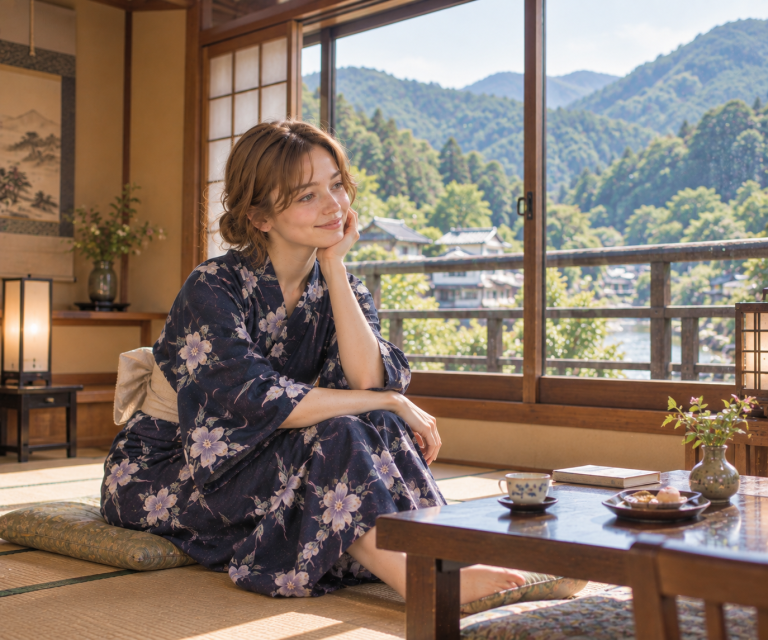
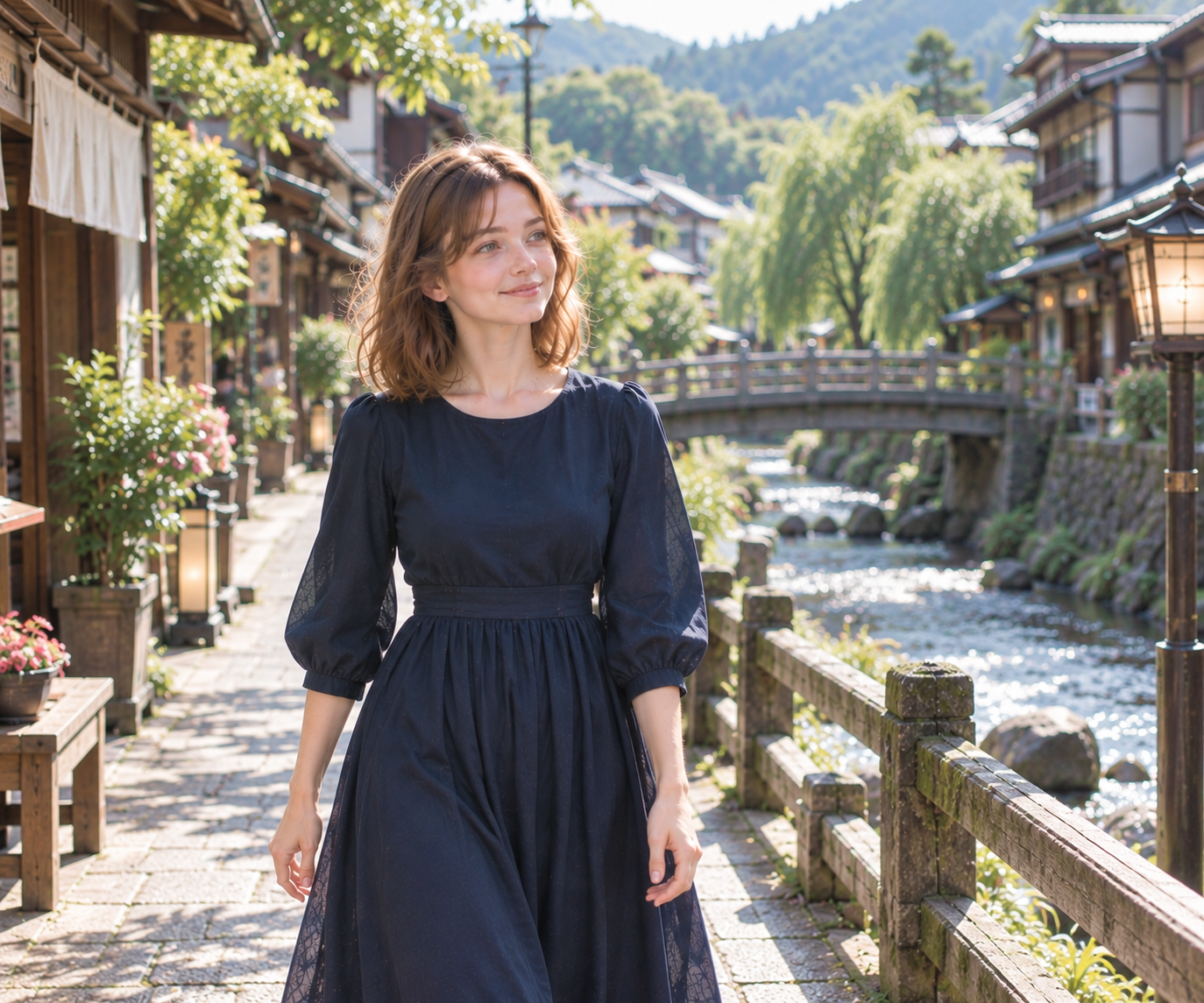
For busy people, taking a trip to a quiet and atmospheric place brings a deep sense of refreshment. I have traveled all around the world, but retreating to an old, charming Japanese ryokan in the countryside is something I cherish very deeply. Two or three times a year, I make it a habit to quietly spend slow, peaceful days in places like this.
Right now, for example, I remember Isawa Onsen. Driving along winding mountain roads, feeling a little lonely at times, the small town suddenly appears right before your eyes. It is an old, charming town with a gentle sense of nostalgia. While it has long been known as a hot spring haven, it remains very compact, keeping the sweet warmth of the good old days untouched.
Soaking slowly in the hot springs every day, slipping back into my room, and spending time writing—I really love that quiet rhythm. In Japan, it has long been known that great writers used to stay at traditional ryokans and hot springs to work on their books. Sitting in a quiet, calm place with no noise at all, you can completely empty your thoughts and mind. For creative people, this is truly a quiet luxury.
When visiting places like Atami and Shimoda in Shizuoka, Yugawara in Kanagawa, or the misty valleys of Hakone, there is a tradition Japanese people love so much: putting on your soft cotton yukata and simply strolling around the neighborhood to take in the simple atmosphere.
For instance, you can buy warm onsen manju—sweet bean cakes freshly steamed over hot spring vapors—eating them while they warm your fingers. Sometimes, you might step into a local okonomiyaki eatery, sipping a cold glass of beer while the savory pancake cooks right in front of you.
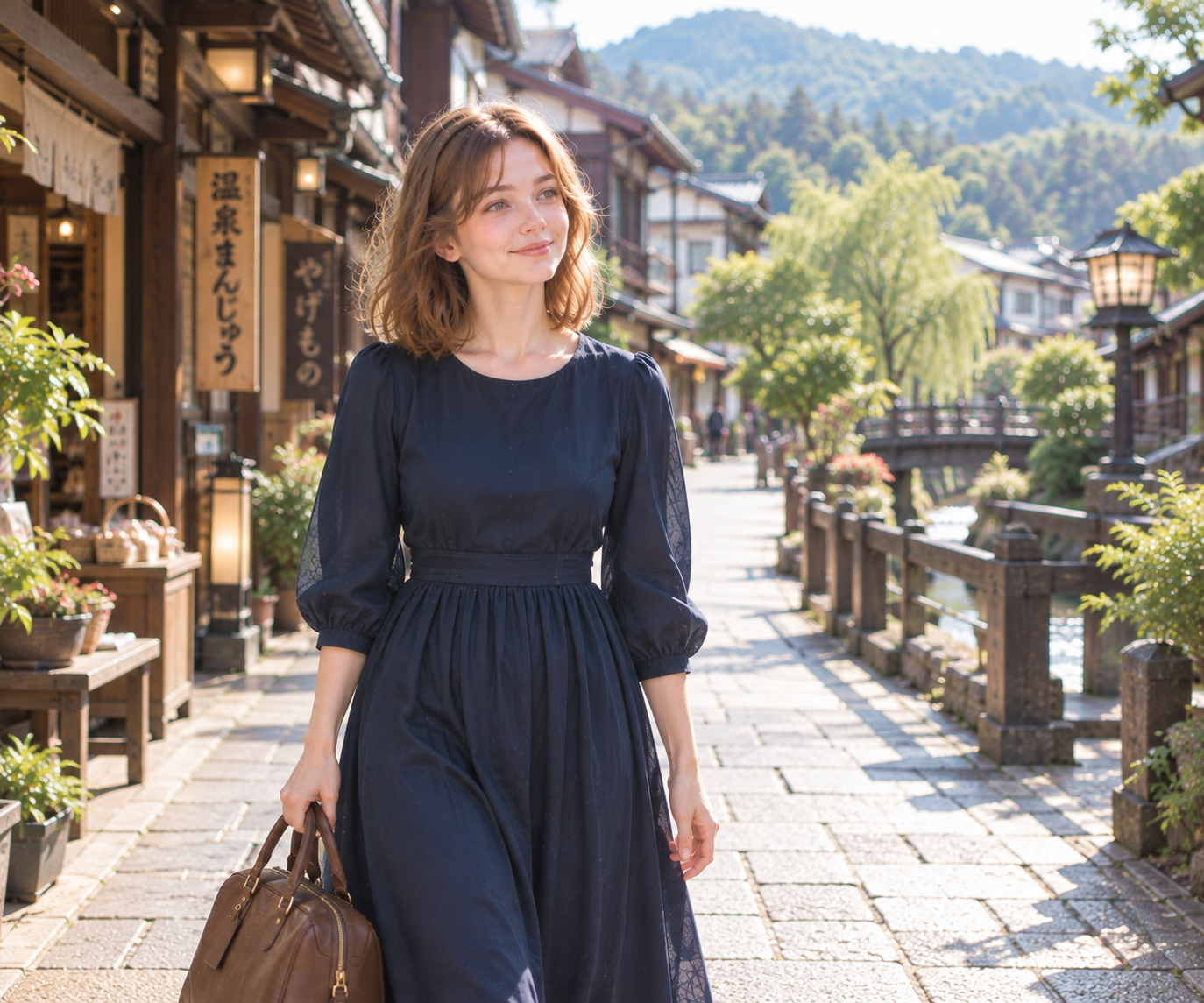
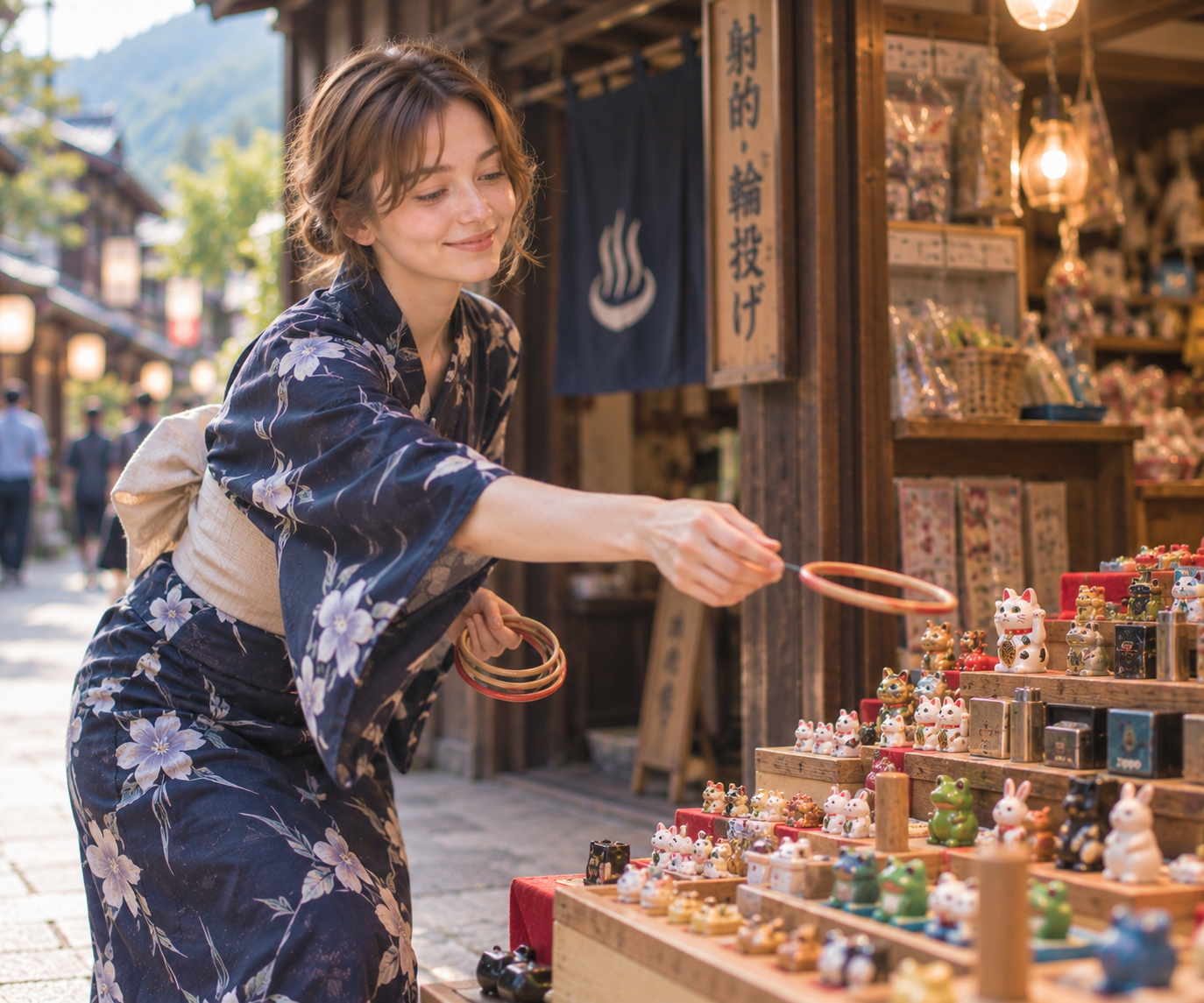
Or you can drop by a retro arcade. In traditional hot spring towns, simple game parlors from past decades still remain. You might find vintage video games, classic pinball (smartball), or ring-toss. Tossing rings to win small ceramic figurines—a little cat, a lucky cat with a gold coin, or a small clay frog—is such a simple joy. Strolling with warm snacks and playing these nostalgic games is one of the best parts of staying at an onsen inn.
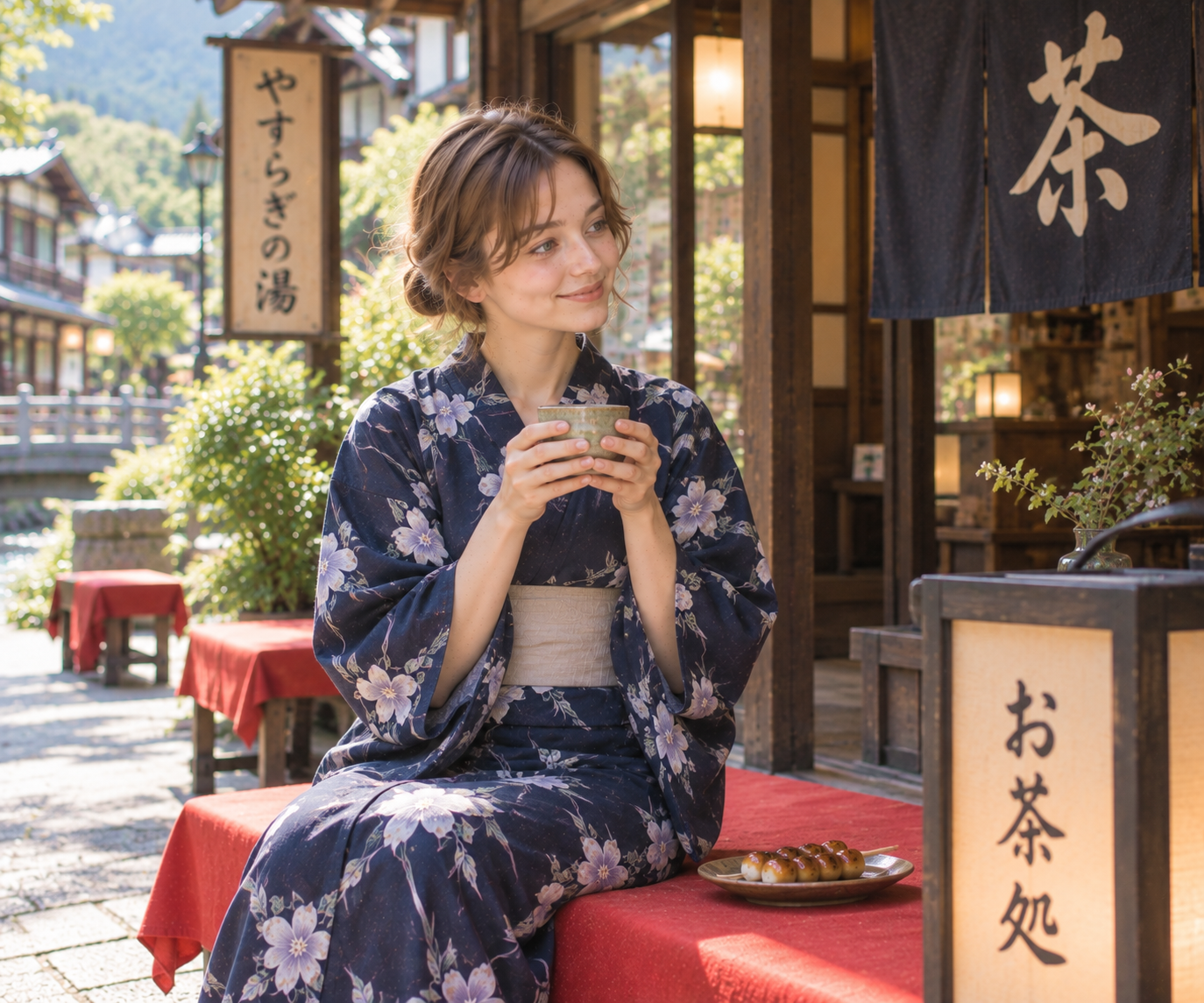
Staying for a longer time brings a very special kind of happiness. When you stay in a compact, quiet town, everyone naturally becomes a familiar face before long. Many people speak English now, and we can easily use translation apps, but even without a common language, communication happens quite naturally in a place like this.
Throughout my travels around the world, even when I couldn’t speak a single word of the local language, I always made friends. When you are in a sanctuary where you can simply be yourself, your heart opens up. You become honest and relaxed, so making friends comes easily. At least, that has always been my experience. So even if you only speak English, French, or Spanish, and only know a tiny bit of Japanese, there is nothing to worry about. You will find ways to connect with the local people step by step.
After staying for a week or two, you naturally become friendly with most people in the neighborhood. Staying in a quiet, slightly aged, compact onsen town brings such a great joy in that way.
The nakai-san who tends to your room, the inn’s okami, the caretakers keeping the hot springs pristine every day, the shopkeepers nearby, and the owner of the small diner where you drop by for lunch. They have lived here for decades, watching the seasons gently turn, and there is so much we can learn from them.
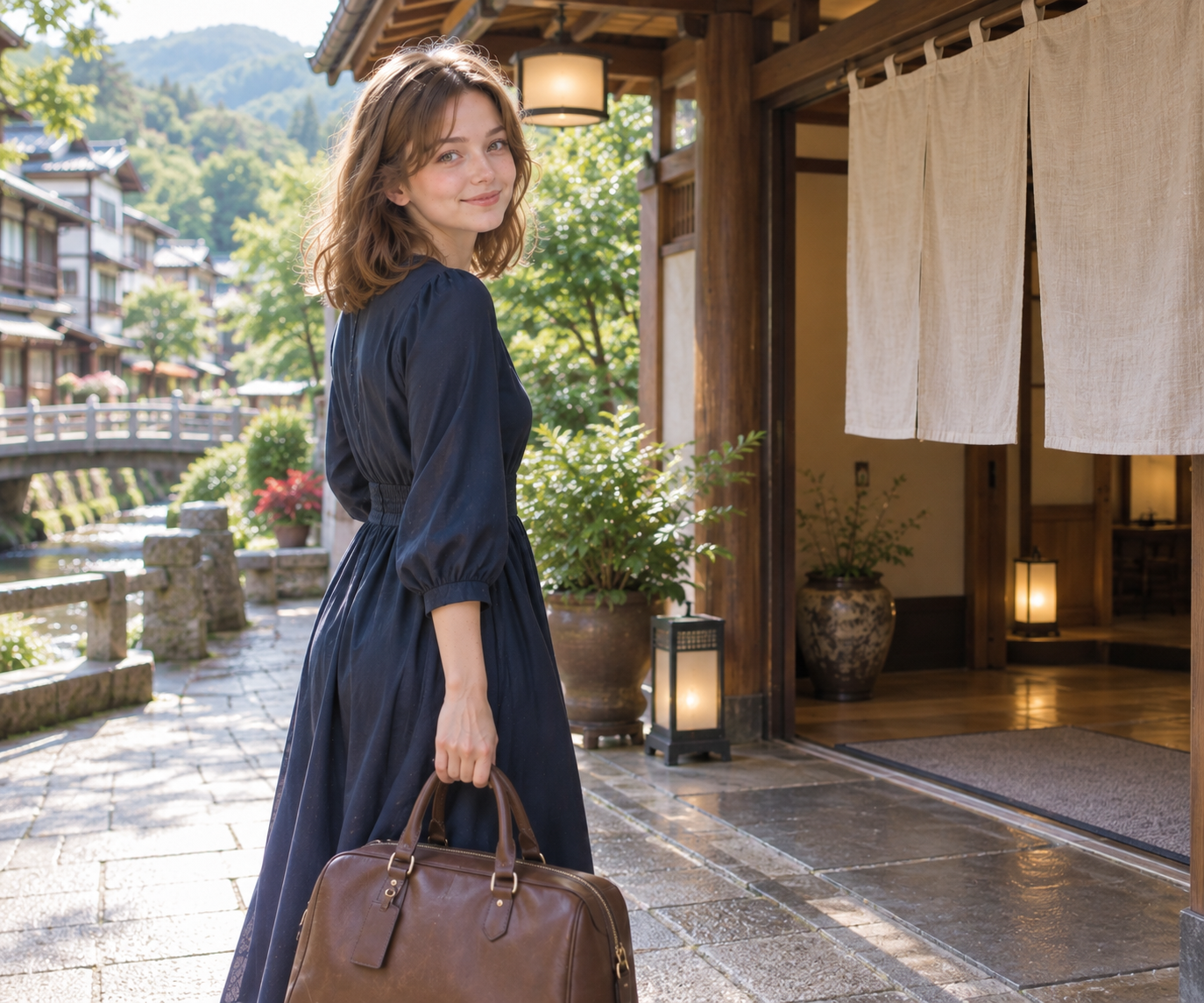
People who soak in the onsen as part of daily life, work diligently, and unwind with another warm bath have the softest expressions. When you walk among them, you notice how calm everyone looks. And before you know it, all the tension has completely melted from your own face, leaving a soft, peaceful smile. This is one of the most beautiful gifts of staying in a countryside onsen.
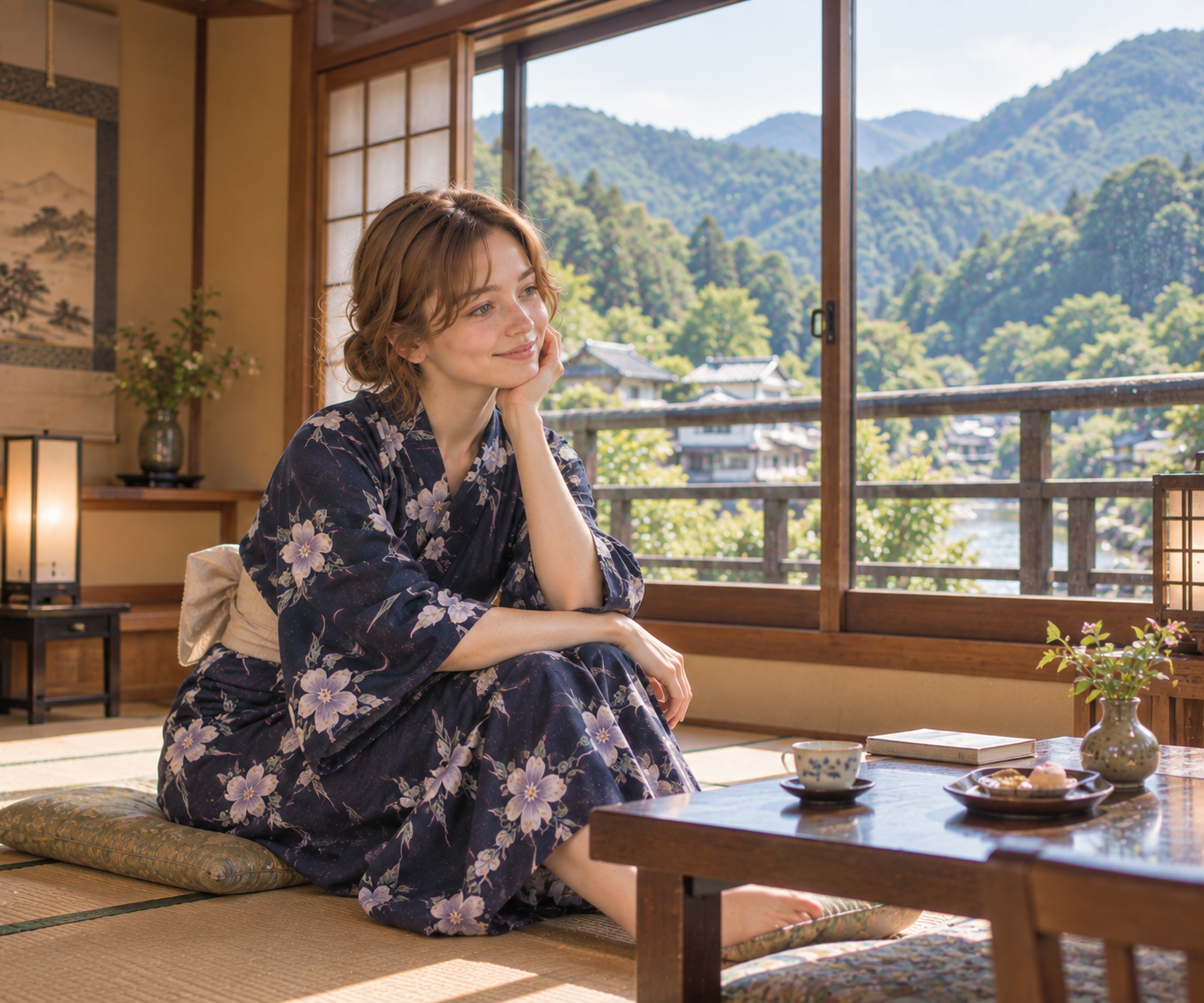
Staying at a ryokan is a little different from staying at a hotel. It feels more like being gently welcomed into someone’s warm home. You take off your shoes at the entrance, and stepping into the tatami room, the gentle scent of rush straw softly fills the air. After enjoying a cup of warm tea with a little sweet, you change into a cotton yukata. From that moment on, you no longer need to check the clock. Watching the soft sunlight filter through the paper sliding doors, you can simply stretch out on the tatami and space out. It is a place to savor the art of doing nothing.
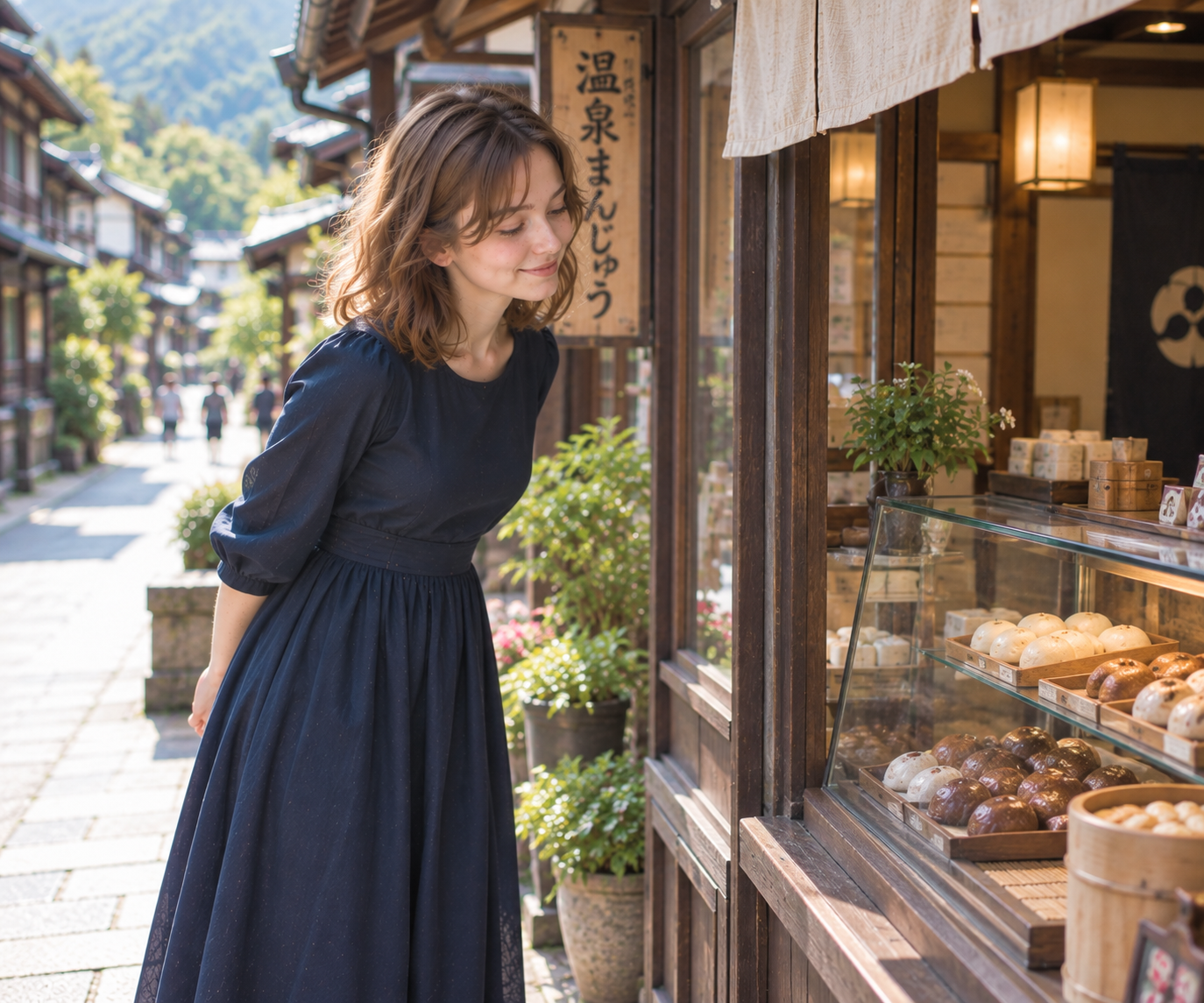
If you are choosing a Japanese ryokan for the first time, a small, family-run inn with about 10 to 20 rooms is a lovely choice. Unlike large hotels, they are wonderfully quiet, and the hospitality feels personal and caring. Choosing an inn with traditional wooden architecture or a quiet little garden lets you experience the gentle rhythm of classic Japanese living firsthand.
One of the greatest joys of staying at a ryokan is dinner, prepared with seasonal local ingredients. Small bowls of seasonal vegetables, fresh fish or meat from the region, and warm soup with a comforting dashi aroma. With each slow bite, the gentle flavors warmly settle into your body. Enjoying the meal at your own pace in your tatami room without any rush is a special pleasure. The next morning, a simple and comforting Japanese breakfast awaits you—warm rice, hot miso soup, and grilled fish.
There are a few simple ways to book your stay:
- Booking through travel websites: Global booking platforms or Japanese travel websites are easy to navigate in English, allowing you to browse photos and reserve smoothly.
- Booking directly through the ryokan’s official website: Many historic, small inns only accept reservations through their own websites. Booking directly often gives you the most personalized and caring experience.
- Helpful search words: When searching online or using booking tools, looking up these romanized Japanese terms will guide you directly to quiet, atmospheric inns:
kakurega onsen ryokan hitoritabi(hidden retreat onsen inn for solo journeys)nihon no furui mokuzo ryokan(historic wooden Japanese ryokan)bungo yukari no yado(historic inns cherished by literary masters)gensen kakenagashi chiisana yado(small authentic inn with natural free-flowing hot springs)
Besides the historic spots you can reach with a short drive from Tokyo, Japan has many other small, quiet, and beautiful hot spring towns:
- Ginzan Onsen (Yamagata): A quiet valley town where wooden ryokans from the Taisho era line the gentle river.
- Yamanaka Onsen (Ishikawa): A calm town surrounded by beautiful gorges and the timeless art of lacquerware.
- Bessho Onsen (Nagano): A historic village with simple stone paths and quiet public baths.
- Kinosaki Onsen (Hyogo): A peaceful town where you can walk along the willow-lined canal in a yukata and wooden geta clogs.
- Misasa Onsen (Tottori): A quiet hot spring retreat with an old-fashioned healing atmosphere and nostalgic retro games.
- Oku-Dogo (Ehime): A tranquil mountain sanctuary tucked away in green nature, just beyond historic Dogo.
- Kurokawa Onsen (Kumamoto): A secluded valley where wooden inns nestle quietly into the trees and river, free from flashy signs.
*I will be sharing detailed reports and stories about each of these onsen towns in upcoming individual articles.
For official details and up-to-date guidance on Japanese hot spring culture and local regions, please refer to the official tourism associations:
-
Official Travel Guide Yamanashi (Isawa Onsen Street Guide):
https://www.yamanashi-kankou.jp/english/uncover/isawa-onsen-street.html -
Visit Kinosaki (Official Tourism Information for Kinosaki Onsen):
https://visitkinosaki.com/ -
Official Tourism Website of Tohoku (Ginzan Onsen Guide):
https://www.tohokukanko.jp/en/attractions/detail_1265.html
The thoughts, stories, and travel notes shared in this article reflect the author’s personal experiences and reflections. All travel arrangements, choices of accommodations, transportation methods, and trip planning should be made at your own discretion and personal responsibility.
Health Considerations & Hot Spring Etiquette: The mineral composition, water temperature, and bathing practices vary across different hot springs. If you have pre-existing health conditions, are pregnant, are an older adult, or have sensitive skin, please carefully consider your own physical condition and consult a healthcare professional if necessary. Bathing repeatedly or soaking for prolonged periods can place extra strain on the body, so please enjoy the waters at a safe and gentle pace.
Financial & Practical Decisions for Long-Term Stays: Planning an extended stay or working holiday in a quiet hot spring town requires thoughtful consideration of your personal finances, work commitments, and living circumstances. Please ensure that any extended travel aligns with your own realistic budget, schedule, and daily responsibilities.
Verifying Current Information: Accommodation rates, operating hours, policies, and local transport options are subject to change. Before making any reservations or traveling, please verify the latest details directly with the official ryokan websites or relevant local tourism offices.

Comments