
- Beyond the Sun: Embracing the Gentle Rhythm of Rainy Days
- Quiet Sanctuaries: Gazing at the Grey Tide from Behind the Glass
- The Texture of the City: Sheltered Arcades, Sensory Markets, and Vintage Cinema
- Senagajima Solitude: Watching Planes Glide into the Mist
- Lina Whitmore’s Notes on Quiet Luxury Travel: Weather, Presence, and Stillness
- Practical Island Wisdom: Gentle Living on Unpredictable Days
Beyond the Sun: Embracing the Gentle Rhythm of Rainy Days
When travelers imagine Okinawa, their thoughts naturally turn to brilliant blue skies, vivid emerald waters, and sun-drenched shorelines. When rain arrives, it is easy to assume that the day has lost its purpose. Yet for those who have spent seasons living alongside these subtropical shores, a rainy day is never a ruined day.
There is a distinct, unhurried rhythm to the island when the skies turn soft grey. A fierce tropical squall sweeps across the coast, dampening the earth in minutes, only to give way to a luminous, quiet light as the clouds slowly part. Instead of rushing against the weather, the local rhythm teaches us to pause: to step beneath a sheltering roof, listen to the heavy fall of rain, and watch the subtle shifting colors of the mist. It is the very essence of quiet travel—letting go of rigid itineraries to dwell in the gentle atmosphere of the present moment.
Quiet Sanctuaries: Gazing at the Grey Tide from Behind the Glass
During sudden island downpours, the architecture of Okinawa offers generous shelters that remain deeply connected to the natural landscape. Modern coastal spaces—such as PARCO CITY in Urasoe or the spacious lounges at Rycom—are designed with expansive walls of glass that frame the ocean rather than shut it out.
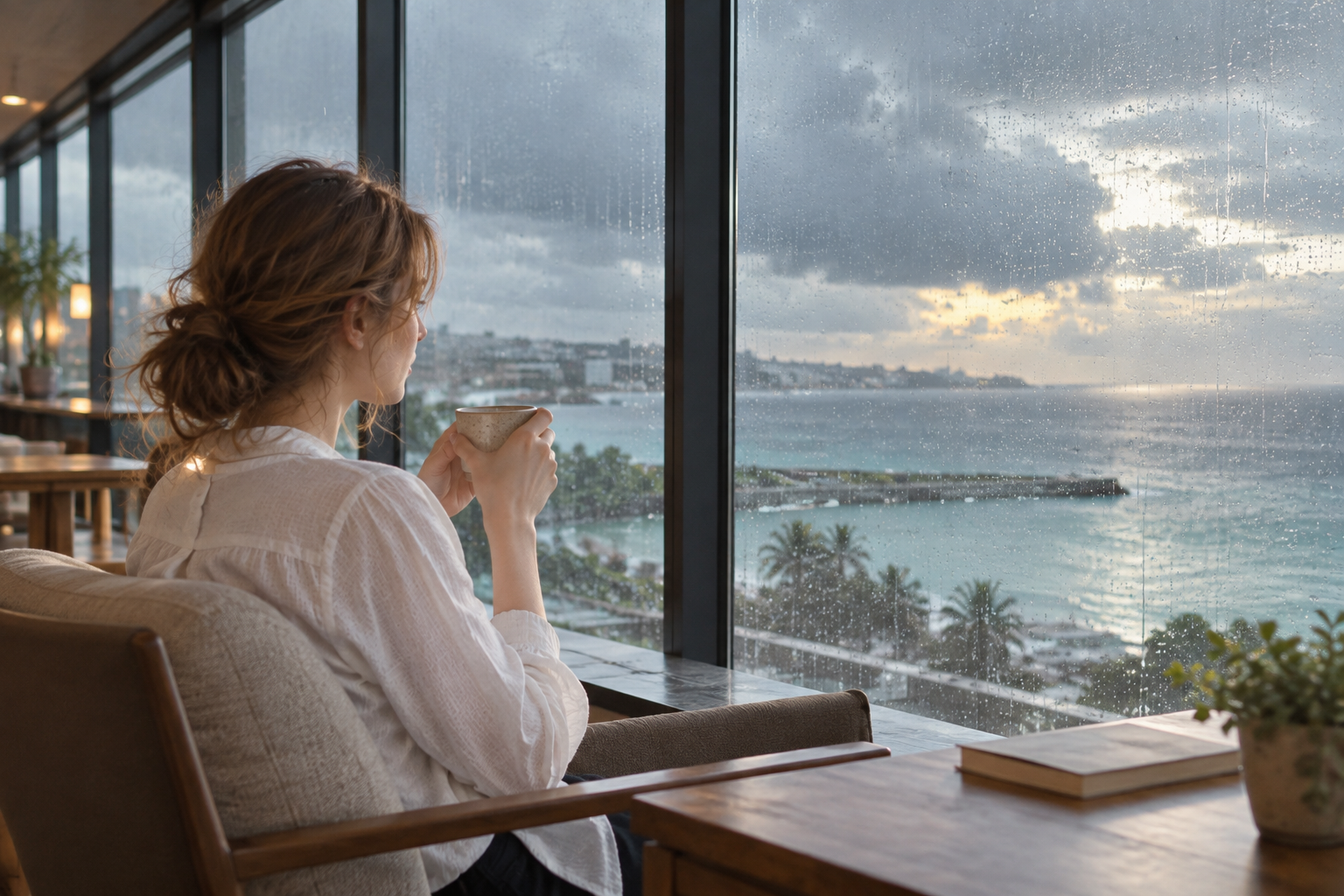
Watching the horizon shift from vivid turquoise to quiet silver-grey.
Sitting comfortably on an upper level with a warm beverage, watching the rain dance across the surface of the sea, brings an unexpected stillness. Without the blinding glare of the summer sun, the ocean reveals subtle gradients of silver, slate, and pale blue. Far from feeling closed in, these airy sanctuaries provide an unhurried vantage point to experience the grandeur of tropical weather while staying entirely dry and grounded.
The Texture of the City: Sheltered Arcades, Sensory Markets, and Vintage Cinema
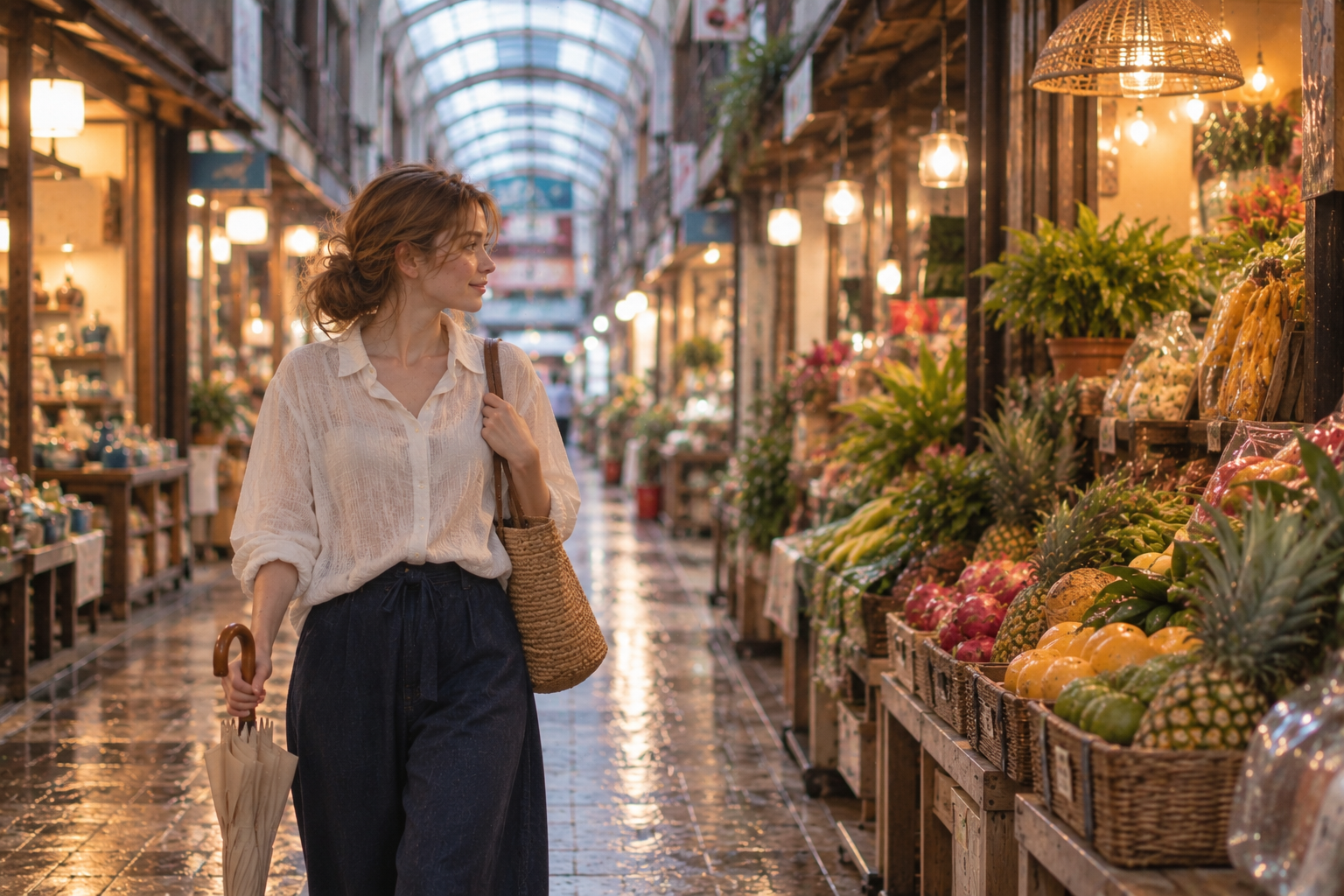
For those staying near central Naha, stepping slightly away from the main thoroughfare of Kokusai Street reveals the island’s lived-in domestic warmth. The historic covered shopping arcades—Heiwa Dori, Ichiba Hondo, and Taihei Dori—form an expansive network of roofed alleyways where daily life continues completely unhindered by the rain.

Vibrant subtropical fruits and quiet domestic warmth under sheltered arcades.
Here, small vegetable stands, traditional pottery displays, and local soba counters sit comfortably side by side. Continuing toward the reconstructed Nouren Market offers a sensory encounter with island agriculture: crates of aromatic passion fruit in late spring, followed by fragrant summer mangoes and unfamiliar local greens. Just a short walk further leads to Sakurazaka Theatre, an independent cinema and cultural haven where art-house films, curated books, and artisanal crafts invite an unhurried afternoon sheltered from the sound of dripping eaves.
Senagajima Solitude: Watching Planes Glide into the Mist
One of the most meditative ways to spend a rainy afternoon in southern Okinawa requires nothing more than a quiet car and a view of the water. On Senagajima, a small island connected by causeway just south of Naha Airport, locals often park along the water’s edge to simply watch the tide.
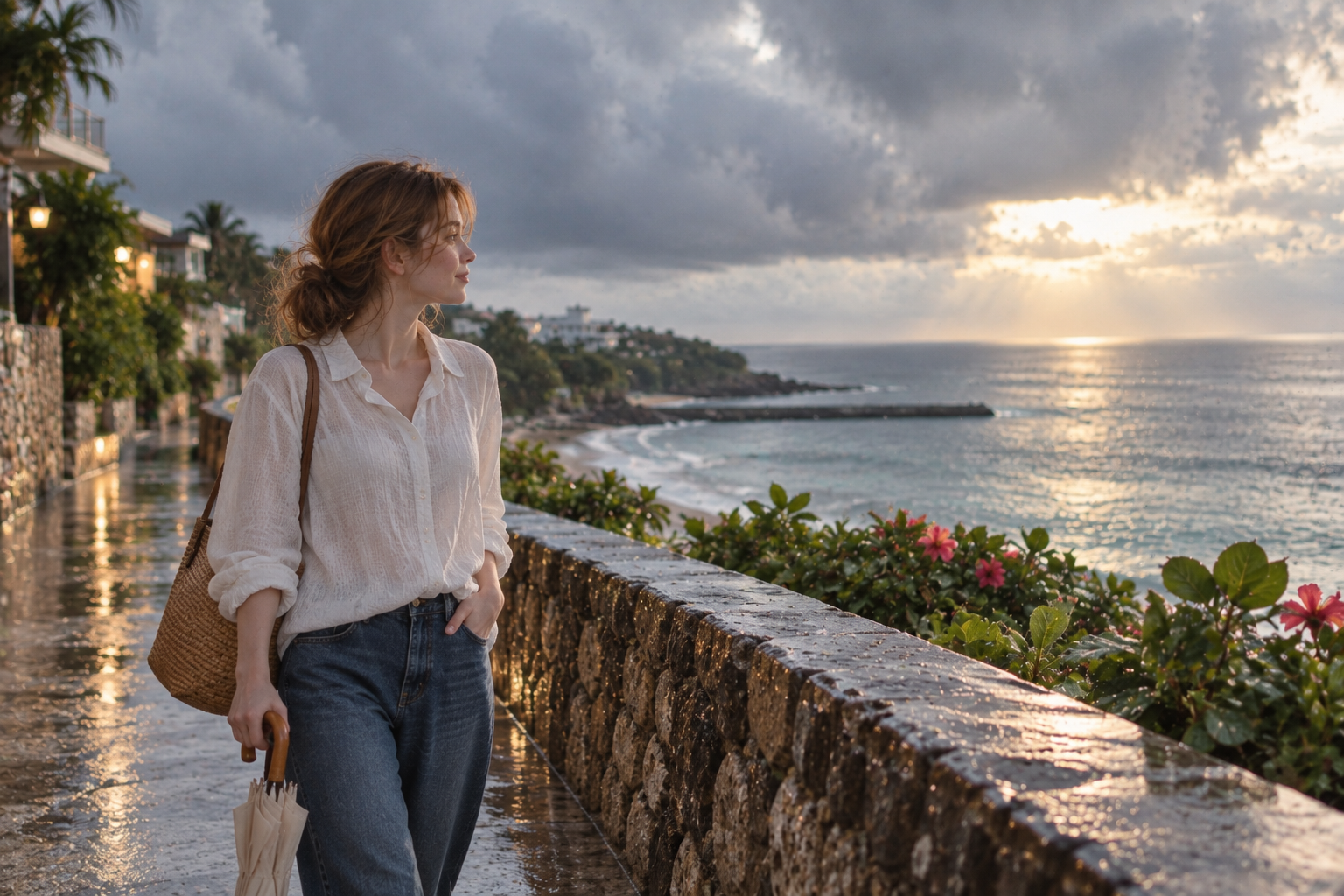
Quiet contemplation along the coast as flights descend through the mist.
Through rain-speckled glass, airplanes descend silently out of the grey clouds one after another, aligning with the runway across the water. As late afternoon fades toward evening, the dividing line between sea and sky blurs into a seamless silver haze. It is a slow, grounding tableau that lingers in memory far longer than a crowded sightseeing stop.
Lina Whitmore’s Notes on Quiet Luxury Travel: Weather, Presence, and Stillness
To travel with a gentle mindset is to stop negotiating with the sky. True luxury in travel does not demand flawless weather; it lies in the ability to find poise, comfort, and sensory presence wherever you happen to stand.
The gentle glow of sunlight reflecting on damp stone as the squall clears.
When the storm arrives, step inside. Listen to the resonance of raindrops falling against awnings. Watch the sudden bursts of tropical light reflect across slick, dark asphalt. When we allow a destination to show us its quiet, working, everyday self, we move from being mere spectators to sharing in the calm breath of the land.
Note on Creative Work & Storytelling
This appreciation for presence, tactile nostalgia, and calm domestic spaces forms the backbone of my storytelling. Under my pen name Claire Rose, I explore how stepping away from modern devices allows an 18-year-old traveler in 1985 to find herself through honest spaces and simple daily rhythms:
*The upcoming California edition, written under my author name Lina Whitmore, continues this gentle study of slow horizons, quiet domestic interiors, and mindful independence.
Practical Island Wisdom: Gentle Living on Unpredictable Days
- Keep a compact umbrella close: Tropical squalls can arrive within seconds, drenching the distance between a car door and an entrance.
- Leverage covered parking structures: Follow local habits by utilizing multi-level covered parking at major centers to move freely without weather friction.
- Monitor rain radar notifications: Smartphone radar apps allow you to comfortably step outdoors between squall bands when the air clears.
- Respect coastal lightning advisories: Open shorelines and coastal bridges should be avoided during thunderstorms; head inland to sheltered cultural hubs instead.
Official Cultural & Travel References
- Okinawa Story (Official Travel Guide) — Comprehensive regional resources and seasonal island culture.
- Sakurazaka Theatre (Naha) — A historic cultural hub presenting curated cinema, books, and regional crafts.
- Tsuboya Pottery Museum — Preserving the heritage and tactile traditions of Okinawa’s historic pottery district.
Editorial Note & Travel Disclaimer:
This essay reflects personal travel experiences and seasonal observations across Okinawa. Weather conditions, sudden squalls, and facility hours can vary significantly. Travelers are encouraged to verify current meteorological warnings and local transportation updates to ensure safe, comfortable journeys.


Comments